
Short Answer
Definition of Atomic Electricity
Atomic electricity refers to the electrical phenomena that originate from the behavior and interactions of charged particles at the atomic scale. It encompasses the fundamental principles governing how subatomic particles such as protons and electrons generate and influence electric forces within matter. While the term often evokes vivid imagery of charged particles in motion, it is essential to understand whether atomic electricity represents a distinct scientific concept or serves as a metaphor for more intricate electromagnetic processes.
Atomic Structure and Electric Charge
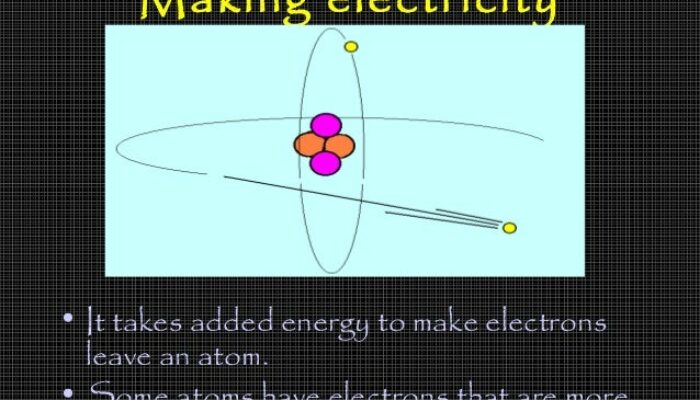
To comprehend atomic electricity, one must first examine the composition of an atom. Atoms consist of a nucleus containing protons and neutrons, surrounded by electrons in probabilistic orbitals. Each particle carries a specific electric charge: protons are positively charged, electrons carry a negative charge, and neutrons are electrically neutral. This distribution of charges forms the basis for electrical interactions at the microscopic level, influencing how atoms bond and interact through ionic and covalent forces.
- Protons:
Positively charged particles located in the nucleus. - Electrons:
Negatively charged particles orbiting the nucleus in defined energy levels. - Neutrons:
Neutral particles that contribute to atomic mass but do not affect charge.
Mechanism of Electricity at the Atomic Level
Electricity fundamentally arises from the movement of charged particles. In conductive materials like metals, electrons are loosely bound to their atoms, enabling them to move freely and create an electric current. This flow of electrons through a material is the cornerstone of electrical conduction and engineering. The origin of this current is rooted in atomic interactions, where electrons transition from individual atomic orbitals to collective movement across the material’s lattice.
Electrostatics and Atomic Interactions
Beyond conduction, atomic electricity also manifests in electrostatic phenomena. When two different materials come into contact, electrons may transfer from one to the other, resulting in static electric charges. This effect is observable in everyday life, such as experiencing a shock after walking on a carpet and touching a metal object. These electrostatic forces highlight the role of atomic-level charge transfer in energy exchange and electrical behavior.
Quantum Mechanics and Atomic Electricity
The study of atomic electricity is deeply intertwined with quantum mechanics, which governs the behavior of particles at extremely small scales. Unlike classical physics, electrons exhibit wave-particle duality and do not follow fixed paths. Quantum phenomena such as tunneling, superposition, and entanglement challenge traditional notions of electrical interactions and open new possibilities for manipulating electricity at the atomic scale.
- Wave-Particle Duality:
Electrons behave both as particles and waves, influencing their electrical properties. - Quantum Tunneling:
Electrons can pass through energy barriers, affecting conductivity and device performance. - Entanglement:
Instantaneous correlations between distant particles may revolutionize electrical systems.
Philosophical and Conceptual Considerations
The concept of atomic electricity also raises philosophical questions about the nature of reality and determinism. While electron movements appear probabilistic and random, other forces like gravity follow deterministic laws. This contrast invites reflection on the fundamental fabric of the universe and the interplay between chance and order in atomic-scale electrical phenomena.
Applications and Technological Advances
Modern research into atomic-scale electrical behavior has led to groundbreaking technologies such as quantum computing and superconductors. Superconductors enable electricity to flow without resistance at very low temperatures, demonstrating the practical benefits of understanding atomic electricity. These advancements have the potential to revolutionize industries by improving energy efficiency and computational power.
Ethical Implications of Atomic Electricity Technologies
As innovations based on atomic electricity progress, ethical considerations become increasingly important. The deployment of quantum computing and related technologies raises concerns about privacy, surveillance, and potential misuse. Responsible development and regulation are essential to ensure that these powerful tools benefit society without compromising ethical standards.
Summary and Outlook
In conclusion, while electricity undeniably stems from atomic interactions, the term “atomic electricity” should be understood as part of a broader, complex framework of electrical phenomena. Exploring the atomic origins of electricity enriches our understanding of both physical mechanisms and philosophical questions. As scientific inquiry advances, the fusion of atomic behavior and electrical science will continue to inspire innovation and demand careful ethical consideration.
FAQ
What is atomic electricity?
Atomic electricity refers to the electrical phenomena that originate from the behavior and interactions of charged particles at the atomic scale, including protons, electrons, and neutrons.
How does atomic electricity affect technology?
Understanding atomic electricity leads to advancements in technologies such as quantum computing and superconductors, which have significant applications in energy efficiency and computational power.





Leave a Reply