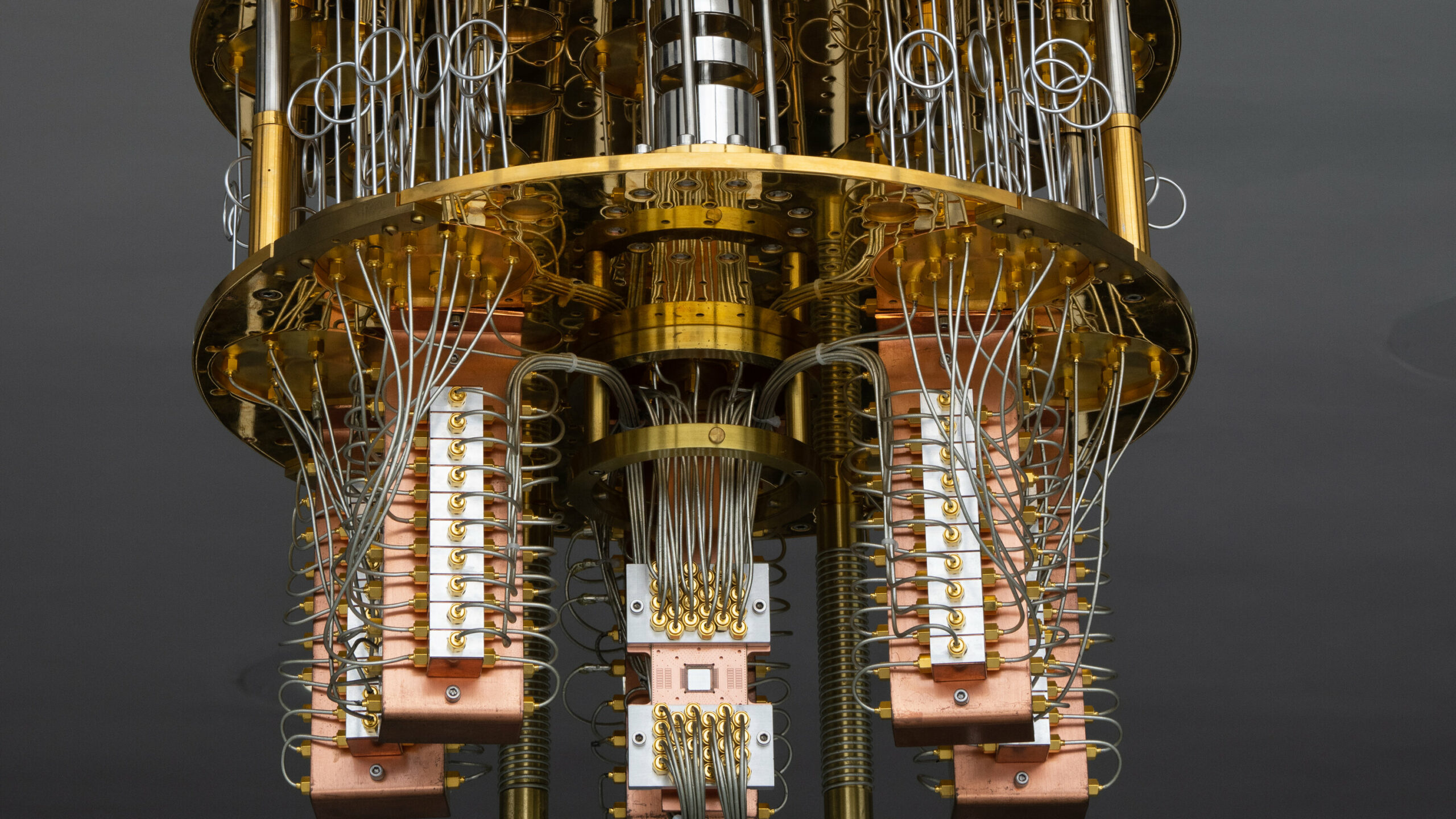
What is a quantum computer

Definition of Quantum Computing Quantum computing represents a groundbreaking shift in computational technology, transcending the capabilities of classical computers. It leverages the principles of quantum mechanics to process information in fundamentally new ways, promising to revolutionize how we handle complex calculations, data analysis, and problem-solving. Unlike traditional computing, which relies on binary bits, quantum computing […]


Read More →

What is green energy

Definition of Green Energy Green energy refers to power generated from natural, renewable sources that are replenished continuously by environmental processes. These energy forms serve as sustainable alternatives to fossil fuels, which are major contributors to pollution and climate change. By utilizing green energy, societies can reduce environmental harm while simultaneously promoting economic development and […]

Read More →

Can matter turn into photons?

Definition of Matter-to-Photon Conversion The concept of matter transforming directly into photons involves the conversion of physical mass into electromagnetic radiation. Photons are elementary particles that carry light and other forms of electromagnetic energy, while matter is composed of particles with rest mass such as protons, neutrons, and electrons. This transformation challenges classical distinctions between […]

Read More →

How do you become a radiologist after a physics degree?

Definition of Radiology and the Role of a Radiologist Radiology is a medical specialty focused on using various imaging technologies to diagnose and treat diseases. Radiologists are physicians trained to interpret medical images such as X-rays, magnetic resonance imaging (MRI), computed tomography (CT) scans, and ultrasounds. Their expertise is essential for accurate diagnosis and guiding […]

Read More →

What’s an MRI and what are its side effects?

Definition of Magnetic Resonance Imaging (MRI) Magnetic Resonance Imaging (MRI) is a sophisticated diagnostic imaging method that employs strong magnetic fields and radiofrequency waves to produce highly detailed images of the body’s internal structures. Unlike imaging techniques such as X-rays or computed tomography (CT) scans, MRI does not use ionizing radiation, making it a safer […]

Read More →

Is it possible to construct a computer without logic gates?

Definition of Logic Gates and Their Role in Computing Logic gates are fundamental components in computer architecture, acting as the essential building blocks for digital systems. These tiny electronic switches process binary inputs-typically represented as 0s and 1s-and produce corresponding binary outputs. Through the combination of these gates, computers perform complex calculations and data manipulations. […]

Read More →

As a computer scientist how much math do you actually use?

Definition The relationship between mathematics and computer science is deeply intertwined, with mathematics serving as a fundamental pillar supporting many aspects of computer science. This connection can be viewed as a complex fabric where each mathematical concept contributes to the structure and functionality of computer science disciplines. The question of how extensively mathematics is applied […]

Read More →

How does the Large Hadron Collider work?

Definition and Overview of the Large Hadron Collider The Large Hadron Collider (LHC) stands as the most extensive and powerful particle accelerator ever constructed. Located underground near Geneva, Switzerland, this colossal scientific instrument spans roughly 27 kilometers in circumference. It represents a global collaboration involving thousands of physicists, engineers, and researchers. The LHC’s fundamental purpose […]

Read More →