Are Particle Accelerators dangerous?

Definition of Particle Accelerators Particle accelerators are sophisticated devices engineered to propel charged particles, such as protons or electrons, to extremely high velocities, often approaching the speed of light. These machines enable scientists to conduct experiments that delve into the fundamental components and forces of the universe by inducing high-energy collisions between particles. Purpose: To […]

Read More →

How would reflection laws work at the atomic level?

Definition of Reflection at the Atomic Scale Reflection is a familiar optical phenomenon observed when light bounces off surfaces, such as mirrors, following the classical law that the angle of incidence equals the angle of reflection. At the atomic level, however, reflection involves more complex interactions between photons-the fundamental particles of light-and the electrons surrounding […]

Read More →

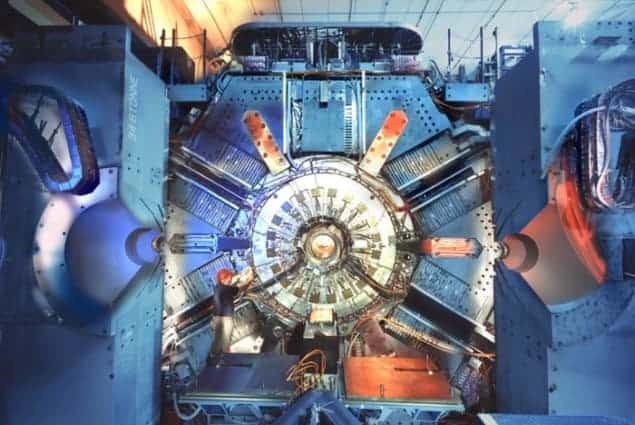
BaBar Makes History: First Direct Measurement of Time-Reversal Violation

Understanding Time-Reversal Symmetry in Particle Physics In the field of particle physics, symmetries play a crucial role in revealing the fundamental principles that govern the universe. Time-reversal symmetry, in particular, posits that the fundamental physical processes should remain unchanged if the direction of time is reversed. This concept implies that the laws of physics are […]

Read More →

What is the propagation of light through optic fiber due to?

Definition of Light Propagation in Optical Fibers Light propagation within optical fibers refers to the transmission of light signals through thin strands of glass or plastic, enabling high-speed data transfer and communication. This process is fundamental to modern telecommunications, medical imaging, and various industrial technologies. The phenomenon relies on guiding light efficiently over long distances […]

Read More →

Will quantum computers break your classical computer code?

Understanding Classical and Quantum Computing Computing technology has undergone a profound transformation with the advent of quantum computing. While classical computers form the backbone of today’s digital infrastructure, quantum computing introduces a fundamentally different approach to processing information. To appreciate the potential impact of quantum machines on classical systems, it is crucial to first understand […]

Read More →

Is it possible for life to arise in a 2-dimensional universe?

Understanding Dimensionality and Its Impact on Life The dimensions that define our universe fundamentally shape the nature of existence and the forms life can take. Exploring the concept of life within a two-dimensional (2D) universe challenges our conventional understanding of biology and the essential traits that constitute living organisms. This investigation delves into how physics, […]

Read More →

What are some cool uses of thin film materials?

Definition of Thin Film Materials Thin film materials consist of ultra-thin layers of substances, often only a few nanometers to micrometers thick, deposited onto a substrate. These films exhibit unique physical, chemical, and optical properties distinct from their bulk counterparts, making them invaluable in a wide range of technological applications. Composition: Thin films are typically […]

Read More →

Casimir Ratchets: Tiny Engines Powered by Vacuum Fluctuations

Definition of the Casimir Effect and Casimir Ratchets The Casimir effect is a fundamental phenomenon in quantum field theory, arising from the intrinsic fluctuations present in vacuum states. It manifests as an attractive force between two uncharged, conductive plates placed in close proximity within a vacuum. This force emerges due to the alteration of electromagnetic […]

Read More →

Are sub atomic particles energy? Or matter?

Definition of Subatomic Particles Subatomic particles are the fundamental building blocks of matter, existing at scales smaller than atoms. They include protons, neutrons, electrons, and more elementary particles such as quarks and photons. These particles form the basis of all physical substances and phenomena, bridging the concepts of matter and energy in modern physics. The […]

Read More →

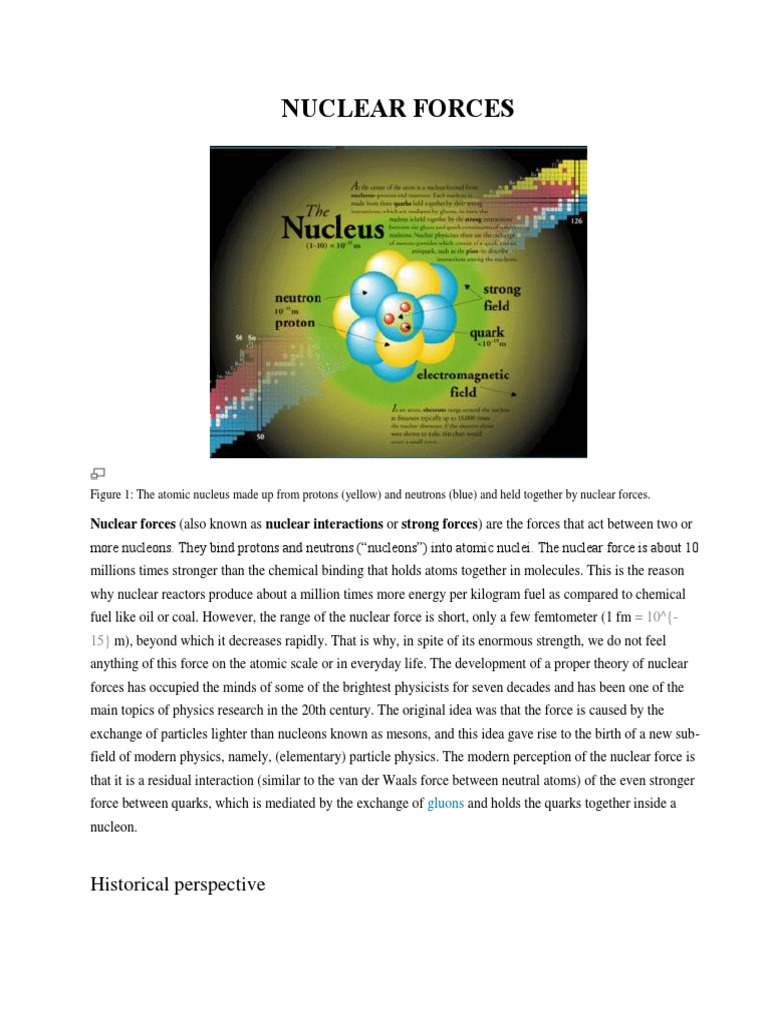
What are the origins of nuclear forces?

Definition of Nuclear Forces Nuclear forces are fundamental interactions that hold the components of an atomic nucleus together. These forces act as the binding agents that maintain the cohesion of protons and neutrons within the nucleus, overcoming the repulsive electromagnetic forces between positively charged protons. They are essential to the stability of matter and play […]

Read More →