
Short Answer
Understanding the Interaction Between Satellite Orbits and Earth’s Magnetic Field
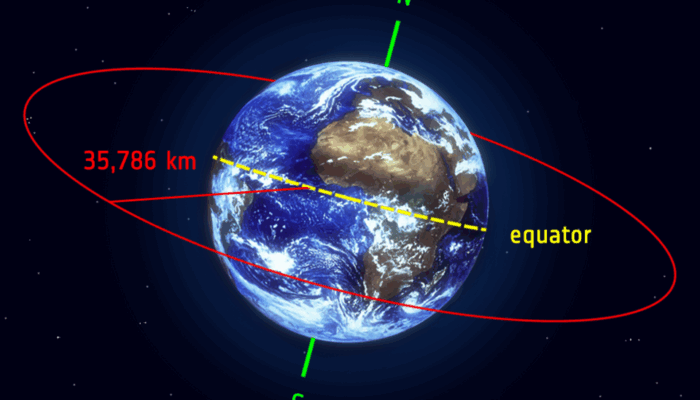
The complex interplay between orbiting satellites and the Earth’s magnetic environment has sparked considerable scientific curiosity. Recent hypotheses propose that the paths followed by artificial satellites might exert subtle influences on the planet’s geomagnetic field, prompting questions about the nature and extent of this relationship.
Fundamentals of Satellite Orbits and Earth’s Magnetism
To explore this potential connection, it is crucial to first grasp the basic principles governing satellite motion and the Earth’s magnetic field.
- Satellite Orbits:
Satellites maintain their trajectories due to the gravitational pull of Earth, balanced by centripetal forces and occasionally affected by atmospheric drag. These forces collectively determine the satellite’s path around the planet. - Earth’s Magnetic Field:
Generated by the movement of molten iron within Earth’s outer core, the magnetic field extends far into space, interacting with charged particles from the solar wind and shaping the magnetosphere.
Traditional Perspectives on Satellite-Magnetosphere Interactions
Historically, satellites were viewed as passive travelers within the Earth’s magnetic domain, merely influenced by the magnetic field without affecting it. However, advancements in satellite instrumentation and observational techniques have revealed a more intricate relationship, where satellites both experience and potentially influence geomagnetic conditions.
Mechanisms of Satellite Influence on Earth’s Magnetic Environment
Emerging research suggests several pathways through which satellites might impact the magnetosphere:
- Localized Plasma Disturbances:
As satellites move through the ionosphere-a plasma-rich layer-they can emit ions and interact with ambient charged particles, creating localized disruptions known as space weather effects. - Magnetospheric Boundary Modulation:
These disturbances may alter the configuration of magnetic field lines near the satellite’s orbit, generating ripples that propagate through the magnetosphere. - Electromagnetic Signatures:
The vast number of satellites, including inactive debris, each produce unique electromagnetic effects that collectively contribute to changes in the Earth’s magnetic environment.
Scale and Complexity: The Growing Satellite Population
By late 2023, the orbital population around Earth numbered in the thousands, encompassing both operational satellites and space debris. This proliferation complicates the magnetic landscape, as the cumulative electromagnetic influences from these objects may have measurable effects on geomagnetic phenomena and potentially on terrestrial climate systems.
Magnetospheric Storms and Satellite Interactions
Magnetospheric storms, triggered by intense solar activity, cause significant fluctuations in Earth’s magnetic field. A critical question arises: could satellites in orbit modify the interaction between solar wind particles and the magnetosphere, thereby influencing the frequency or intensity of these storms? Understanding this dynamic is essential for predicting space weather impacts.
Implications for Communication and Navigation Systems
Satellites underpin vital technologies such as GPS, telecommunications, and financial networks, all of which depend on the stability of Earth’s magnetic field. Fluctuations induced by satellite-magnetosphere interactions could affect the reliability and accuracy of these systems, highlighting the importance of monitoring and understanding these effects.
Interdisciplinary Approaches to Unraveling Satellite-Magnetosphere Dynamics
Addressing the complexities of satellite and magnetic field interactions demands collaboration across multiple scientific disciplines, including astrophysics, geophysics, and atmospheric science. Integrating diverse expertise facilitates a holistic understanding of these phenomena.
Leveraging Advanced Technologies for Data Analysis
The vast datasets generated by satellite observations require sophisticated analytical tools. Machine learning and artificial intelligence offer promising avenues for detecting subtle patterns and correlations within this data, potentially revealing new insights into how satellites influence Earth’s magnetism.
Ethical and Environmental Considerations
The possibility that human-made satellites could affect the planet’s magnetic environment introduces ethical questions about space exploration and its terrestrial consequences. As climate change and other global challenges intensify, the scientific community must carefully evaluate the broader impacts of expanding satellite networks.
Summary and Future Directions
The exploration of how satellite orbits might affect Earth’s magnetic field is an emerging field, rich with potential but fraught with uncertainties. Continued research, supported by interdisciplinary collaboration and advanced technologies, is essential to deepen our understanding and responsibly manage humanity’s growing presence in space.
FAQ
How do satellites interact with Earth's magnetic field?
Satellites can influence Earth's magnetic field through localized plasma disturbances and electromagnetic signatures as they travel through the ionosphere.
What are the implications of these interactions?
These interactions could affect communication systems and navigation technologies, highlighting the need for careful monitoring.




Leave a Reply