
Short Answer
Definition of the Anomalous Particle
Within the vast universe, where countless enigmas challenge human understanding, NASA has identified a particle that seemingly contradicts established physical laws. This particle, defying the Standard Model of particle physics, represents a groundbreaking anomaly that could reshape our comprehension of the cosmos. Far from being a mere scientific curiosity, this discovery marks a critical milestone in the fields of astrophysics and quantum mechanics.
Context and Significance in Modern Physics
The Standard Model has long served as the cornerstone framework explaining the fundamental forces and elementary particles that constitute matter. However, the newly detected particle exhibits characteristics that do not align with this model’s predictions, suggesting that our current theoretical constructs may be incomplete. This revelation prompts scientists to reconsider foundational principles about particle interactions and the universe’s underlying structure, potentially necessitating the development of extended or alternative theories.
Unique Properties and Theoretical Implications
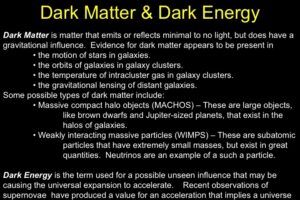
Initial studies indicate that this particle possesses an unusual combination of mass and spin, which defies classification as either a fermion or boson. This hybrid nature hints at a previously hypothesized but unobserved category of quantum entities. Such a particle could provide crucial insights into elusive phenomena such as dark matter or lend support to supersymmetry theories, which propose an expanded framework for understanding matter and forces. Furthermore, the particle might be linked to hidden spatial dimensions or exotic quantum fields, thereby offering a window into the universe’s concealed aspects.
Detection Techniques and Experimental Framework
NASA’s discovery was made possible through advanced detection technologies capable of isolating faint particle signatures amid cosmic background noise. The process involved meticulous calibration of sensors, sophisticated data analysis algorithms, and stringent statistical validation to distinguish authentic signals from false positives. These technical achievements underscore the precision and innovation required to identify such an extraordinary particle.
Human Element and Scientific Collaboration
Beyond the technical narrative, the discovery story is enriched by the human experiences of perseverance, collaboration, and intellectual curiosity. Interviews with principal investigators and research teams reveal the emotional journey encompassing skepticism, excitement, and eventual confirmation. This human dimension contextualizes the particle within the broader scientific endeavor, highlighting the collective effort behind groundbreaking research.
Educational and Interactive Resources
To make this complex subject accessible, various interactive tools such as infographics and simulations have been developed. These resources visually represent the particle’s properties, detection methods, and potential implications, enabling students and enthusiasts to engage deeply with the material. By translating intricate scientific data into intuitive formats, these multimedia approaches democratize knowledge and foster wider public interest.
Speculative and Future-Oriented Perspectives
The discovery has sparked imaginative discussions about its potential applications and impact on future technologies. Speculation ranges from harnessing the particle’s unique properties for revolutionary energy sources to enabling novel space travel techniques through manipulation of spacetime at quantum scales. While these ideas remain theoretical, they highlight the transformative possibilities that such fundamental discoveries can inspire.
Philosophical and Existential Reflections
This particle’s defiance of established physical laws also invites profound philosophical inquiry. It challenges our understanding of reality, the limits of scientific knowledge, and the coherence of existing paradigms. Questions arise about the nature of anomalies and their role in advancing science, encouraging a view of scientific progress as a dynamic and evolving narrative shaped by curiosity and critical examination.
Ongoing Research and Scientific Evolution
As investigations proceed, accumulating data will refine our knowledge of this particle’s characteristics and may either reinforce or challenge current interpretations. This iterative process exemplifies the scientific method, where each discovery contributes to an expanding mosaic of cosmic understanding. The path from initial detection to comprehensive comprehension is complex but embodies the excitement and rigor of scientific exploration.
Why This Discovery Matters
NASA’s identification of a particle that ostensibly should not exist transcends a mere anomaly; it symbolizes a beacon of scientific curiosity and potential. This finding compels a reevaluation of long-standing physical theories and invites a global audience to engage with the unfolding story of cosmic discovery. By opening new avenues for technical innovation, philosophical debate, and imaginative speculation, this breakthrough marks a pivotal chapter in humanity’s quest to unravel the universe’s deepest mysteries.
FAQ
What is the significance of NASA's discovery?
It challenges the established Standard Model and may lead to new theories in physics.
How was the particle detected?
Through advanced detection technologies and meticulous data analysis.




Leave a Reply