

Short Answer
Definition and Overview of Black Holes
Black holes are among the most mysterious and fascinating objects in the universe. Defined by their extraordinarily strong gravitational fields, they distort spacetime to such an extent that nothing, including light, can escape once it crosses a critical boundary known as the event horizon. These cosmic phenomena captivate scientists across multiple disciplines, from astronomy to theoretical physics, as they may hold vital clues about the universe’s fundamental nature, its origins, and its ultimate fate.
Classification and Characteristics of Black Holes
Understanding black holes begins with recognizing their diverse types, which differ significantly in mass, size, and formation processes:
- Stellar Black Holes:
These form from the gravitational collapse of massive stars and typically possess masses ranging from a few to several tens of times that of our Sun. - Intermediate-Mass Black Holes:
Less well understood, these black holes have masses between hundreds and thousands of solar masses and are often found in dense star clusters. - Supermassive Black Holes:
Residing at the centers of galaxies, including the Milky Way, these giants contain millions to billions of solar masses and play a crucial role in galactic dynamics and evolution.
Each category offers unique insights: stellar black holes provide natural laboratories for studying gravitational collapse, while supermassive black holes shed light on galaxy formation and cosmic structure.
The Event Horizon and the Information Paradox
The event horizon marks the boundary beyond which escape is impossible, making it a focal point for exploring the limits of physics. One of the most intriguing puzzles associated with black holes is the information paradox, which arises from conflicting principles in quantum mechanics and general relativity regarding the conservation of information.
Research in this area delves into advanced theoretical concepts such as Hawking radiation-a quantum effect that suggests black holes can emit particles and gradually evaporate. Other hypotheses, including the firewall paradox and holographic principles, attempt to reconcile these contradictions, pushing the boundaries of our understanding of space, time, and information.
Gravitational Waves: Unlocking New Cosmic Insights
The detection of gravitational waves has revolutionized astrophysics by providing a novel method to observe black holes. These ripples in spacetime, generated by cataclysmic events like black hole mergers, were first observed by the Laser Interferometer Gravitational-Wave Observatory (LIGO) and similar facilities.
Analyzing gravitational wave signals allows scientists to determine properties such as the masses and spins of merging black holes, as well as the environments in which these events occur. This breakthrough not only confirms predictions made by Einstein’s theory of general relativity but also opens new avenues for studying stellar evolution and the early universe.
Black Holes and Spacetime Dynamics
Black holes serve as natural testbeds for examining the fabric of spacetime under extreme conditions. Their intense gravitational fields cause phenomena such as frame dragging, where spacetime itself is twisted, and gravitational lensing, which bends light around massive objects.
These effects influence the behavior of matter and energy near black holes, including the formation of accretion disks composed of high-energy particles and the emission of relativistic jets that extend across vast cosmic distances. Studying these interactions enhances our understanding of matter under extreme gravity and informs broader cosmological theories.
Quantum Gravity and the Quest for Unification
Black holes highlight the tension between quantum mechanics and general relativity, two foundational yet currently incompatible frameworks in physics. Singularities within black holes-points of infinite density-challenge existing theories and motivate the search for a unified description known as quantum gravity.
Speculative models such as string theory, loop quantum gravity, and the Anti-de Sitter/Conformal Field Theory (AdS/CFT) correspondence aim to bridge this gap by providing a consistent mathematical framework for describing spacetime and matter at the smallest scales. Progress in this domain could illuminate the universe’s birth during the Big Bang and clarify the fate of information consumed by black holes.
Cosmological Significance of Black Holes
Far from being isolated curiosities, black holes are deeply intertwined with the universe’s large-scale structure and evolution. The growth of supermassive black holes appears closely linked to the formation and development of galaxies, suggesting a mutual influence between these massive objects and their cosmic environments.
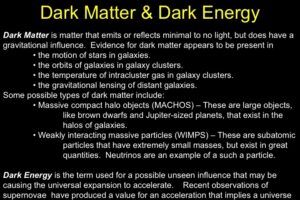
Moreover, some theories propose that primordial black holes, formed in the early universe shortly after the Big Bang, might constitute a portion of dark matter-the mysterious substance accounting for approximately 27% of the universe’s total mass-energy. This intersection of astrophysics, particle physics, and cosmology invites ongoing investigation into black holes’ role in shaping the cosmos.
Advancements in Observation and Future Research
Technological progress is pivotal in advancing black hole research. Next-generation observatories, such as the James Webb Space Telescope and the Event Horizon Telescope, are poised to deliver unprecedented images and data, potentially capturing the silhouette of event horizons and the immediate surroundings of black holes.
These instruments employ cutting-edge techniques including multispectral imaging, interferometry, and ultra-precise timing to probe black holes with greater clarity and depth. Such innovations promise to usher in a new era of discovery, enabling scientists to unravel many of the remaining mysteries surrounding these enigmatic objects.
Common Misconceptions About Black Holes
Black holes are cosmic vacuum cleaners that suck in everything around them.
Black holes exert gravitational pull like any other massive object; objects must cross the event horizon to be irretrievably captured.
Black holes are visible because they emit light.
Black holes themselves emit no light; they are detected by observing their effects on nearby matter and radiation.
Importance of Black Holes in Science and Technology
Black holes are central to advancing our understanding of fundamental physics, cosmology, and astrophysics. They provide unique environments to test theories of gravity, quantum mechanics, and the nature of spacetime. Insights gained from black hole research influence technologies such as gravitational wave detectors and high-resolution telescopes, which have broader applications in science and engineering. Ultimately, studying black holes enriches our comprehension of the universe’s origins, structure, and destiny, making them indispensable to modern scientific inquiry.




Leave a Reply