
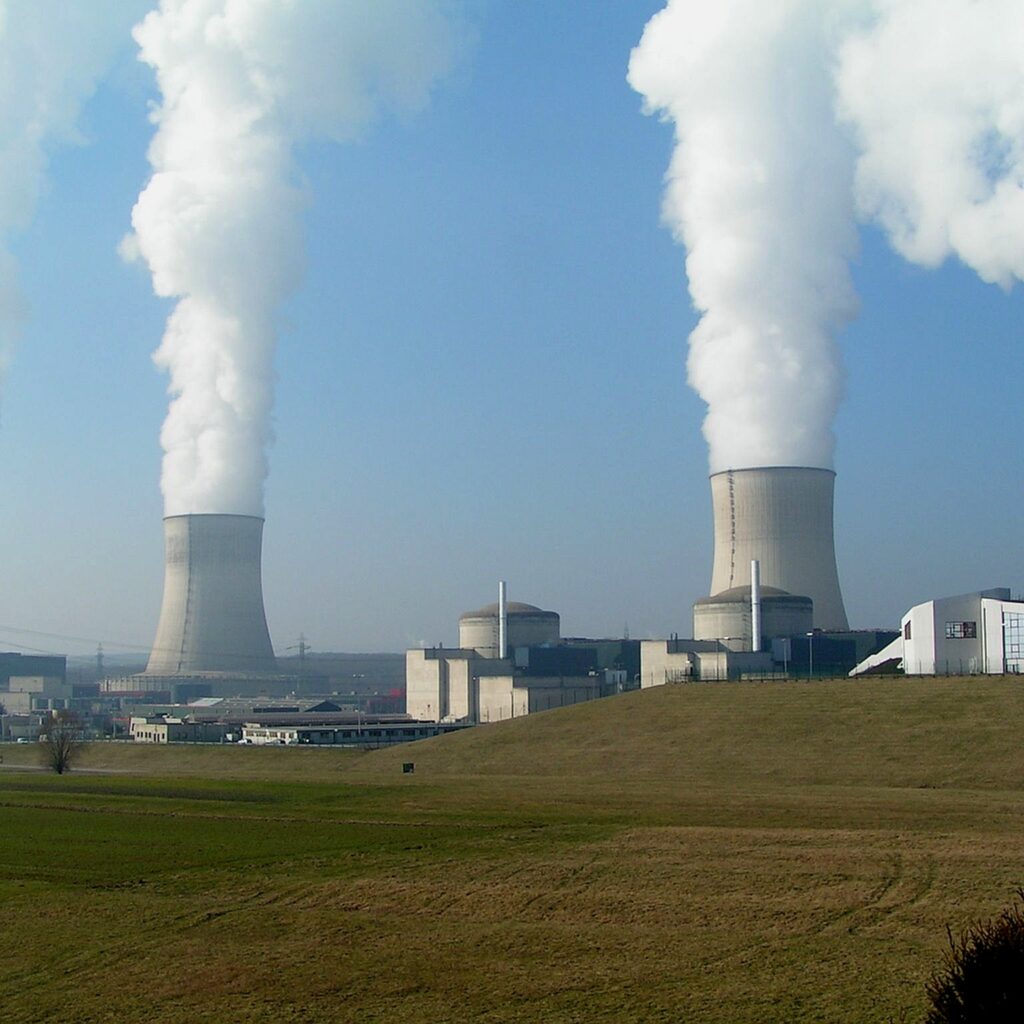
Short Answer
Definition of Nuclear Power
Nuclear power is the generation of energy through the process of nuclear reactions, primarily nuclear fission, where the nucleus of an atom splits into smaller parts, releasing a significant amount of energy. This energy can be harnessed to produce electricity, offering an alternative to conventional fossil fuel sources.
- Nuclear Fission:
The splitting of heavy atomic nuclei, such as uranium-235 or plutonium-239, into lighter nuclei, accompanied by the release of energy and neutrons. - Nuclear Reactor:
A facility or device designed to initiate and control sustained nuclear chain reactions for energy production. - Radioactivity:
The spontaneous emission of particles or electromagnetic radiation from unstable atomic nuclei.
Historical Development of Nuclear Power
Early Atomic Discoveries
The foundation of nuclear power lies in the late 19th and early 20th centuries, when scientists began unraveling the mysteries of atomic structure. In 1897, J.J. Thomson identified the electron, revealing that atoms were divisible and contained smaller charged particles. Subsequently, Ernest Rutherford proposed the nuclear model of the atom in 1911, describing a dense central nucleus surrounded by orbiting electrons. These discoveries shifted scientific understanding and set the stage for exploring atomic forces and stability.
Discovery of Radioactivity
The phenomenon of radioactivity was uncovered in 1896 by Henri Becquerel, who observed that uranium salts emitted radiation without external energy input. Building on this, Marie Curie isolated radioactive elements such as polonium and radium, deepening insight into radioactive decay processes and the immense energy stored within atomic nuclei.
Advances in Nuclear Physics and Fission
During the 1930s, the emergence of quantum mechanics provided new theoretical tools to analyze atomic interactions. Scientists like Enrico Fermi and Otto Hahn hypothesized that bombarding heavy nuclei with neutrons could trigger a chain reaction. This hypothesis was confirmed in 1938 when Hahn and Fritz Strassmann demonstrated neutron-induced fission of uranium-235, releasing vast amounts of energy. Lise Meitner and Otto Frisch later explained the theoretical underpinnings of this process, transforming nuclear fission from a scientific curiosity into a practical energy source.
Impact of World War II and the Manhattan Project
The outbreak of World War II accelerated nuclear research, driven by the urgent need for powerful weaponry. The Manhattan Project, a secret U.S. initiative, assembled leading physicists such as Robert Oppenheimer and Richard Feynman to develop atomic bombs. This project not only produced the first nuclear weapons but also pioneered the first controlled nuclear chain reaction with Chicago Pile-1 in 1942, marking the dawn of nuclear reactor technology.
Post-War Civilian Nuclear Energy Development
Following the war, attention shifted toward peaceful applications of nuclear technology. The Atomic Energy Act of 1946 in the United States established regulatory frameworks and promoted nuclear research for civilian use. This led to the construction of the first commercial nuclear power plant, the Shippingport Atomic Power Station, which began operation in 1958, demonstrating nuclear power’s potential to supply electricity on a large scale.
How Nuclear Power Works
Nuclear power plants generate electricity by harnessing the heat produced from nuclear fission reactions. When a heavy nucleus such as uranium-235 absorbs a neutron, it becomes unstable and splits into smaller nuclei, releasing energy in the form of heat and additional neutrons. These neutrons can then induce fission in other nuclei, creating a self-sustaining chain reaction.
The heat generated is used to produce steam, which drives turbines connected to electrical generators. Control rods within the reactor regulate the rate of fission by absorbing excess neutrons, ensuring the reaction remains stable and safe.
Mathematical Explanation and Formula
The energy released during nuclear fission can be estimated using Einstein’s mass-energy equivalence formula:
E = mc²
- E: Energy released (joules)
- m: Mass defect or difference in mass before and after fission (kilograms)
- c: Speed of light in vacuum (~3 × 10⁸ meters/second)
In nuclear fission, a small amount of mass is converted into a large amount of energy, making nuclear reactions extraordinarily efficient compared to chemical reactions.
Significant Nuclear Accidents and Their Impact
Despite its benefits, nuclear power has faced challenges related to safety. The Three Mile Island incident in 1979 and the Chernobyl disaster in 1986 highlighted the potential dangers of nuclear reactors. These events led to stricter safety regulations, improved reactor designs, and heightened public awareness about nuclear energy risks.
Modern Innovations and Future Prospects
Today, nuclear power is revisited as a critical component in combating climate change due to its low greenhouse gas emissions. Advances in reactor technology, such as Generation III and IV designs, focus on enhanced safety, efficiency, and waste reduction. Additionally, research into nuclear fusion-the process powering the sun-promises a future of abundant, clean energy, though practical fusion power remains under development.
Common Misconceptions About Nuclear Power
Nuclear power is inherently unsafe.
While accidents have occurred, modern reactors incorporate multiple safety systems and rigorous regulations to minimize risks.
Nuclear energy produces large amounts of greenhouse gases.
Nuclear power plants emit negligible greenhouse gases during operation, making them a low-carbon energy source.
Nuclear waste is impossible to manage.
Nuclear waste can be safely stored and managed through advanced containment methods and recycling technologies.
Importance of Nuclear Power in Contemporary Energy Systems
Nuclear power plays a vital role in global energy strategies by providing a reliable, large-scale source of low-carbon electricity. As the world seeks sustainable alternatives to fossil fuels, nuclear energy offers a means to reduce carbon emissions, enhance energy security, and support economic growth. Its continued development is essential for meeting future energy demands while addressing environmental challenges.
FAQ
What is nuclear power?
Nuclear power is the use of sustained nuclear fission reactions to generate heat, which is then converted into electricity.
How was nuclear fission discovered?
In 1938, Otto Hahn and Fritz Strassmann discovered that uranium nuclei split into lighter elements when bombarded with neutrons, releasing energy.
What role did the Manhattan Project play in nuclear power development?
The Manhattan Project was a top-secret World War II initiative that developed the first nuclear weapons and also created the first nuclear reactor to sustain controlled fission reactions.
What are the risks associated with nuclear power?
Nuclear power carries risks including accidents like Three Mile Island and Chernobyl, radioactive waste management challenges, and potential proliferation concerns.
Can nuclear power help combat climate change?
Yes, nuclear power produces low greenhouse gas emissions during operation and is considered a potential low-carbon energy source for reducing fossil fuel dependence.






Leave a Reply