

Short Answer
Definition of Magnetic Resonance Imaging (MRI)
Magnetic Resonance Imaging (MRI) is a non-invasive diagnostic technique that produces detailed images of the internal structures of the body. It utilizes powerful magnetic fields and radio waves to generate high-resolution images without the need for surgical intervention or exposure to ionizing radiation. MRI has become an indispensable tool in modern medicine for visualizing soft tissues, organs, and other anatomical features.
Core Components of an MRI System
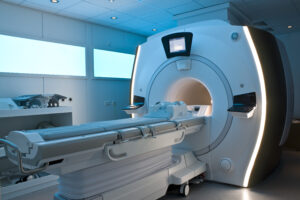
Understanding the fundamental parts of an MRI machine is essential for grasping how it functions. The main components include:
- Superconducting Magnet:
This is the heart of the MRI system, generating a strong, stable magnetic field typically ranging from 1.5 to 3.0 teslas in clinical settings. The magnetic field aligns hydrogen protons within the body, which is critical for image formation. - Radiofrequency (RF) Coils:
These coils transmit radiofrequency pulses into the body and receive the signals emitted by the protons as they relax back to their original alignment. - Gradient Coils:
Responsible for spatial encoding, gradient coils create variable magnetic fields that allow the MRI system to localize signals in three dimensions, enabling the construction of detailed images. - Computer System:
This processes the raw data collected from the coils, applying complex algorithms to reconstruct images for clinical interpretation.
Patient Preparation and Safety Screening
Ensuring patient safety and comfort is a critical aspect of MRI operation. Prior to scanning, patients undergo a thorough screening to identify any contraindications such as metallic implants, pacemakers, or other ferromagnetic devices that could pose serious risks within the magnetic environment.
Once cleared, patients receive a comprehensive explanation of the procedure, including the expected duration, the nature of the loud noises produced by the gradient coils, and instructions to remain still. Proper positioning using cushions and supports is employed to maximize comfort and minimize movement, which is vital for obtaining clear images.
Step-by-Step MRI Operational Procedures
Operating an MRI machine involves a series of carefully coordinated steps to ensure optimal image quality and patient safety:
- System Calibration:
Before scanning, the MRI machine is calibrated to manufacturer specifications. This includes verifying the magnetic field strength and the functionality of gradient coils to ensure accurate imaging. - Patient Positioning:
The patient is placed on the scanning table with the target anatomy centered within the magnet bore. Straps or supports may be used to prevent involuntary movement during the scan. - Parameter Configuration:
The technologist sets imaging parameters such as repetition time (TR), echo time (TE), and slice thickness. These settings influence image contrast, resolution, and overall quality. - Continuous Monitoring:
Throughout the scan, the patient’s condition is closely observed via intercom and visual systems. This allows immediate response to any discomfort or emergencies.
Mechanism of MRI Signal Generation and Image Formation
The MRI process relies on the interaction between the body’s hydrogen protons and the magnetic field. When exposed to the magnetic field, protons align with it. Radiofrequency pulses then perturb this alignment, causing protons to emit signals as they return to equilibrium. These signals vary depending on tissue characteristics such as water content and molecular environment.
The emitted signals are captured by the RF coils and digitized. A Fourier transform is applied to convert the frequency and phase data into spatially resolved images. Advanced post-processing techniques enhance image clarity, reduce noise, and enable three-dimensional reconstructions, facilitating detailed anatomical visualization.
Mathematical Principles Underlying MRI
The core mathematical operation in MRI is the Fourier transform, which translates raw signal data from the time domain into spatial frequency domain, enabling image reconstruction.
Key variables include:
- TR (Repetition Time): The time interval between successive pulse sequences applied to the same slice.
- TE (Echo Time): The time between the delivery of the RF pulse and the peak of the signal received.
- B0: The strength of the main magnetic field.
The signal intensity (S) can be modeled as a function of these parameters and tissue-specific relaxation times (T1 and T2), which influence contrast:
S = f(TR, TE, T1, T2, B0)
Practical Applications of MRI in Medicine
MRI is widely used across various medical specialties due to its ability to provide detailed images of soft tissues. Examples include:
- Neurology:
Imaging brain structures to diagnose tumors, stroke, and neurodegenerative diseases. - Orthopedics:
Visualizing joints, cartilage, and soft tissue injuries. - Cardiology:
Assessing heart anatomy and function without invasive catheterization. - Oncology:
Detecting and characterizing tumors, guiding biopsy, and monitoring treatment response.
Common Misunderstandings About MRI
- Misconception: MRI uses harmful ionizing radiation.
Correction: MRI employs magnetic fields and radio waves, which do not involve ionizing radiation, making it safer than X-rays or CT scans. - Misconception: All metal objects are unsafe in MRI.
Correction: Only ferromagnetic metals pose risks; some implants made from non-ferromagnetic materials are MRI-compatible.
Importance of MRI in Modern Healthcare
MRI technology plays a pivotal role in advancing medical diagnostics by providing unparalleled soft tissue contrast and detailed anatomical information. Its non-invasive nature and versatility make it invaluable for early disease detection, treatment planning, and monitoring therapeutic outcomes. As MRI technology continues to evolve, it promises to expand its clinical applications, enhancing patient care and contributing to medical research breakthroughs.
FAQ
What is the role of the magnet in an MRI machine?
The magnet creates a strong and uniform magnetic field that aligns hydrogen nuclei in the body, which is essential for MRI signal generation.
Why is patient screening important before an MRI scan?
Screening identifies contraindications such as ferromagnetic implants that could pose serious safety risks during the scan.
How does the MRI technologist ensure image quality?
By calibrating the machine, positioning the patient correctly, setting appropriate imaging parameters, and monitoring the patient throughout the scan.
What safety protocols protect against projectile accidents in MRI?
Strict zone management and screening procedures prevent ferromagnetic objects from entering the magnetic field area.
How are MRI images enhanced during post-processing?
Through algorithms that improve contrast, reduce noise, and enable 3D visualization to aid clinical diagnosis.




Leave a Reply