
Short Answer
Definition of the Moon’s Gravitational Influence on Earth
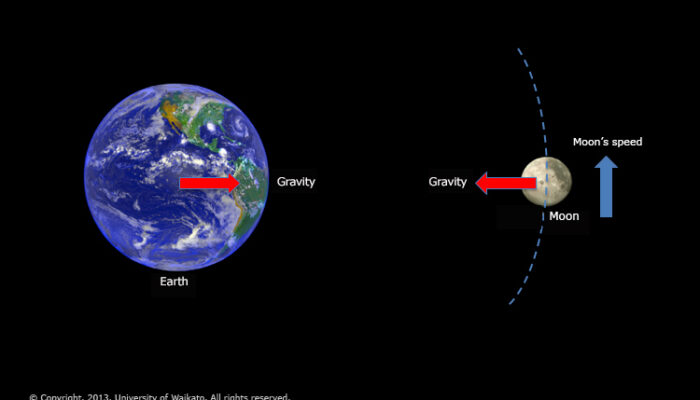
The gravitational interaction between the Earth and its natural satellite, the Moon, is a fundamental cosmic relationship that profoundly affects various terrestrial phenomena. This gravitational force governs not only the visible ocean tides but also subtle geological, atmospheric, and rotational dynamics of our planet. The Moon’s pull acts as a continuous, invisible force shaping Earth’s environment and biological rhythms.
Mechanisms of Lunar Gravitational Effects
The Moon’s gravity exerts a multifaceted influence on Earth through several interconnected processes:
- Ocean Tides:
As the Moon revolves around Earth, its gravitational attraction causes the oceans to bulge toward it, creating high tides on the side facing the Moon. Simultaneously, inertia generates a corresponding bulge on the opposite side, resulting in two high tides approximately every 12 hours, with low tides occurring in between. - Tidal Braking:
The Moon’s gravitational pull gradually slows Earth’s rotation, a phenomenon known as tidal braking. This deceleration extends the length of a day by roughly 1.7 milliseconds per century, a subtle change with significant long-term implications. - Axial Tilt Stabilization:
The Moon helps maintain Earth’s axial tilt at about 23.5 degrees, ensuring relatively stable seasonal cycles. Without this stabilizing effect, Earth’s tilt could fluctuate dramatically, causing extreme climate variations. - Earth Tides:
Beyond ocean tides, the Moon’s gravity causes the solid Earth’s crust to flex by several centimeters, influencing geological activity such as fault movements and volcanic behavior. - Atmospheric Tides:
The Moon’s gravitational pull also affects the atmosphere, inducing subtle variations in air pressure and density that interact with solar-driven weather patterns, influencing wind, temperature, and ionospheric plasma distribution.
Mathematical Explanation of Lunar Tidal Forces
The tidal force exerted by the Moon on Earth can be described by the differential gravitational force formula:
F_tidal ∝ (G * M_moon * R_earth) / d^3
- F_tidal: Tidal force exerted on Earth
- G: Universal gravitational constant
- M_moon: Mass of the Moon
- R_earth: Radius of Earth
- d: Distance between Earth and Moon
This inverse-cube relationship explains why the Moon’s gravitational pull causes differential forces across Earth’s diameter, leading to tidal bulges.
Real-World Impacts of the Moon’s Gravity
The Moon’s gravitational influence manifests in numerous tangible ways:
- Coastal Ecosystems:
The cyclical rise and fall of tides regulate nutrient flows and habitats, supporting diverse marine life and migratory patterns. - Length of Day:
Over geological timescales, the gradual slowing of Earth’s rotation affects climate patterns and biological rhythms. - Seasonal Stability:
The Moon’s role in stabilizing Earth’s tilt ensures predictable seasonal changes vital for agriculture and ecosystem balance. - Geological Activity:
Earth tides contribute to subtle crustal deformations that may influence seismic and volcanic events. - Atmospheric Dynamics:
Lunar-induced atmospheric tides add complexity to weather systems, affecting wind and temperature variations.
Common Misunderstandings About Lunar Gravity
- Misconception: The Moon’s gravity only affects ocean tides.
Correction: While ocean tides are the most visible effect, lunar gravity also influences Earth’s rotation, axial tilt, solid crust, and atmosphere. - Misconception: The Moon’s gravitational effects are constant and unchanging.
Correction: The strength and impact of lunar gravity vary with the Moon’s orbital distance and position, causing fluctuations in tidal forces and related phenomena. - Misconception: Lunar gravity directly controls human behavior.
Correction: Although cultural beliefs link lunar phases to human cycles, scientific evidence for direct gravitational effects on mood or reproduction remains inconclusive.
Significance of the Earth-Moon Gravitational Relationship
The gravitational bond between Earth and the Moon is crucial for maintaining the planet’s environmental stability and biological viability. By regulating tides, moderating Earth’s rotation, and stabilizing the axial tilt, the Moon creates conditions conducive to life’s evolution and sustainability. This unique partnership distinguishes Earth within the solar system, highlighting the importance of celestial mechanics in shaping planetary habitability.
Unique Characteristics of the Earth-Moon System
Compared to other terrestrial planets, Earth’s Moon is exceptionally large relative to its host planet, with a diameter exceeding one-quarter that of Earth. This size ratio results in a complex gravitational interplay that profoundly influences Earth’s physical and biological development. Additionally, the Earth’s gravity has tidally locked the Moon, causing it to always present the same face to our planet, a phenomenon that exemplifies the long-term equilibrium achieved through their mutual gravitational interaction.
Conclusion: The Enduring Cosmic Dance
The Moon’s gravitational influence is a subtle yet powerful force that continuously shapes Earth’s natural rhythms and geological processes. From the ebb and flow of tides to the stabilization of climate and the modulation of atmospheric conditions, this celestial relationship is a dynamic and enduring partnership. The Earth-Moon gravitational connection not only sculpts the physical world but also enriches human culture and understanding, reminding us of our place within the vast cosmic ballet.
FAQ
How does the Moon's gravity affect ocean tides?
The Moon's gravitational pull causes the oceans to bulge, creating high tides on the side facing the Moon and a corresponding bulge on the opposite side.
What is tidal braking?
Tidal braking is the gradual slowing of Earth's rotation due to the Moon's gravitational pull, extending the length of a day over centuries.
Does the Moon's gravity affect the weather?
Yes, the Moon's gravitational influence can induce atmospheric tides, affecting weather patterns.
Leave a Reply