

Short Answer
Definition of Radiologic Physics
Radiologic physics is the scientific discipline that explores the interaction between radiation and matter, particularly as it applies to medical imaging. It combines principles from physics and technology to transform invisible energy forms into visible diagnostic images. This field is fundamental for understanding how various imaging modalities function and how they can be optimized for accurate diagnosis and patient safety.
Fundamental Concepts in Radiologic Physics
Atomic and Molecular Foundations
At the heart of radiologic physics lies a deep understanding of atoms and molecules, the basic units of all matter, including human tissues. The atomic structure-comprising electrons, protons, and neutrons-plays a crucial role in how radiation interacts with biological material. These interactions determine the quality of the images produced and influence safety protocols for patients and healthcare workers alike.
Electromagnetic Radiation and the X-Ray Spectrum
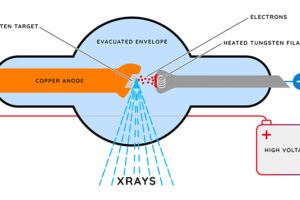
Electromagnetic radiation spans a broad spectrum, from low-energy radio waves to high-energy gamma rays. In radiology, the focus is primarily on X-rays, a form of high-frequency electromagnetic radiation. X-rays are generated when accelerated electrons collide with a metal target, producing photons that penetrate the body to create diagnostic images. Understanding the production and manipulation of these photons is essential for mastering radiographic techniques.
Mechanisms of Radiation Interaction with Matter
When X-rays pass through the human body, they interact with tissues in complex ways, influenced by tissue density and composition. Two primary phenomena govern these interactions:
- Photoelectric Effect:
This process involves the complete absorption of an X-ray photon by an atom, resulting in the ejection of an electron. It is more likely to occur in denser tissues, contributing to image contrast. - Compton Scattering:
Here, X-ray photons are deflected by electrons, losing energy and changing direction. This scattering affects image clarity and contributes to radiation dose outside the targeted area.
Proficiency in these concepts enables radiologists to interpret images accurately and distinguish between healthy and pathological tissues.
Wave-Particle Duality and Its Impact on Imaging
Radiation exhibits both wave-like and particle-like characteristics, a duality that influences image formation. Wave properties such as interference and diffraction can affect image resolution and sharpness. Mathematical tools like wave functions and Fourier transforms are employed to analyze and enhance imaging techniques, ensuring optimal diagnostic performance.
Image Formation and Digital Processing
Modern radiology heavily relies on digital imaging, where raw data is converted into visual representations through complex algorithms. Key principles include:
- Sampling Theory:
The process of converting continuous signals into discrete data points for digital representation. - Quantization:
Assigning numerical values to sampled data to create pixels that form the image.
Each pixel encodes vital information about tissue characteristics and radiation dose, balancing image quality with patient safety considerations.
Radiation Dose and Safety Principles
Ensuring minimal radiation exposure while maintaining image quality is a cornerstone of radiologic practice. The ALARA principle-“As Low As Reasonably Achievable”-guides dose management. Key dosimetric concepts include:
- Absorbed Dose:
The amount of radiation energy deposited per unit mass of tissue. - Effective Dose:
A measure that accounts for the type of radiation and sensitivity of tissues exposed, reflecting overall risk. - Dose Equivalence:
A standardized measure to compare different types of radiation exposure.
Mastery of these concepts is vital for protecting patients and healthcare professionals from unnecessary radiation risks.
Advanced Imaging Modalities and Their Physical Principles
Emerging technologies in medical imaging extend beyond traditional X-rays, incorporating diverse physical phenomena:
- Computed Tomography (CT):
Utilizes X-ray attenuation and cross-sectional imaging to produce detailed 3D representations of internal structures. - Magnetic Resonance Imaging (MRI):
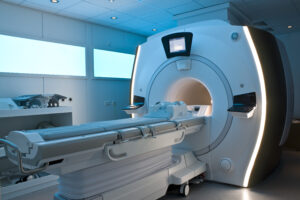
Employs strong magnetic fields and radiofrequency waves to generate images based on nuclear magnetic resonance, offering superior soft tissue contrast without ionizing radiation.
Understanding the physics behind these modalities allows radiologists to leverage their capabilities effectively and stay current with technological advancements.
Importance of Physics in Radiology
The integration of physics into radiology is indispensable for advancing medical diagnostics and treatment. A solid grasp of physical principles empowers practitioners to optimize imaging techniques, enhance patient safety, and interpret complex images with confidence. As medical imaging technology evolves, ongoing education in radiologic physics remains essential for delivering high-quality healthcare and improving patient outcomes.
FAQ
What is the role of physics in radiology?
Physics is crucial in radiology as it helps understand how radiation interacts with matter, enabling the optimization of imaging techniques and ensuring patient safety.
What are the key concepts in radiologic physics?
Key concepts include atomic and molecular foundations, electromagnetic radiation, radiation interaction with matter, wave-particle duality, image formation, and radiation safety principles.



Leave a Reply