
Short Answer
Definition of the Sun’s Gravitational Influence
The Sun, a colossal glowing sphere at the center of our solar system, serves as the fundamental force behind the motion of celestial bodies and the sustenance of life on Earth. It is not only a prodigious source of energy but also the dominant gravitational anchor that holds planets, comets, and asteroids in their precise orbits. Understanding how much of the Sun’s gravity we experience on Earth reveals the subtle yet profound role this force plays in our cosmic environment.
Fundamentals of Gravitational Force
Gravity is the invisible force that binds the universe together, extending infinitely but diminishing with distance according to Newton’s law of universal gravitation. The Sun’s immense mass-over 330,000 times that of Earth-makes its gravitational pull the primary driver of the solar system’s complex orbital dynamics. Despite its vastness, the gravitational force exerted by the Sun on Earth is gentle and constant, often overshadowed by more dramatic solar phenomena like flares or coronal mass ejections.
Quantifying the Sun’s Gravitational Pull on Earth
The gravitational attraction between two objects follows the inverse-square law, meaning the force decreases with the square of the distance separating them. Earth orbits the Sun at an average distance of about 93 million miles (150 million kilometers). At this distance, the Sun’s gravity applies roughly 0.006 Newtons of force per kilogram of Earth’s mass. Although this force seems minuscule, it is precisely this pull that governs Earth’s orbital path, maintaining a delicate balance in the solar system.
Comparison with Earth’s Gravity
On Earth’s surface, the gravity we experience daily is approximately 9.8 meters per second squared, vastly stronger than the Sun’s direct gravitational pull at ground level. This disparity explains why we do not feel the Sun’s gravity as a direct tug or push. Instead, Earth’s gravity dominates our immediate environment, while the Sun’s gravitational effect is more apparent in the overall orbital motion of the planet, acting as the centripetal force that keeps Earth bound in its path around the Sun.
Gravitational Gradients and Tidal Effects
Gravitational gradients, or tidal forces, arise because the Sun’s gravitational pull is slightly stronger on the side of Earth facing it compared to the opposite side. These subtle differences contribute to phenomena such as ocean tides, although the Moon’s gravity has a more pronounced effect. This gradient highlights how the Sun’s gravity influences Earth’s geophysical processes, reinforcing our connection to the solar gravitational field even if the force is not directly perceptible.
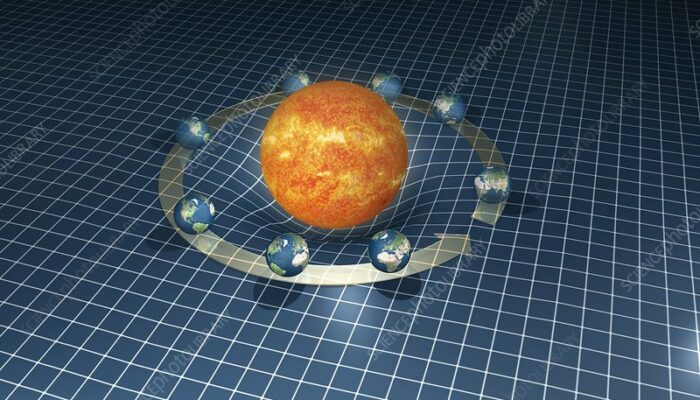
Concept of the Sun’s Gravity Well
Rather than viewing gravity as a simple force pulling objects, it can be understood as a curvature of space-time. The Sun creates a deep “well” in this fabric, and Earth, along with other planets, moves within this depression. Our orbit is essentially a continuous free-fall around the Sun, a dynamic interaction shaped by the contours of this gravitational well. This perspective shifts the understanding of gravity from a direct force to a state of motion governed by the geometry of space-time.
Extent of the Sun’s Gravitational Domain
The Sun’s gravitational reach extends far beyond Earth’s orbit, forming the heliosphere-a vast bubble dominated by the solar wind that shields our planet from cosmic radiation and interstellar particles. This gravitational influence directs the paths of comets and asteroids and maintains the structural integrity of the solar system. The boundary where the Sun’s gravity yields to that of neighboring stars marks the edge of our cosmic neighborhood, illustrating the vast scale of solar gravitational dominance.
Human Perception of Gravitational Forces
Humans typically associate gravity with tangible sensations, such as the weight felt on our feet or the effort required to lift objects. The Sun’s gravity, however, acts uniformly across Earth, producing no localized tug that we can detect. This uniformity means that the gravitational influence we physically sense differs fundamentally from the gravitational forces that govern planetary orbits and cosmic structures.
Impact of Solar Gravity on Earth’s Environment
Beyond orbital mechanics, the Sun’s gravity plays a crucial role in shaping Earth’s seasons, climate patterns, and biological cycles. The steady orbit maintained by solar gravity influences Earth’s axial tilt and precession, which are vital for the planet’s environmental stability and the flourishing of life. Thus, the subtlety of the Sun’s gravitational pull belies its essential role in sustaining the conditions necessary for life on Earth.
Summary: The Invisible Force Governing Our Planet
Although the Sun’s gravitational pull is not directly felt as a physical sensation on Earth’s surface, it remains the fundamental force orchestrating the cosmic dance that sustains our planet. We are bound to a massive gravitational anchor whose influence is experienced through the stability of Earth’s orbit and the subtle shaping of our planet’s physical and climatic systems. Recognizing this quiet yet powerful force invites a deeper appreciation of our place within the vast gravitational symphony of the universe.
Leave a Reply