

Short Answer
Definition of Magnetic Resonance Imaging (MRI)
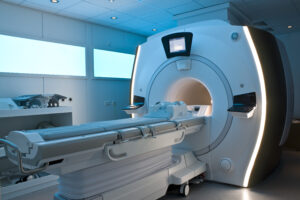
Magnetic Resonance Imaging (MRI) is a non-invasive diagnostic technique widely used in contemporary medicine to produce detailed images of the internal structures of the body. It leverages magnetic fields and radio waves to generate high-resolution visuals, enabling healthcare professionals to detect and evaluate a broad spectrum of medical conditions without exposure to ionizing radiation.
Fundamental Principles Behind MRI
The operation of MRI is grounded in the concept of nuclear magnetic resonance (NMR), a physical phenomenon involving atomic nuclei in a magnetic field. The human body contains a large number of hydrogen atoms, primarily within water molecules, which play a pivotal role in MRI imaging.
- Proton Alignment:
When placed in a strong external magnetic field, the protons in hydrogen nuclei align themselves parallel or antiparallel to the field, similar to how a compass needle aligns with Earth’s magnetic field. - Magnetic Field Strength:
The intensity of the magnetic field, measured in Tesla (T), directly influences image clarity. Higher magnetic field strengths improve the signal-to-noise ratio, resulting in sharper and more detailed images.
Mechanism of MRI Signal Generation
After the protons align with the magnetic field, the MRI system emits radiofrequency (RF) pulses that temporarily disrupt this alignment. This disturbance causes the protons to enter a state of resonance, absorbing energy from the RF pulses.
- Resonance and Relaxation:
Once the RF pulse stops, the protons relax back to their original alignment, releasing the absorbed energy as signals. - Signal Detection and Image Formation:
These emitted signals are captured by receiver coils and processed through complex algorithms to reconstruct detailed images of the body’s internal anatomy.
Origin of MRI Scanner Noise
The characteristic loud sounds produced during an MRI scan stem from the physical behavior of the machine’s components, particularly the gradient coils.
- Gradient Coil Operation:
These coils rapidly switch on and off to spatially encode the MRI signals, causing them to vibrate. - Vibrations and Sound Waves:
The rapid switching induces mechanical vibrations in the coils and surrounding structures, which generate audible noise ranging from knocking to banging sounds. - Influencing Factors:
The volume and pitch of the noise depend on the magnetic field strength and the specific imaging sequences used, with higher field strengths and certain protocols producing louder sounds.
Patient Experience and Noise Mitigation Strategies
The intense noise during MRI scans can be distressing for patients, especially given the confined space of the scanner.
- Hearing Protection:
Facilities commonly provide earplugs or headphones to reduce noise exposure. - Music and Relaxation:
Some centers offer music therapy, allowing patients to listen to calming music during the procedure to alleviate anxiety. - Emerging Technologies:
Advances such as silent MRI techniques aim to minimize acoustic noise by optimizing pulse sequences and hardware design.
Clinical Significance of MRI Imaging
MRI is invaluable in medical diagnostics due to its ability to visualize soft tissues with exceptional clarity, which is crucial for identifying various health issues.
- Soft Tissue Visualization:
MRI excels at imaging muscles, ligaments, nerves, and organs, providing detailed contrast that other imaging modalities may lack. - Neurological and Musculoskeletal Applications:
It is extensively used to diagnose brain disorders, spinal cord injuries, joint abnormalities, and tumors. - Safety Advantages:
Unlike X-rays or CT scans, MRI does not use ionizing radiation, making it safer for repeated use.
Common Misunderstandings About MRI
- Misconception: MRI scans expose patients to harmful radiation.
Correction: MRI uses magnetic fields and radio waves, which do not involve ionizing radiation, making it a safer imaging option. - Misconception: The loud noises are a sign of malfunction.
Correction: The sounds are a normal byproduct of the gradient coils’ operation and indicate the scanner is functioning correctly.
Future Directions and Technological Innovations
Ongoing research aims to enhance MRI technology by improving patient comfort and image quality simultaneously.
- Silent MRI:
New pulse sequences and hardware modifications are being developed to significantly reduce acoustic noise during scans. - Improved Patient Experience:
Innovations include wider bore designs and faster imaging techniques to reduce scan times and claustrophobia. - Enhanced Imaging Capabilities:
Higher field strengths and advanced contrast agents continue to expand MRI’s diagnostic potential.
Importance of MRI in Modern Medicine
MRI stands as a cornerstone in diagnostic imaging due to its unparalleled ability to provide detailed, non-invasive insights into the human body. Its role is critical in early disease detection, treatment planning, and monitoring therapeutic outcomes, thereby significantly impacting patient care and medical research.
FAQ
Why is an MRI scan so loud?
The loud noise during an MRI scan is caused by the rapid switching of gradient coils, which produces mechanical vibrations and audible sounds.
Is an MRI scan safe in terms of radiation exposure?
Yes, MRI uses magnetic fields and radio waves, not ionizing radiation, making it safe for repeated use.
What causes the magnetic resonance in MRI?
Magnetic resonance occurs when hydrogen protons in the body, aligned by a strong magnetic field, absorb and then release energy from radiofrequency pulses.
How can patients reduce discomfort from MRI noise?
Patients are typically provided earplugs or headphones, and some centers offer music therapy or use silent MRI technology.



Leave a Reply