
Short Answer
Understanding Quantum AI Computing
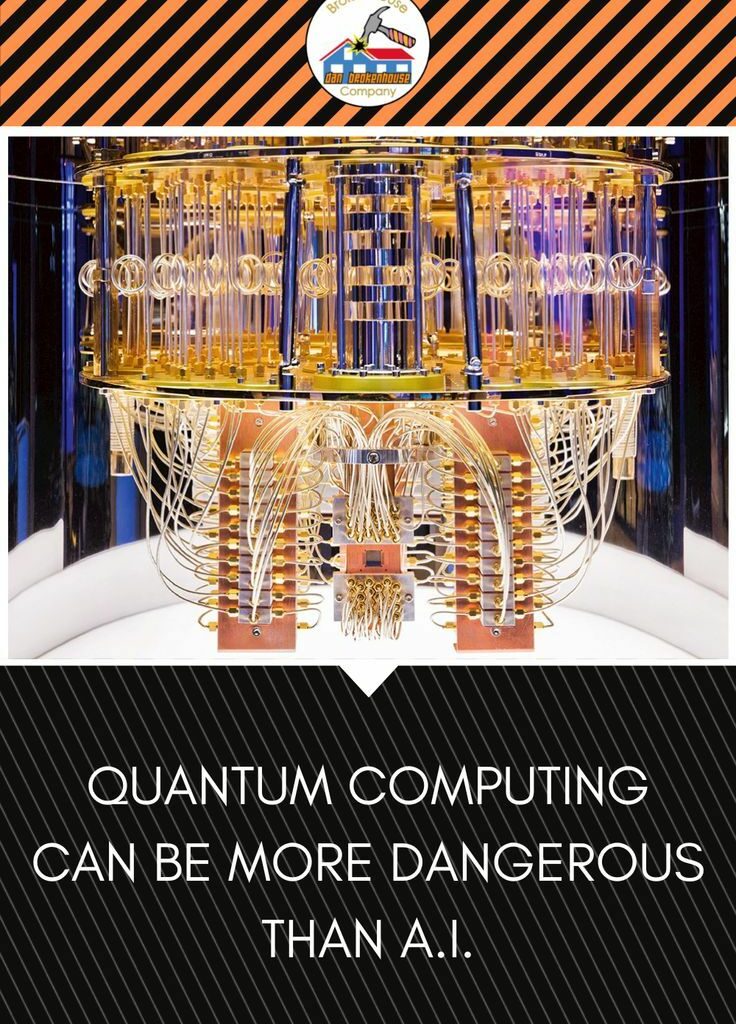
Quantum AI computing represents the intersection of two groundbreaking fields: artificial intelligence (AI) and quantum computing. This fusion opens a new realm of possibilities, offering transformative advancements while simultaneously presenting significant risks. The metaphor of Pandora’s Box aptly captures this duality-within this emerging technology lies both extraordinary innovation and potential hazards that demand careful consideration.
Definition and Fundamental Concepts
At its core, quantum AI computing harnesses the principles of quantum mechanics to enhance AI capabilities beyond classical limits. Energy and information, fundamental elements of our universe, find a unique parallel in this technology. Quantum computers utilize quantum bits, or qubits, which differ from classical bits by existing in multiple states simultaneously through superposition and by being interconnected via entanglement, regardless of physical distance.
- Qubits:
The basic units of quantum information that can represent both 0 and 1 simultaneously, enabling parallel computation. - Superposition:
A quantum phenomenon allowing qubits to be in multiple states at once, vastly increasing computational possibilities. - Entanglement:
A unique quantum connection between qubits that allows instantaneous state correlation, enhancing processing power.
Mechanisms Behind Quantum AI
Quantum AI leverages quantum algorithms to process and analyze data at speeds unattainable by classical computers. This capability allows machines to learn, adapt, and evolve rapidly, potentially surpassing human cognitive functions. The integration of quantum computing with AI algorithms accelerates problem-solving, optimization, and pattern recognition, which are essential for advanced machine learning and decision-making processes.
Mathematical Foundations and Algorithms
Quantum AI relies on specialized algorithms that exploit quantum mechanics to solve complex problems efficiently. One notable example is Shor’s algorithm, which can factor large integers exponentially faster than classical algorithms, threatening the security of widely used cryptographic systems.
- Shor’s Algorithm:
An algorithm that factors integers in polynomial time, undermining classical encryption methods based on integer factorization. - Grover’s Algorithm:
Provides a quadratic speedup for unstructured search problems, enhancing data retrieval and optimization tasks.
Implications for Security and Privacy
The advent of quantum AI computing poses significant challenges to current cybersecurity frameworks. Classical cryptographic techniques, which rely on the computational difficulty of certain mathematical problems, become vulnerable in the face of quantum algorithms. This vulnerability extends beyond data breaches, threatening the confidentiality of personal, financial, and governmental information.
- Encryption Vulnerability:
Quantum algorithms can break widely used encryption schemes, such as RSA and ECC, compromising data security. - Potential Consequences:
Unauthorized access to sensitive information could destabilize financial systems, expose state secrets, and erode individual privacy.
Geopolitical and Ethical Considerations
The race to develop and control quantum AI technology is likely to reshape global power structures. Entities that achieve early mastery may gain significant strategic advantages, potentially triggering a new form of technological arms race reminiscent of nuclear proliferation. This shift raises profound ethical questions about power distribution, inequality, and governance.
- Power Imbalance:
Early adopters of quantum AI could dominate economic and political landscapes. - Ethical Challenges:
Issues of fairness, control, and accountability must be addressed to prevent misuse and abuse.
Positive Applications and Opportunities
Despite its risks, quantum AI holds immense promise for advancing various fields. In medicine, it can model complex biological interactions, accelerating drug discovery and enabling personalized treatments. Climate science stands to benefit from enhanced simulations that improve understanding and mitigation of environmental changes. These applications illustrate the technology’s potential to drive significant societal progress.
- Healthcare Innovation:
Quantum AI can simulate molecular structures and biological systems with unprecedented accuracy. - Environmental Modeling:
Enhanced computational power aids in predicting climate patterns and informing policy decisions.
Ethical Frameworks and Responsible Development
As quantum AI technologies evolve, establishing comprehensive ethical guidelines and regulatory frameworks becomes imperative. Collaboration among scientists, ethicists, policymakers, and technologists is essential to ensure that advancements align with human values and societal norms. The concept of “aligned AI” emphasizes the need for AI systems to operate in harmony with ethical principles, fostering beneficial outcomes rather than unintended harm.
Addressing Common Misconceptions
Quantum AI will instantly replace human intelligence.
While quantum AI can enhance computational capabilities, it complements rather than fully replicates human cognition.
Quantum AI is inherently uncontrollable and dangerous.
With proper governance and ethical oversight, the risks can be managed effectively.
The Importance of Vigilance and Collaboration
The trajectory of quantum AI is inevitable, making it crucial for society to engage proactively with its development. A balanced approach that embraces cautious optimism, rigorous oversight, and interdisciplinary cooperation will be key to harnessing its benefits while mitigating risks. The stewardship of this powerful technology ultimately rests with humanity’s collective choices and actions.
Conclusion: Navigating the Quantum AI Era
Standing on the threshold of a quantum revolution, the question is not solely about the dangers posed by quantum AI computing but about how humanity manages and governs this transformative force. Through vigilant regulation, ethical commitment, and collaborative innovation, society can unlock the immense potential of quantum AI while safeguarding against its threats. The future of this technology depends on responsible stewardship rather than the technology itself.
FAQ
What is Quantum AI computing?
Quantum AI computing is the integration of artificial intelligence and quantum computing, enhancing AI capabilities through quantum principles.
What are the risks associated with Quantum AI?
The main risks include vulnerabilities in cybersecurity, ethical concerns, and the potential for a technological arms race.
How can Quantum AI benefit society?
Quantum AI can drive advancements in healthcare, climate science, and complex problem-solving.






Leave a Reply