
Short Answer
Definition of Graphene and Graphene Bubbles
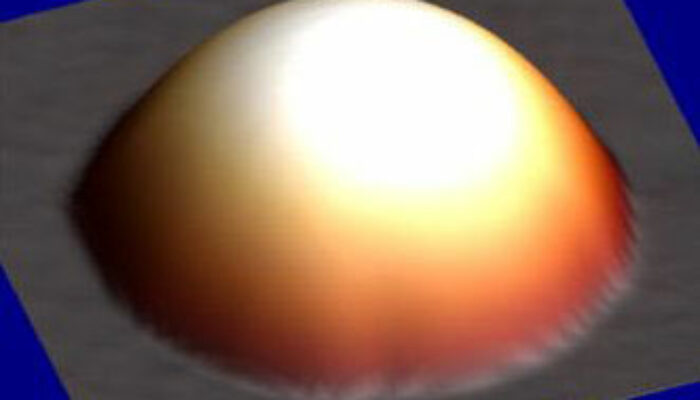
Graphene is a single layer of carbon atoms arranged in a two-dimensional hexagonal lattice, renowned for its exceptional physical and chemical properties. Among its many intriguing features, graphene’s interaction with light has sparked considerable interest, especially in the development of novel optical devices. A particularly fascinating phenomenon within this context is the formation of “graphene bubbles”-nanoscopic, curved structures that emerge when graphene sheets deform over substrates or trapped gases.
- Graphene:
A one-atom-thick sheet of carbon atoms arranged in a hexagonal pattern, exhibiting extraordinary strength, electrical conductivity, and thermal properties. - Graphene Bubbles:
Curved, bubble-like formations on graphene sheets caused by mechanical stress and trapped gases, which alter the material’s optical characteristics.
Formation and Morphology of Graphene Bubbles
Graphene bubbles typically develop when a graphene layer is suspended over a substrate, creating nanoscale voids filled with air or other gases. The interplay between the mechanical flexibility of graphene and environmental factors such as thermal fluctuations leads to the dynamic shaping of these bubbles. Their size-characterized by diameter and height-varies significantly, influencing their optical behavior. This variability offers a unique platform for tailoring optical properties by controlling bubble geometry.
Optical Properties and Tunability
One of the most compelling features of graphene bubbles is their optical tunability. This term describes the ability to modify the refractive index and other optical parameters by adjusting the size, shape, and distribution of the bubbles. Such control enables the design of lenses with adaptable focal lengths and other customizable optical traits without relying on mechanical movement. This tunability arises from the localized curvature and strain in the graphene lattice, which affect how light interacts with the material.
Mechanism of Optical Interaction in Graphene Bubbles
Graphene’s interaction with light is influenced by its plasmonic properties-collective oscillations of electrons that can confine and manipulate electromagnetic waves at the nanoscale. When graphene forms bubbles, the local curvature modifies these plasmonic effects, creating regions with distinct optical responses compared to flat graphene sheets. This phenomenon allows for the engineering of lenses that can dynamically adjust their optical characteristics by controlling bubble morphology.
Applications in Imaging and Optical Systems
Graphene bubble-based lenses hold significant promise for enhancing imaging technologies. Traditional lenses often suffer from chromatic aberrations, where different wavelengths of light focus at varying points, degrading image quality. Graphene bubbles can mitigate this issue by providing a broader spectral focusing capability, potentially leading to sharper and more accurate images in microscopy, photography, and astronomy.
Additionally, these lenses offer advantages in terms of weight and size. Conventional optical systems require multiple glass elements to correct aberrations, resulting in bulky and heavy devices. In contrast, graphene bubble lenses can achieve comparable or superior performance with a much smaller footprint, enabling the development of compact, lightweight optical instruments suitable for portable and wearable technologies.
Manufacturing Techniques and Challenges
The fabrication of graphene bubbles suitable for optical applications demands precise control over graphene quality and bubble formation. Methods such as chemical vapor deposition (CVD) and liquid phase exfoliation have been employed to produce high-quality graphene sheets. However, achieving uniformity and defect-free graphene remains a challenge, as imperfections can degrade optical performance. Advanced manufacturing processes must also ensure consistent bubble size and distribution to maintain reliable lens characteristics.
Environmental Stability and Durability
Graphene bubble lenses must withstand various environmental conditions to be viable for practical use. Factors like humidity, temperature changes, and exposure to contaminants can affect bubble stability and optical properties. Research efforts are focused on enhancing the robustness of these structures to ensure consistent performance in diverse settings, including industrial, scientific, and consumer applications.
Integration with Existing Optical Technologies
For graphene bubble lenses to be widely adopted, they must be compatible with current imaging and optical systems. This integration involves maintaining optical clarity, ensuring mass production scalability, and developing effective mounting and alignment techniques. Uniformity across lenses is critical to guarantee consistent optical performance, which is essential for applications ranging from cameras to microscopes.
Potential in Telecommunications
Beyond imaging, graphene bubble lenses have promising applications in telecommunications. As the demand for faster and more efficient data transmission grows, advanced optical components become increasingly important. Graphene bubble structures could enhance fiber optic systems by improving signal quality and reducing losses, potentially enabling higher data transfer rates and more reliable communication networks.
Significance and Future Outlook
The exploration of graphene bubbles as a foundation for next-generation lenses represents a convergence of materials science, optics, and engineering. Their unique tunable optical properties, combined with lightweight and compact form factors, position them as transformative components in visual technology. Ongoing interdisciplinary research aims to bridge the gap between laboratory discoveries and real-world applications, paving the way for innovative optical devices that leverage the full potential of graphene.
Summary
Graphene bubble technology introduces a groundbreaking approach to lens design, offering adjustable optical properties, reduced weight, and enhanced imaging capabilities. These attributes could revolutionize various fields, from microscopy and photography to telecommunications. Realizing this potential will require continued collaboration among physicists, materials scientists, and engineers to refine fabrication methods, improve environmental resilience, and integrate these lenses into existing systems, ultimately ushering in a new era of advanced optical devices.
FAQ
What are graphene bubbles?
Graphene bubbles are nanoscopic, curved structures formed on graphene sheets that alter the material's optical characteristics.
How do graphene bubbles enhance lens design?
They provide tunable optical properties, allowing for adjustable focal lengths and improved imaging quality.
What are the applications of graphene bubble lenses?
They can be used in microscopy, photography, telecommunications, and other optical technologies.




Leave a Reply