
Short Answer
Definition of Gamma Rays
Gamma rays represent the highest-energy segment of the electromagnetic spectrum, characterized by their extremely short wavelengths and immense penetrating power. These rays are a form of ionizing radiation, capable of traversing vast cosmic distances and providing critical information about some of the universe’s most violent and energetic events.
- Energy Range:
Gamma rays possess energies exceeding 100 keV, often reaching into the MeV and GeV ranges, making them the most energetic photons known. - Sources:
They originate from astrophysical phenomena such as supernovae, gamma-ray bursts (GRBs), neutron star collisions, and other cataclysmic cosmic occurrences.
Astrophysical Origins of Gamma Rays
The universe is a dynamic arena where colossal events generate gamma rays as byproducts of extreme physical processes. These emissions serve as cosmic messengers, revealing insights into the mechanisms behind stellar death, compact object mergers, and energetic particle acceleration.
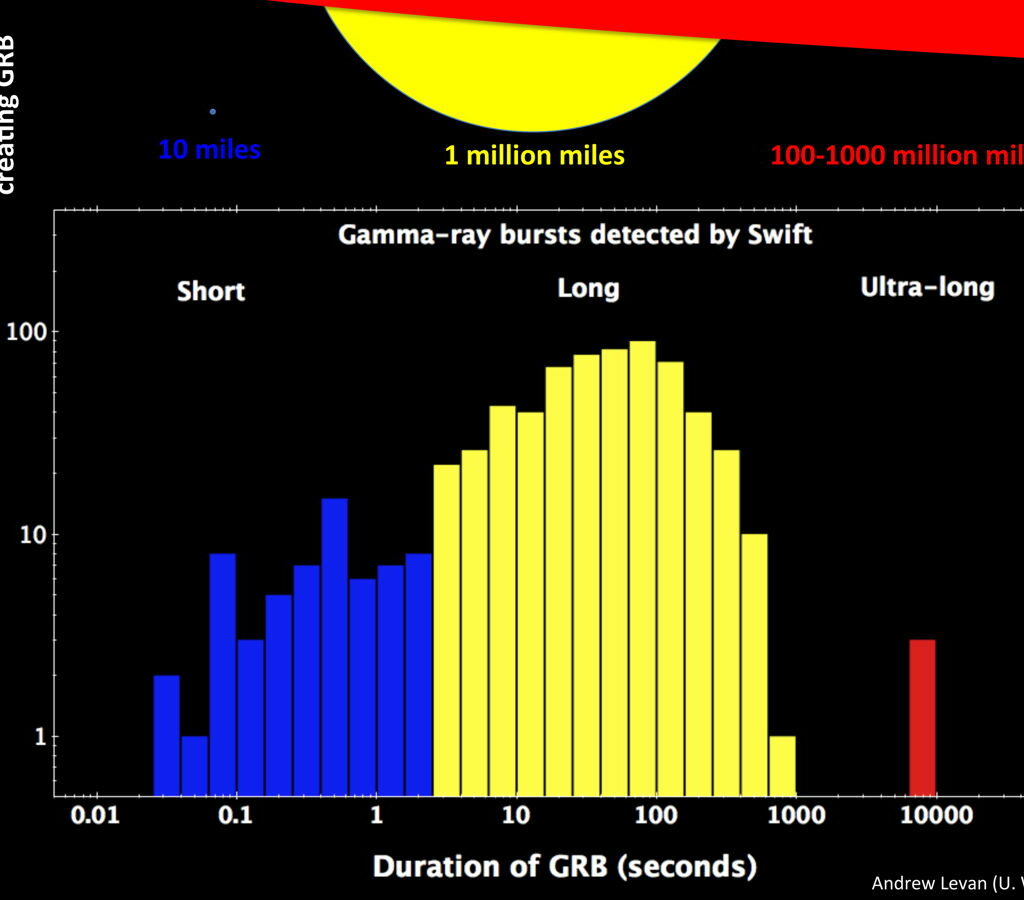
- Long-Duration Gamma-Ray Bursts:
Typically linked to the collapse of massive stars, particularly Wolf-Rayet stars, these bursts are associated with hypernova explosions that release tremendous energy over tens of seconds. - Short-Duration Gamma-Ray Bursts:
Believed to result from the merger of binary neutron stars or neutron star-black hole systems, these bursts last only a few seconds but are equally powerful. - Other Sources:
Additional gamma-ray emissions arise from pulsars, active galactic nuclei, and cosmic ray interactions with interstellar matter.
Detection and Observation Techniques
Advances in technology have significantly enhanced our ability to detect and analyze gamma rays, especially the faint and transient bursts that challenge observational astronomy.
- Space-Based Observatories:
Instruments like the Fermi Gamma-ray Space Telescope employ sophisticated detectors to capture gamma-ray photons beyond Earth’s atmosphere, where absorption is minimal. - Temporal Challenges:
Gamma-ray bursts are unpredictable and fleeting, often lasting from milliseconds to minutes, necessitating rapid response and continuous monitoring. - Multi-Messenger Astronomy:
Combining gamma-ray data with gravitational wave and neutrino observations offers a more comprehensive understanding of the astrophysical events producing these emissions.
Physical Mechanisms Behind Gamma-Ray Emission
Gamma rays are produced through various high-energy processes involving particle acceleration and nuclear reactions in extreme environments.
- Core Collapse of Massive Stars:
The implosion of a massive star’s core triggers a hypernova, releasing gamma rays as jets of relativistic particles interact with surrounding material. - Compact Object Mergers:
The collision of neutron stars or neutron star-black hole pairs generates intense gamma-ray flashes due to rapid energy release and shockwave formation. - Particle Interactions:
High-energy cosmic rays colliding with interstellar gas can produce secondary gamma rays through processes like pion decay.
Mathematical Framework and Energy Considerations
The characterization of gamma-ray bursts involves quantifying their luminosity, energy spectra, and temporal profiles using astrophysical models and equations.
- Luminosity (L):
The total energy emitted per unit time, often exceeding 1051 erg/s for GRBs, far surpassing typical supernovae. - Energy Spectrum:
Described by photon flux as a function of energy, often modeled with Band functions or power-law distributions. - Redshift (z):
Used to determine the distance and epoch of the burst, affecting observed energy and duration due to cosmological expansion.
Scientific and Cosmological Significance
Studying gamma rays, especially faint bursts from distant cosmic sources, provides profound insights into the universe’s structure, evolution, and fundamental physics.
- Probing Cosmic Expansion:
Gamma-ray bursts serve as distant beacons, helping measure the rate of expansion and investigate dark energy’s influence. - Element Formation:
These events contribute to nucleosynthesis, explaining the origin of heavy elements essential for planet formation and life. - Testing Fundamental Physics:
Observations challenge and refine theories of particle physics, gravity, and high-energy astrophysics.
Challenges in Gamma-Ray Burst Research
Despite technological progress, several obstacles complicate the study of gamma-ray bursts and their faint emissions.
- Transient Nature:
The brief and unpredictable occurrence of bursts limits the ability to gather comprehensive data. - Cosmic Distance and Attenuation:
Gamma rays can be absorbed or scattered by the intergalactic medium and cosmic microwave background, altering their observed properties. - Source Identification:
Pinpointing exact origins is difficult due to limited angular resolution and overlapping signals from multiple sources.
Emerging Theories and Future Directions
Ongoing research explores novel hypotheses and interdisciplinary approaches to deepen our understanding of gamma-ray phenomena.
- Dark Matter Interactions:
Some models propose that gamma-ray emissions could be linked to dark matter particle annihilation or decay. - Alternative Stellar Evolution Paths:
New theories suggest unconventional stellar processes might produce unique gamma-ray signatures. - Enhanced Detection Methods:
Future missions aim to improve sensitivity and temporal resolution, enabling detection of subtler gamma-ray signals.
Conclusion: The Quest to Unveil Cosmic Mysteries
The faint gamma-ray bursts detected at the universe’s edge represent both a challenge and an opportunity for astrophysics. Their study not only enriches our knowledge of extreme cosmic events but also illuminates fundamental aspects of the cosmos. By integrating advanced observational tools, multi-messenger data, and innovative theoretical frameworks, scientists continue to unravel the enigmatic stories encoded in these high-energy photons, advancing humanity’s understanding of the universe’s grand design.
FAQ
What are gamma rays?
Gamma rays are the highest-energy photons in the electromagnetic spectrum, emitted from various cosmic events.
What causes gamma-ray bursts?
Gamma-ray bursts can be caused by massive star collapses or the merger of neutron stars.
How are gamma rays detected?
Gamma rays are detected using space-based observatories equipped with advanced detectors.



Leave a Reply