

Short Answer
Definition of Quantum Fields in Medicine
The intersection of quantum physics and medical science represents an emerging frontier that could transform our understanding of health and healing. Quantum field theory (QFT), a cornerstone of modern physics, describes the universe as composed of continuous fields rather than discrete particles. These quantum fields permeate all space, with particles appearing as disturbances within them. This paradigm shift offers a novel lens through which to explore biological phenomena and the potential mechanisms underlying healing processes.
Fundamental Concepts of Quantum Field Theory
Quantum field theory posits that every particle is a manifestation of an underlying field that exists throughout the universe. Unlike classical physics, which treats particles as isolated entities, QFT emphasizes the primacy of fields and their interactions. This framework introduces concepts such as coherence, resonance, and non-locality, which challenge traditional views of space, time, and causality.
- Quantum Fields:
Continuous entities filling space, with particles emerging as excitations. - Coherence:
A state where quantum systems exhibit synchronized behavior, enhancing stability and function. - Non-locality:
The phenomenon where particles influence each other instantaneously across distances, defying classical locality.
Quantum Principles and Biological Systems
Exploring the application of quantum mechanics to biology involves examining how quantum phenomena might influence cellular and systemic functions. Biological processes often display resonance and coherence, such as synchronized neuronal firing or rhythmic heartbeats, which parallel quantum coherent states. This suggests that quantum coherence could play a role in optimizing cellular efficiency and health.
Moreover, the principle of non-locality invites speculation about the interconnectedness of biological systems beyond physical proximity. This could imply the existence of an underlying energetic or informational field-sometimes referred to as a healing field-that facilitates communication and regulation within the body.
Electromagnetic Fields and Bio-Communication
Human cells generate electromagnetic signals that form a complex network of bioelectrical communication. These fields may act as conduits for information exchange, influencing cellular behavior and repair mechanisms. Understanding these biofields could provide insights into how the body maintains homeostasis and responds to injury or disease.
- Bioelectromagnetic Signals:
Emitted by cells, these signals coordinate physiological functions. - Field-Like Phenomena:
Hypothesized energetic fields that may underpin biological interactions and healing.
Challenges and Skepticism in Quantum Medicine
Despite the promising theoretical connections, applying quantum mechanics to biological systems faces significant scientific challenges. Biological environments are typically warm and noisy, conditions that can disrupt delicate quantum states. Critics argue that quantum effects may be negligible at the scale of cells and tissues, necessitating rigorous empirical validation.
Balancing scientific skepticism with insights from holistic traditions that emphasize energy and interconnectedness is crucial for advancing this interdisciplinary field.
Technological Innovations Inspired by Quantum Science
Quantum technologies hold potential to revolutionize medical diagnostics and therapeutics. Quantum imaging and sensing devices could detect subtle biofield variations, enabling real-time, non-invasive health assessments beyond the capabilities of conventional methods.
In pharmacology, quantum mechanics offers new perspectives on molecular interactions. Quantum tunneling, for example, may influence drug behavior at the molecular level, guiding the design of more effective and targeted therapies.
Formula and Mathematical Framework
Quantum field theory is mathematically described by the Lagrangian density (mathcal{L}), which encodes the dynamics of fields and their interactions:
[
mathcal{L} = bar{psi}(igamma^mu partial_mu – m)psi – frac{1}{4}F_{munu}F^{munu} + cdots
]
- (psi): Field operator representing particles such as electrons.
- (gamma^mu): Gamma matrices encoding spinor structure.
- (m): Mass of the particle.
- (F_{munu}): Electromagnetic field tensor describing field strengths.
This formalism underpins the quantum description of particles and fields, providing a basis for exploring their biological implications.
Real-World Applications and Examples
Several practical examples illustrate the potential of quantum principles in medicine:
- Quantum Imaging:
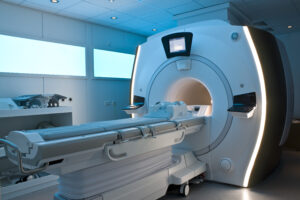
Techniques such as quantum-enhanced MRI improve resolution and sensitivity. - Biofield Therapies:
Modalities like bioelectromagnetic therapy explore the manipulation of body fields for healing. - Drug Design:
Quantum chemistry aids in understanding molecular interactions critical for pharmaceutical development.
Common Misconceptions About Quantum Medicine
Quantum effects dominate all biological processes.
Quantum phenomena may influence certain biological functions but are often subtle and context-dependent.
Healing fields are purely mystical and lack scientific basis.
Emerging research suggests bioelectromagnetic fields have measurable effects on physiology.
Significance and Future Directions
Integrating quantum physics with medical science could profoundly expand our understanding of health, moving beyond purely biochemical models to include energetic and informational dimensions. This holistic approach may lead to innovative diagnostics, therapies, and a more comprehensive grasp of disease mechanisms.
Future progress depends on collaborative efforts among physicists, biologists, clinicians, and holistic practitioners to rigorously investigate and translate quantum concepts into practical healthcare solutions.
Ethical Considerations in Quantum Medicine
The application of quantum principles in medicine raises important ethical questions. Ensuring equitable access to advanced quantum-based therapies and technologies is essential to prevent disparities. Additionally, transparent communication about the scientific validity and limitations of such approaches is critical to maintain public trust and informed consent.
Conclusion
The exploration of quantum fields within the context of medicine offers a compelling avenue for redefining health and healing. While challenges remain, the synthesis of quantum physics and biological science holds promise for unveiling deeper layers of human physiology and developing transformative medical innovations. This evolving dialogue underscores the importance of curiosity, interdisciplinary collaboration, and a balanced approach to integrating new knowledge into healthcare.
FAQ
How does quantum physics relate to medicine?
Quantum physics offers insights into biological processes, suggesting that phenomena like coherence and non-locality may play a role in healing and cellular functions.
What are the challenges of applying quantum mechanics to medicine?
Applying quantum mechanics to biology faces challenges such as the disruption of quantum states in warm, noisy biological environments.




Leave a Reply