
Short Answer
Definition of Gamma Rays
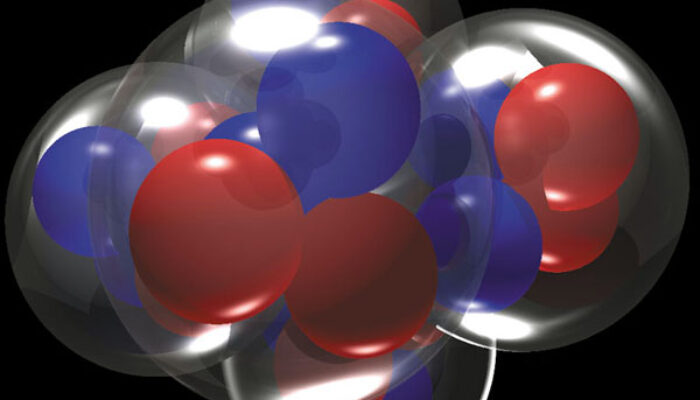
Gamma rays are a form of electromagnetic radiation characterized by extremely high energy and short wavelengths. They originate from nuclear reactions, radioactive decay, and energetic cosmic events such as supernovae and neutron stars. As part of the electromagnetic spectrum, gamma rays share properties with other types of radiation like visible light, X-rays, and radio waves, but they stand out due to their exceptional penetrating power and energy levels.
Fundamental Properties: Mass and Charge
One of the most intriguing questions about gamma rays concerns whether they possess mass or electric charge. The answer is that gamma rays are composed of photons, which are massless and electrically neutral particles. This means gamma rays have no rest mass and carry no charge, distinguishing them from subatomic particles such as electrons or protons.
- Masslessness:
Photons, the quantum units of gamma rays, have zero rest mass. This allows them to travel at the speed of light (approximately 299,792 kilometers per second) without slowing down or coming to rest. - Neutral Charge:
Gamma rays do not carry any electric charge, which means they are unaffected by electric and magnetic fields, unlike charged particles that experience forces in such fields.
How Gamma Rays Propagate
Gamma rays move through space as electromagnetic waves and exhibit a dual nature, behaving both as waves and as discrete particles called photons. Their wave-like properties include phenomena such as interference and diffraction, while their particle-like behavior allows them to transfer momentum in quantized amounts. Because they lack mass, gamma rays always travel at the speed of light, and their energy is directly related to their frequency and wavelength.
Interaction with Matter
Due to their neutral charge, gamma rays interact with matter differently than charged particles. They are not deflected by magnetic or electric fields but can be absorbed or scattered when they collide with atoms. Key interaction processes include:
- Compton Scattering: Gamma rays transfer part of their energy to electrons, resulting in scattered photons with reduced energy.
- Pair Production: High-energy gamma photons can transform into an electron-positron pair when passing near a nucleus.
- Photoelectric Absorption: Gamma rays can eject electrons from atoms, leading to ionization.
Significance of Massless and Neutral Characteristics
The absence of mass and charge in gamma rays is not merely a scientific curiosity but a fundamental aspect that influences their behavior and applications. Their ability to penetrate dense materials without being deflected by electromagnetic fields makes them invaluable in various fields:
- Medical Applications: Gamma rays are used in cancer radiotherapy to target and destroy malignant cells.
- Industrial Uses: They serve in non-destructive testing and inspection of materials and structures.
- Astrophysics: Gamma rays provide insights into high-energy cosmic phenomena, acting as messengers from distant and extreme environments.
Gamma Rays in Theoretical Physics
Gamma photons exemplify core principles of modern physics, including quantum electrodynamics and the Standard Model. Their massless and neutral nature reflects fundamental symmetries and conservation laws that govern the universe. These properties help scientists understand complex phenomena such as black hole radiation and the cosmic microwave background, deepening our grasp of the cosmos.
Common Misconceptions About Gamma Rays
Gamma rays have mass because they are energetic.
Despite their high energy, gamma rays are massless photons that carry energy through frequency and wavelength, not mass.
Gamma rays are charged particles.
Gamma rays are electrically neutral and do not experience forces from electric or magnetic fields.
Practical Considerations in Detection and Safety
Detecting gamma radiation requires specialized instruments that rely on the interactions of gamma rays with matter rather than direct capture, due to their intangible, massless nature. Safety protocols emphasize shielding with dense materials like lead or concrete to effectively reduce gamma ray exposure, as their neutral charge and high penetration ability make them difficult to block.
Gamma Rays in the Cosmic Landscape
In astronomy, gamma rays serve as vital probes into the universe’s most energetic and violent processes. Their lack of mass and charge allows them to travel vast interstellar distances without alteration, carrying untainted information about their sources. This makes gamma rays essential tools for studying phenomena such as nuclear transitions, supernova explosions, and neutron star activity.
Conclusion: The Essence of Gamma Rays
Gamma rays are unique electromagnetic waves that possess neither mass nor electric charge. This defining characteristic shapes their behavior, interactions, and applications across science and technology. Beyond their physical attributes, gamma rays symbolize the elegant interplay of energy and fundamental forces, offering profound insights into the nature of light and the universe itself. Exploring their properties is a gateway to understanding the deeper laws that govern reality and the cosmic dance of energy through space-time.
FAQ
Do gamma rays have mass?
No, gamma rays are massless photons.
Are gamma rays charged?
No, gamma rays are electrically neutral and do not carry charge.
What are common applications of gamma rays?
Gamma rays are used in cancer treatment, industrial testing, and astrophysics.


Leave a Reply