
Short Answer
Definition of Planetary Orbital Escape
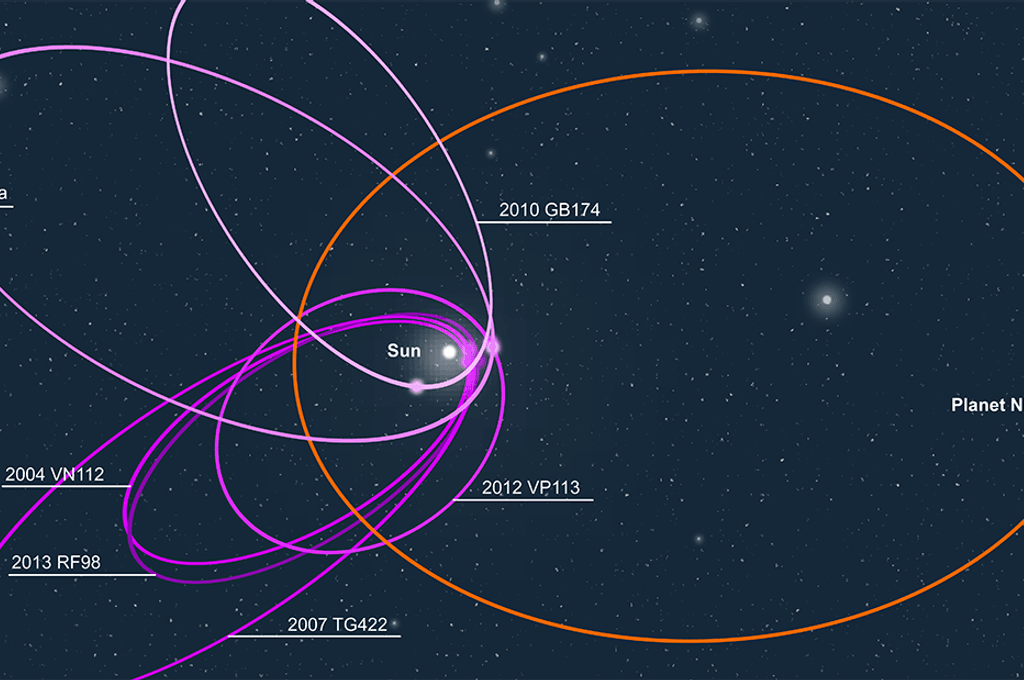
Planetary orbital escape refers to the phenomenon where a planet breaks free from the gravitational influence of its host star, ceasing to follow a stable orbit and instead traveling independently through space. This event challenges the common perception of planetary orbits as fixed and eternal, revealing a dynamic cosmic environment shaped by various forces and interactions.
Fundamental Principles Governing Planetary Orbits
The motion of a planet around its star is primarily dictated by the star’s gravitational pull, which provides the centripetal force necessary to maintain orbital motion. According to Newtonian mechanics, a planet remains gravitationally bound as long as its velocity and trajectory balance the star’s gravitational attraction. This balance results in elliptical orbits characterized by negative total energy relative to the star. However, this equilibrium can be disturbed by internal and external perturbations, which may alter the planet’s velocity or orbital path.
- Gravitational Binding:
The star’s gravity keeps the planet in orbit by continuously pulling it inward, counteracting the planet’s tendency to move in a straight line. - Orbital Energy:
The total energy (kinetic plus potential) of the planet-star system determines whether the orbit is bound (elliptical) or unbound (parabolic or hyperbolic). - Perturbations:
Forces from other bodies or events that disrupt the planet’s stable orbit, potentially increasing its energy beyond the escape threshold.
Mechanisms Leading to Planetary Escape
Several astrophysical processes can impart sufficient energy to a planet to overcome its star’s gravitational hold, resulting in orbital escape. These mechanisms include gravitational interactions within the planetary system, external stellar encounters, catastrophic cosmic events, and changes in the host star’s mass.
Gravitational Interactions Within Planetary Systems
Planets exert mutual gravitational forces on each other, creating a complex network of interactions that can gradually alter orbits. Over long timescales, resonances and chaotic dynamics may amplify these effects, sometimes leading to dramatic orbital changes.
- Planetary Close Encounters:
A close approach between a planet and a massive neighbor can produce a gravitational slingshot effect, boosting the planet’s velocity to or beyond escape velocity. - Orbital Resonances:
Repeated gravitational influences at specific orbital ratios can destabilize orbits, potentially triggering ejections. - System Instabilities:
During planetary system formation or migration, shifting gravitational balances can provoke planet ejections.
External Stellar Influences
Stars move through the galaxy and occasionally pass near other stellar systems. These flybys can exert transient but significant gravitational forces on planetary orbits, especially affecting distant or loosely bound objects.
- Stellar Flybys:
Passing stars can perturb outer planets or cometary clouds, nudging planets into altered orbits or ejecting them entirely. - Rogue Planet Formation:
Such gravitational disturbances are believed to contribute to the population of free-floating planets wandering interstellar space.
Catastrophic Cosmic Events
Rare but powerful events such as supernova explosions or close encounters with compact objects (black holes, neutron stars) can disrupt planetary orbits through sudden mass loss or intense gravitational tides.
- Supernova Mass Loss:
The rapid expulsion of stellar material reduces gravitational binding, potentially freeing orbiting planets. - Gravitational Tides:
Extreme tidal forces during close passages by massive compact objects can destabilize orbits, accelerating planets to escape velocities.
Stellar Evolution and Its Impact on Orbits
As stars age, their physical properties change, influencing the gravitational environment of their planetary systems.
- Mass Loss During Red Giant Phase:
Stars shed mass through stellar winds, weakening their gravitational grip and causing planetary orbits to expand. - Orbital Expansion and Escape:
Significant and rapid mass loss can allow outer planets to drift outward and potentially escape the star’s gravitational well.
Mathematical Framework of Orbital Escape
Orbital dynamics are described by the total mechanical energy (E) of the planet-star system:
E = K + U
- K (Kinetic Energy): ( frac{1}{2} m v^2 ), where ( m ) is the planet’s mass and ( v ) its velocity.
- U (Potential Energy): ( -frac{G M m}{r} ), where ( G ) is the gravitational constant, ( M ) the star’s mass, and ( r ) the distance between star and planet.
For a bound elliptical orbit, ( E < 0 ). When perturbations increase the planet’s energy to ( E geq 0 ), the orbit becomes parabolic (( E = 0 )) or hyperbolic (( E > 0 )), indicating escape from the star’s gravitational influence.
Factors Influencing Orbital Stability and Escape
The outcome of perturbations depends on several dynamic variables:
- Velocity and Direction: The planet’s speed and angle of approach relative to perturbing forces determine whether it gains enough energy to escape.
- Duration and Timing: The length of time and orbital phase during which forces act can amplify or reduce their impact.
- Resonant Amplification: Repeated gravitational interactions at resonant frequencies can progressively destabilize orbits.
Real-World Observations and Implications
Studies of exoplanetary systems have revealed that planetary ejections are not merely theoretical but likely common throughout the galaxy. The discovery of rogue planets-planetary-mass objects unattached to any star-supports the idea that orbital escape is a natural outcome of planetary system evolution.
Within our Solar System, Jupiter’s massive gravitational influence shapes the orbits of smaller bodies and can potentially eject comets or asteroids. Similarly, stellar flybys and the Sun’s future evolution will affect the orbits of distant objects in the Oort cloud.
Common Misconceptions About Planetary Escape
Planetary orbits are permanent and unchanging.
Orbits are dynamic and can be altered or disrupted by gravitational interactions and astrophysical events.
Only catastrophic events can cause orbital escape.
Gradual processes like resonant interactions and stellar mass loss can also lead to escape over long timescales.
Rogue planets are extremely rare.
Observations suggest rogue planets may be numerous, formed through common ejection processes.
Significance of Understanding Planetary Orbital Escape
Comprehending the mechanisms behind planetary escape enriches our knowledge of planetary system formation, evolution, and stability. It informs models of how planetary architectures change over time and explains the existence of free-floating planets. This understanding also aids in predicting the long-term fate of planets, including those in our own Solar System, and contributes to broader insights into the dynamic and often chaotic nature of the cosmos.
FAQ
What is planetary orbital escape?
Planetary orbital escape refers to the process where a planet breaks free from the gravitational influence of its host star, allowing it to travel independently through space.
What mechanisms can lead to a planet escaping its orbit?
Mechanisms include gravitational interactions with other bodies, external stellar influences, catastrophic cosmic events, and changes in the host star’s mass.
Are rogue planets common in the galaxy?
Yes, observations suggest that rogue planets, which wander through space unattached to any star, may be numerous and form through common ejection processes.


Leave a Reply