
Short Answer
Definition of DNA Nanotechnology
DNA nanotechnology is an innovative interdisciplinary field combining biology, chemistry, and engineering principles to design and construct nanoscale structures using DNA molecules. By exploiting the natural base-pairing properties of DNA, scientists can create highly precise and complex three-dimensional (3D) architectures, often referred to as “DNA bricks.” These nanostructures have transformative potential across various scientific and technological domains.
Fundamental Principles of DNA as a Building Material
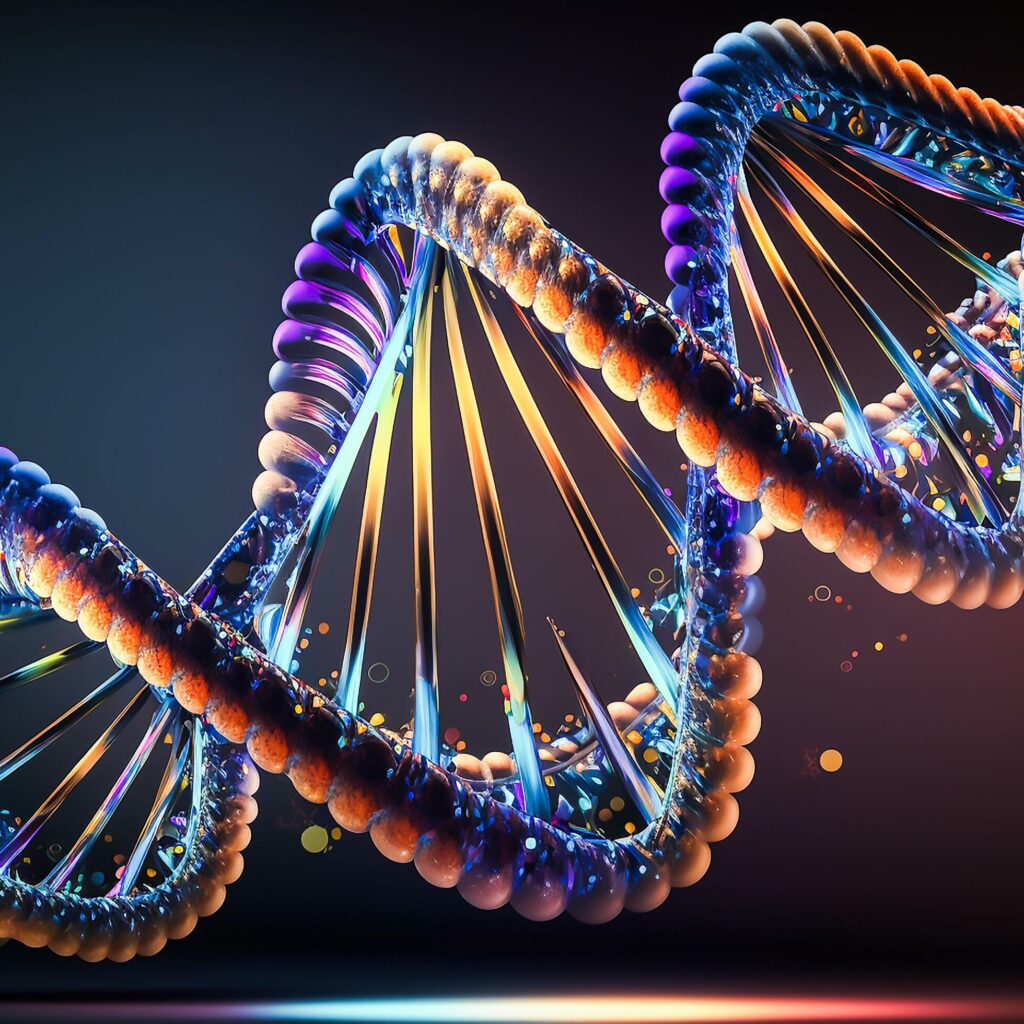
The foundation of DNA nanotechnology lies in the molecular structure of DNA, which consists of two strands forming a double helix. Each strand is composed of nucleotide bases: adenine (A), thymine (T), cytosine (C), and guanine (G). The specificity of base pairing-adenine pairing exclusively with thymine, and cytosine pairing with guanine-enables predictable and programmable interactions between DNA strands.
- Base Pairing Specificity:
This selective hydrogen bonding allows DNA strands to hybridize in a controlled manner, facilitating the design of custom sequences that self-assemble into predetermined shapes. - Modularity:
DNA strands can be treated as modular units or “building blocks,” which can be combined in various configurations to form intricate nanostructures.
Techniques for Constructing DNA Nanostructures
Several advanced methodologies have been developed to fabricate DNA-based nanostructures, each offering unique advantages in terms of complexity and scalability.
DNA Origami
DNA origami involves folding a long single-stranded DNA molecule into specific shapes by using numerous short “staple” strands that bind to complementary regions. This technique allows for precise control over the geometry of the resulting structure, enabling the creation of both two-dimensional (2D) and three-dimensional (3D) forms with high fidelity.
DNA Bricks
In contrast, the DNA bricks approach utilizes many short DNA strands designed to hybridize with one another through complementary base pairing. Each brick acts as a discrete unit that self-assembles into larger, complex 3D lattices. This modular strategy supports the construction of a vast array of geometric configurations, offering flexibility and scalability in design.
Emergence of Structural Complexity
One of the remarkable aspects of DNA nanotechnology is the ability to generate sophisticated architectures from relatively simple components. The self-assembly process is driven by entropic and thermodynamic principles, allowing DNA strands to spontaneously organize into elaborate structures such as scaffolds, cages, and functional nanodevices.
- Customizable Architectures:
By altering the length and sequence of DNA strands, researchers can fine-tune the shape and function of the assembled nanostructures. - Functional Scaffolds:
DNA-based scaffolds serve as platforms for the precise spatial arrangement of biomolecules, facilitating applications in molecular biology and nanomedicine. - Encapsulation Capabilities:
Hollow DNA origami structures can encapsulate proteins or therapeutic agents, enhancing targeted delivery and controlled release.
Applications in Medicine and Biotechnology
DNA nanostructures have significant implications in healthcare due to their biocompatibility and programmability.
- Targeted Drug Delivery:
DNA nanocarriers can be engineered to transport drugs and release them in response to specific biological triggers, improving treatment precision and reducing side effects. - Biosensing:
DNA-based biosensors constructed from nanoscale architectures enable the detection of biomolecules at extremely low concentrations, facilitating early diagnosis of diseases such as cancer and infectious conditions.
Environmental and Material Science Applications
Beyond medicine, DNA nanotechnology offers promising solutions in environmental remediation and materials engineering.
- Pollutant Capture and Catalysis:
Engineered DNA scaffolds can be designed to trap environmental contaminants or catalyze chemical reactions directly at the nanoscale. - Advanced Material Fabrication:
The predictable self-assembly of DNA enables the creation of novel materials with tailored properties, potentially impacting electronics and nanofabrication. - Nanoscale Electronics:
DNA frameworks are being explored as templates for assembling nanoscale electronic components, which could revolutionize circuitry and enhance computational capabilities.
Challenges and Prospects for the Future
Despite its vast potential, DNA nanotechnology faces several obstacles that must be addressed to enable widespread application and commercialization.
- Reproducibility:
Variability in experimental conditions can affect the consistency of DNA nanostructure assembly, necessitating improved protocols and deeper understanding of DNA thermodynamics. - Scalability:
Producing DNA nanostructures on a large scale remains challenging, requiring the development of standardized, cost-effective manufacturing techniques. - Interdisciplinary Collaboration:
Continued cooperation among biologists, chemists, engineers, and material scientists is essential to overcome current limitations and unlock new functionalities.
Significance and Impact of DNA Nanotechnology
The fusion of biological molecules with engineering design principles in DNA nanotechnology exemplifies how simple molecular components can be orchestrated into complex, functional systems. This field holds the promise to revolutionize medicine, environmental science, and materials engineering by providing customizable, programmable nanoscale tools. As research progresses, DNA nanostructures are poised to become foundational elements in next-generation technologies, reshaping scientific and technological landscapes.
FAQ
What are DNA bricks?
DNA bricks are short DNA strands designed to self-assemble into predefined 3D nanostructures by complementary base pairing.
How does DNA nanotechnology impact medicine?
It allows for targeted drug delivery systems and biosensors that improve diagnostics and treatment precision.
What is DNA origami?
DNA origami is a method of folding long single-stranded DNA into complex shapes with the help of short staple strands.
What are the main challenges in DNA brick technology?
Ensuring reproducibility and scalability of DNA nanostructure fabrication remains difficult for practical applications.



Leave a Reply