
Short Answer
Definition and Overview of DNA-Enhanced Dye Lasers
The fusion of biological molecules with physical laser technology has opened new frontiers in scientific innovation. Among these intersections, the incorporation of DNA into dye lasers stands out as a promising development. DNA-enhanced dye lasers refer to laser systems that utilize DNA molecules as part of the gain medium, potentially improving laser performance and expanding wavelength tunability. This integration aims to leverage the unique molecular properties of DNA to overcome limitations inherent in conventional dye lasers.
Fundamentals of Dye Lasers
Dye lasers operate by using organic dye molecules dissolved in solvents as the active medium to generate laser light. Their hallmark is the ability to emit a wide range of wavelengths, making them versatile tools across various fields such as medicine, telecommunications, and spectroscopy. Despite their adaptability, traditional dye lasers face challenges including limited operational lifetimes, photodegradation of dyes, and dependence on solvent stability, which restrict their long-term efficiency and practical applications.
Structural and Functional Attributes of DNA Relevant to Laser Technology
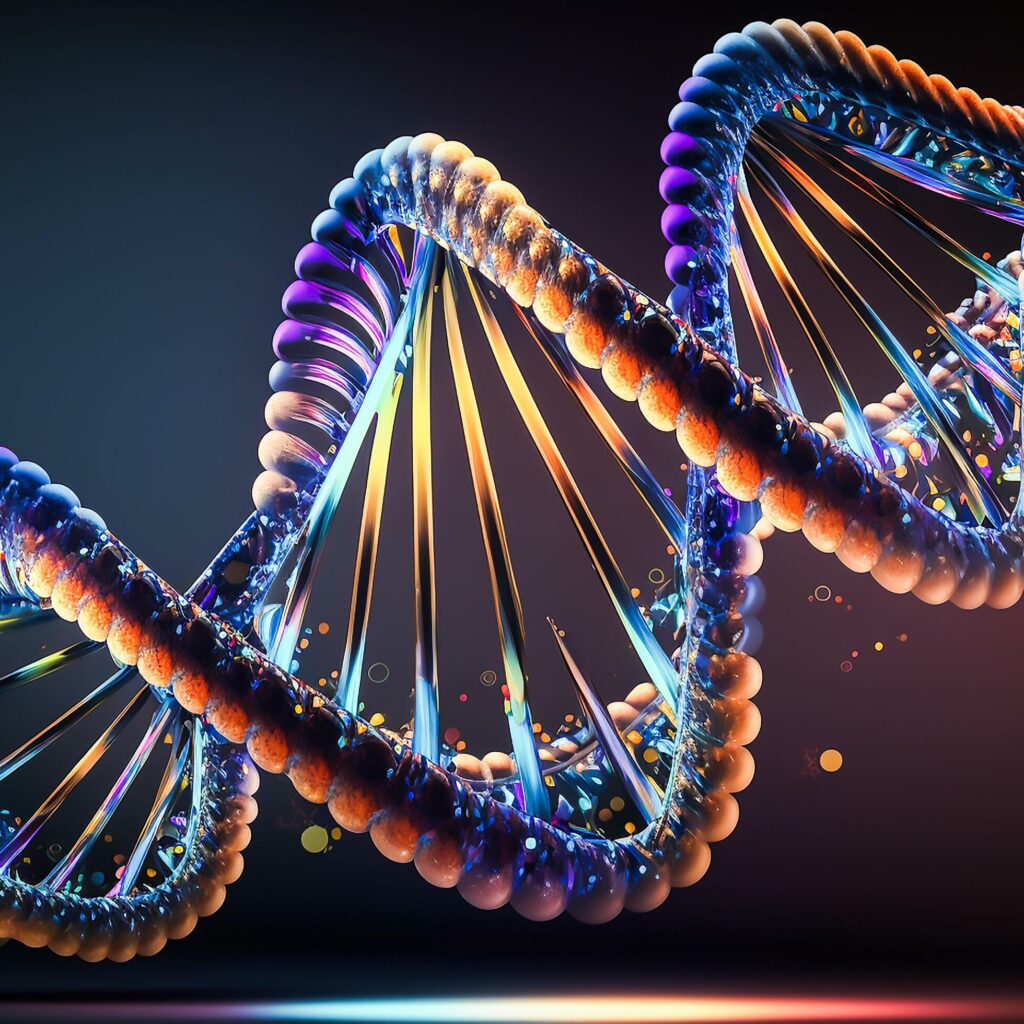
DNA is composed of two antiparallel strands forming a double helix, with sequences of nucleotide bases encoding genetic information. Beyond its biological role, DNA exhibits unique photophysical properties that can be harnessed in laser technology. The sequence-specific electronic and optical responses of DNA molecules allow for tunable interactions with light, potentially enabling precise control over laser emission wavelengths. This molecular versatility positions DNA as a candidate for expanding the spectral range and functional capabilities of dye lasers.
Mechanisms Underlying DNA-Based Laser Emission
The operation of DNA-enhanced dye lasers relies on the molecular excitations and electron transfer processes within DNA strands. When excited by an external energy source, DNA molecules can undergo electronic transitions that may produce laser-like emissions. Achieving this requires a sophisticated understanding of biophysical interactions and photonic principles to optimize excitation, energy transfer, and emission processes. The challenge lies in engineering these mechanisms to be efficient, reproducible, and scalable for practical laser devices.
Challenges in Synthesizing DNA Dye Solutions
Creating effective DNA-based dye laser media involves complex chemical and physical considerations. The interactions between DNA nucleotides and solvents must be carefully managed to maintain molecular stability and optical performance. Researchers must navigate the delicate balance of solvent compatibility, DNA concentration, and environmental conditions to produce solutions that sustain consistent laser action. These synthesis challenges are critical to developing reliable DNA dye lasers suitable for real-world applications.
Photostability and Longevity of DNA in Laser Applications
Photostability is a significant concern in dye lasers, as traditional dyes often degrade under continuous light exposure, leading to diminished performance. DNA molecules offer enhanced resistance to photobleaching due to their robust molecular structure. However, DNA’s behavior under prolonged irradiation, including potential hybridization effects and sequence-dependent responses, requires further investigation. Understanding and optimizing DNA stability is essential to extending the operational lifespan of DNA-based laser systems.
Advancements Through Genetic Engineering and Molecular Customization
Emerging gene-editing technologies, such as CRISPR-Cas9, provide exciting opportunities to tailor DNA sequences for specific photonic properties. By precisely modifying nucleotide arrangements, scientists can potentially engineer DNA molecules with customized electronic transitions and optical behaviors. This bioengineering approach could lead to a new class of lasers with enhanced performance and novel functionalities, bridging molecular biology and photonics in unprecedented ways.
Ethical and Biosecurity Considerations
The integration of biological materials like DNA into technological devices raises important ethical questions. Issues related to biosecurity, responsible use of genetic materials, and the implications of manipulating living molecules for industrial purposes must be addressed. Ongoing interdisciplinary dialogue is crucial to ensure that advancements in DNA-based laser technology proceed with appropriate ethical oversight and societal awareness.
Applications and Impact in Medicine and Technology
DNA-enhanced dye lasers hold significant promise for advancing medical diagnostics and therapeutic techniques. Their potential for precise wavelength control and improved stability could enhance imaging resolution, targeted treatment delivery, and cellular-level interventions. For instance, lasers incorporating DNA might enable selective illumination of cancerous tissues, combining biological specificity with photonic precision to revolutionize medical technology.
Summary and Future Perspectives
The exploration of DNA as a component in dye lasers represents a compelling convergence of biology and photonics. This innovative approach offers the possibility of overcoming current limitations in laser technology by exploiting the molecular complexity and tunability of DNA. While challenges related to synthesis, stability, and ethical considerations remain, continued research may unlock transformative applications across science and industry. Ultimately, DNA-enhanced dye lasers could redefine the boundaries between living systems and engineered devices, fostering new solutions in diverse technological domains.
FAQ
How do DNA molecules improve dye lasers?
DNA molecules exhibit unique photophysical properties that allow for tunable interactions with light, potentially enabling precise control over laser emission wavelengths.
What ethical issues are associated with DNA-enhanced technology?
Ethical issues include biosecurity, responsible use of genetic materials, and implications of manipulating living molecules for industrial purposes.



Leave a Reply