
Short Answer
Definition of the DNA Backbone
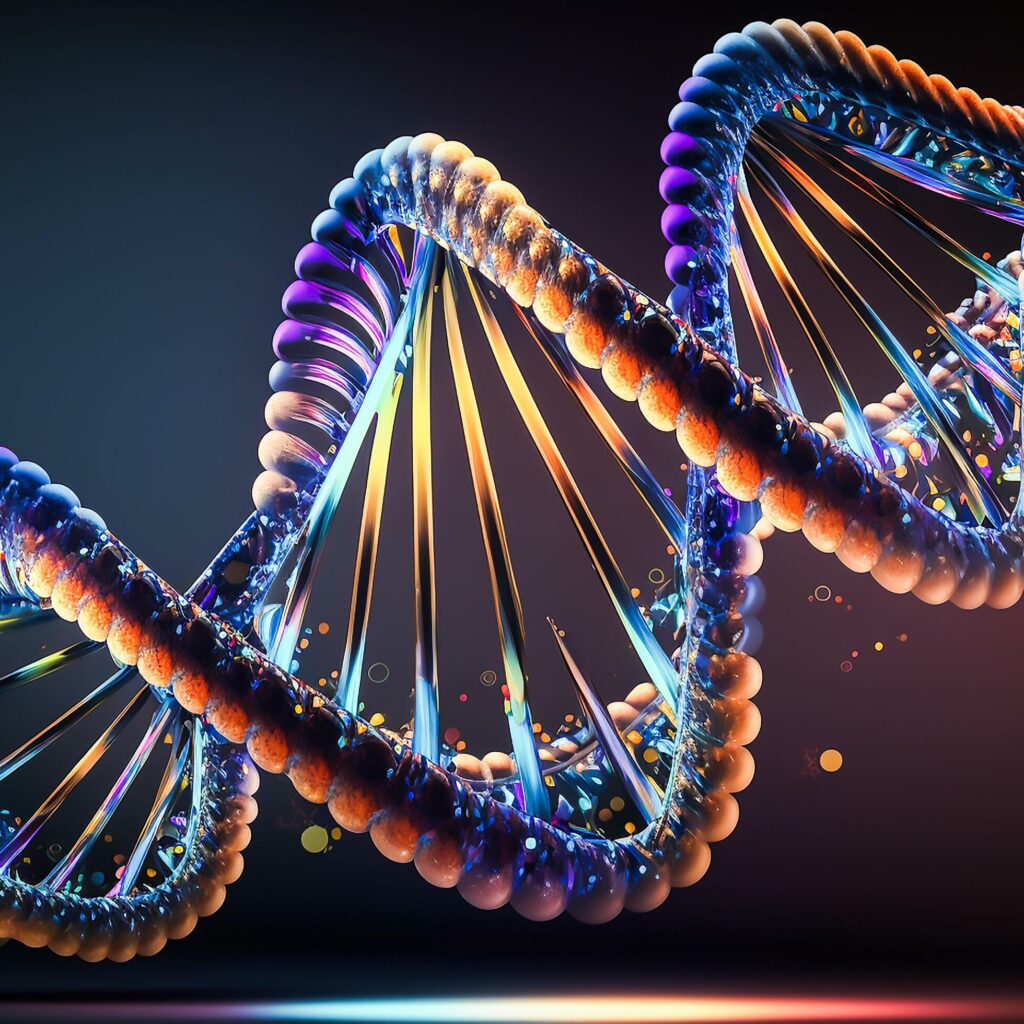
The DNA backbone is a fundamental structural component of the deoxyribonucleic acid molecule, serving as the molecular framework that supports genetic information. It consists of a repeating sequence of sugar and phosphate groups, which form the outer edges of the iconic double helix. This backbone not only provides mechanical stability but also plays a critical role in maintaining the integrity and functionality of DNA within living cells.
- Sugar Component:
The sugar in the DNA backbone is deoxyribose, a five-carbon sugar that alternates with phosphate groups to create the backbone’s chain. - Phosphate Groups:
These negatively charged groups link the sugars together via phosphodiester bonds, contributing to the molecule’s overall stability and charge. - Nitrogenous Bases:
Attached to each sugar is one of four bases-adenine, thymine, cytosine, or guanine-that encode genetic information and form the rungs of the DNA ladder.
Structural Composition and Stability
The DNA backbone’s architecture is characterized by its alternating sugar-phosphate pattern, which forms a sturdy yet flexible scaffold. This arrangement allows the DNA molecule to maintain its helical shape while accommodating the base pairs that carry genetic codes. The covalent bonds between sugars and phosphates ensure the molecule’s resilience against chemical and enzymatic degradation, which is essential for preserving genetic fidelity across generations.
Electrical Conductivity of the DNA Backbone
Beyond its structural role, the DNA backbone exhibits intriguing electrical properties. The negatively charged phosphate groups create a pathway that can facilitate the movement of electrons, effectively allowing DNA to act as a molecular conductor. This electron transport capability is comparable to a semiconductor, where the sugar-phosphate chain enables electron flow along the DNA strand.
Mechanism of Electron Transport
Electron conduction in DNA occurs through the overlapping π-orbitals of the stacked base pairs and the charged phosphate backbone. This conduction is essential for certain biochemical reactions and cellular signaling pathways, highlighting the DNA backbone’s active participation in molecular communication within the cell.
Biological Significance of DNA Conductivity
The ability of DNA to conduct electrons has profound implications in various biological processes. For example, during cellular respiration and photosynthesis, electron transfer is a critical step in energy production. Specific DNA sequences can influence the efficiency of this electron flow, thereby affecting cellular metabolism and energy output.
Moreover, the conductive nature of DNA opens possibilities for bioelectronic applications, where DNA-based materials could be engineered to create biocompatible electronic devices. This intersection of biology and electronics is a promising frontier for medical diagnostics and therapeutic technologies.
Dynamic Flexibility and Functional Adaptability
The DNA backbone is not a rigid structure; it exhibits flexibility that allows the molecule to undergo conformational changes. These structural adjustments are vital during processes such as DNA replication and transcription, where enzymes require access to the genetic code. The dynamic nature of the backbone facilitates these spatial rearrangements, ensuring accurate gene expression and replication fidelity.
Applications in Genetic Engineering and Synthetic Biology
Recognizing DNA as a molecular highway has spurred innovative research in genetic engineering and synthetic biology. Scientists are exploring ways to manipulate DNA sequences to develop bio-based electronic circuits and devices. These advancements could revolutionize how biological systems interface with electronic components, enabling new diagnostic tools and therapeutic strategies that harness DNA’s conductive properties.
Evolutionary Perspective on DNA Structure
Over billions of years, the DNA backbone has evolved to meet the complex demands of diverse life forms. Its dual function as a structural scaffold and an electrical conductor has contributed to genetic stability and adaptability. This evolutionary refinement underscores the backbone’s role in facilitating rapid responses to environmental changes and evolutionary pressures.
Future Directions in DNA Nanotechnology
Advancements in genomic technologies are driving research into DNA nanostructures capable of forming conductive networks. These DNA-based materials hold promise for applications in nanotechnology, where molecular devices can be designed to integrate seamlessly with biological systems. The unique conductive properties of DNA offer exciting opportunities for creating novel functional materials at the nanoscale.
Philosophical and Interdisciplinary Implications
The concept of DNA as a molecular highway invites reflection on the fundamental nature of life. It highlights the intricate interplay between molecular structure and information flow, suggesting that life itself is a complex network of conductive pathways and molecular interactions. This perspective bridges disciplines such as physics, chemistry, and molecular biology, enriching our understanding of biological systems.
Conclusion: The Dual Role of the DNA Backbone
In summary, the DNA backbone serves a dual purpose: it provides essential structural support to the DNA molecule while also enabling electrical conduction critical for cellular functions. This multifaceted role enhances our comprehension of genetic mechanisms and opens new avenues for technological innovation. As research progresses, the DNA backbone’s potential to transform fields such as medicine, computational biology, and environmental science continues to grow, solidifying its place as a cornerstone of both biology and bio-integrated technology.
FAQ
What is the DNA backbone?
The DNA backbone is the structural framework of the DNA molecule, composed of alternating sugar and phosphate groups that provide stability and support for genetic information.
How does the DNA backbone conduct electricity?
The negatively charged phosphate groups in the DNA backbone enable electron movement, allowing DNA to act as a molecular conductor, similar to a semiconductor.



Leave a Reply