
Short Answer
Definition of Dark Matter
Dark matter is a mysterious form of matter that is believed to make up about 27% of the universe’s total mass-energy content. Unlike ordinary matter, it does not emit, absorb, or reflect light, making it invisible to traditional astronomical instruments. Despite its elusive nature, dark matter exerts a significant gravitational influence on visible matter, shaping the structure and evolution of the cosmos.
- Invisible Substance:
Dark matter cannot be detected through electromagnetic radiation, which includes visible light, X-rays, and radio waves. - Mass-Energy Contribution:
It constitutes a substantial portion of the universe’s total mass-energy, far exceeding the amount of ordinary matter. - Gravitational Effects:
Its presence is inferred from gravitational interactions with galaxies and galaxy clusters.
Historical Background and Discovery
The concept of dark matter originated in the 1930s when Swiss astronomer Fritz Zwicky observed unexpected behavior in the Coma Cluster of galaxies. He found that the visible mass of galaxies was insufficient to explain the gravitational forces required to keep the cluster intact. This discrepancy suggested the existence of an unseen mass, which Zwicky termed “dark matter.” This discovery marked a pivotal moment in astrophysics, introducing the idea that the universe contains significant amounts of matter beyond what is observable.
Evidence Supporting Dark Matter
Over the decades, multiple lines of evidence have reinforced the dark matter hypothesis:
- Galaxy Rotation Curves:
Stars in galaxies orbit at speeds that cannot be explained solely by visible matter, implying additional unseen mass. - Cosmic Microwave Background (CMB):
Fluctuations in the CMB radiation, the afterglow of the Big Bang, reveal density variations consistent with the presence of dark matter. - Gravitational Lensing:
The bending of light from distant objects by massive galaxy clusters indicates more mass than what is visible.
Leading Dark Matter Candidates
Scientists have proposed several theoretical particles as potential constituents of dark matter, each with unique properties and implications:
Weakly Interacting Massive Particles (WIMPs)
WIMPs are hypothetical particles that interact through gravity and the weak nuclear force but rarely with electromagnetic forces, making them difficult to detect. They are thought to have formed in the early universe and remain a primary focus of experimental searches.
Axions
Axions are ultra-light particles originally proposed to solve problems in quantum chromodynamics. Their weak interactions and low mass make them promising dark matter candidates, with specialized experiments designed to detect their subtle signals.
Sterile Neutrinos
Sterile neutrinos are heavier counterparts to known neutrinos that do not interact via the standard weak force. They could explain discrepancies in galactic matter distribution and may be linked to asymmetries observed in the universe.
Experimental Approaches to Detect Dark Matter
Efforts to identify dark matter involve a variety of sophisticated techniques:
- Direct Detection:
Experiments deep underground aim to observe rare interactions between dark matter particles and ordinary matter. - Collider Searches:
High-energy particle accelerators, such as the Large Hadron Collider, look for signs of dark matter production. - Axion Detection:
Instruments like haloscopes and light-shining-through-walls experiments seek to capture axion signals.
Alternative Theories and Expanding Horizons
Beyond particle candidates, some researchers explore other explanations for dark matter phenomena:
- Primordial Black Holes:
These ancient black holes formed shortly after the Big Bang could account for some dark matter effects. - Modified Gravity Theories:
Proposals that alter the laws of gravity at large scales aim to explain observations without invoking dark matter.
These alternatives challenge conventional paradigms and encourage broader investigative frameworks.
Role of Modern Observatories and Interdisciplinary Research
New astronomical instruments are revolutionizing the study of dark matter:
- James Webb Space Telescope:
Offers unprecedented sensitivity to observe distant galaxies and cosmic structures influenced by dark matter. - Vera C. Rubin Observatory:
Designed to conduct wide-field surveys that map the distribution of dark matter through gravitational lensing and galaxy clustering.
Collaboration among astrophysicists, particle physicists, and cosmologists fosters innovative approaches, combining theoretical and observational insights to tackle the dark matter puzzle.
Common Misconceptions About Dark Matter
Dark matter is the same as dark energy.
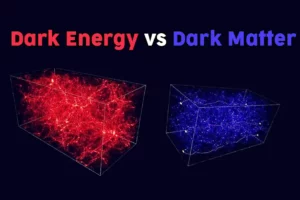
Dark matter and dark energy are distinct; dark matter exerts gravitational pull, while dark energy drives the universe’s accelerated expansion.
Dark matter can be seen with telescopes.
Dark matter does not emit or reflect light, making it invisible to all forms of electromagnetic observation.
Significance of Dark Matter in Science and Cosmology
Understanding dark matter is crucial for comprehending the universe’s composition, structure, and evolution. It influences galaxy formation, cosmic web development, and the overall dynamics of the cosmos. Unraveling its nature could unlock new physics beyond the Standard Model, potentially revolutionizing our grasp of fundamental particles and forces. The quest for dark matter exemplifies humanity’s enduring curiosity and the drive to illuminate the unseen aspects of reality.
FAQ
What are the leading candidates for dark matter?
Leading candidates include Weakly Interacting Massive Particles (WIMPs), Axions, and Sterile Neutrinos.
What role do modern observatories play in dark matter research?
Modern observatories like the James Webb Space Telescope and Vera C. Rubin Observatory enhance our ability to study dark matter through advanced imaging and surveys.


Leave a Reply