

Short Answer
Definition of Space Research
Space research encompasses the scientific study and exploration of outer space beyond Earth’s atmosphere. It involves investigating celestial phenomena, cosmic bodies, and the fundamental laws governing the universe. This field integrates disciplines such as astrophysics, cosmology, planetary science, and aerospace engineering to deepen humanity’s understanding of the cosmos and our place within it.
Significance and Philosophical Implications
The pursuit of space research is not merely a scientific endeavor but a profound journey that challenges humanity’s worldview. It raises essential questions about our origins, the existence of extraterrestrial life, and the future trajectory of human civilization. By exploring the vastness of space, we confront both the enormity of the universe and the fragility of our own existence, fostering a unique blend of humility and empowerment.
- Existential Inquiry:
Space research prompts reflection on where humanity comes from and whether life exists beyond Earth. - Cosmic Perspective:
Observing the universe encourages a deeper appreciation for Earth and motivates responsible stewardship of our planet. - Cultural Inspiration:
The cosmos has historically inspired art, mythology, and literature, continuing to fuel creativity and collective imagination today.
Technological Advancements Driven by Space Exploration
Space exploration acts as a powerful catalyst for innovation, driving technological progress that extends well beyond its original scope. The challenges of operating in space have led to breakthroughs in materials science, robotics, artificial intelligence, and communication systems. These advancements have practical applications in everyday life, enhancing sectors such as medicine, environmental monitoring, and global navigation.
- Satellite Technology:
Revolutionized weather forecasting and GPS navigation, improving safety and convenience worldwide. - Robotics and AI:
Developed for space missions, these technologies now support medical procedures and industrial automation. - Materials Science:
Innovations for spacecraft durability have influenced the creation of stronger, lighter materials used in various industries.
Current and Future Endeavors in Space Exploration
As of 2026, space exploration is entering a new phase focused on sustainable human presence beyond Earth. Ambitious projects aim to establish lunar bases and conduct manned missions to Mars, marking a shift from exploration to colonization. These initiatives require unprecedented international cooperation and foster resilience and adaptability on a global scale.
- Lunar Habitats:
Plans to build permanent bases on the Moon to support scientific research and serve as a stepping stone for deeper space missions. - Mars Missions:
Human expeditions to Mars aim to explore the planet’s surface and assess its potential for long-term habitation. - International Collaboration:
Space agencies and private companies worldwide are joining forces to pool resources and expertise.
Scientific Frontiers and Mysteries
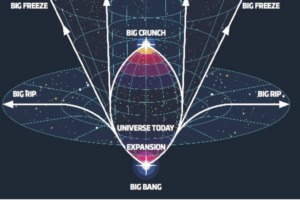
Space research continually pushes the boundaries of known physics by investigating enigmatic phenomena such as dark matter, dark energy, and black holes. These areas challenge existing theories and hold the promise of revolutionary discoveries that could transform our understanding of the universe and lead to new technologies.
- Dark Matter and Dark Energy:
Invisible components that constitute most of the universe’s mass-energy, their nature remains one of the greatest scientific puzzles. - Black Holes:
Regions of spacetime exhibiting gravitational forces so intense that nothing, not even light, can escape, offering insights into gravity and quantum mechanics.
Environmental Insights from Planetary Science
Studying other planets and their atmospheres provides valuable analogs for understanding Earth’s environmental challenges. Research on planetary responses to solar radiation and atmospheric changes informs climate science and resource management, contributing to strategies for sustainability and resilience on our home planet.
Democratization and Inclusivity in Space Exploration
The landscape of space research is becoming increasingly diverse, with private enterprises and international partnerships expanding access and participation. This democratization broadens the range of perspectives and resources, fostering innovation and making space exploration a collective human endeavor rather than the domain of a few select nations.
Why Space Research Matters in 2026
Space research holds a dual role as both a mirror reflecting human curiosity and resilience, and a window revealing new possibilities beyond current knowledge. It challenges complacency, inspires technological and intellectual innovation, and nurtures a shared aspiration to transcend earthly limitations. By exploring the cosmos, humanity embarks on a multidimensional journey that enriches scientific understanding, cultural expression, and global cooperation.
Real-World Examples of Space Research Impact
- Global Positioning System (GPS):
Developed from satellite technology, GPS has become integral to navigation, logistics, and emergency response worldwide. - Climate Monitoring Satellites:
Provide critical data for tracking weather patterns, natural disasters, and long-term climate change. - Robotic Space Missions:
Rovers on Mars and probes exploring distant celestial bodies have expanded our knowledge of planetary environments and potential habitability.
Common Misconceptions About Space Exploration
Space research is purely theoretical and has little practical benefit.
Space exploration drives technological innovations that improve daily life, from medical devices to communication systems.
Only governments can conduct meaningful space research.
Private companies and international collaborations now play a significant role, increasing accessibility and diversity in the field.
Space exploration is a solitary pursuit without cultural impact.
The cosmos inspires art, literature, and philosophy, enriching human culture and creativity.
FAQ
Why is space research important?
Space research drives technological innovation, enhances our understanding of the universe, and inspires cultural creativity.
What are current trends in space exploration?
Current trends include establishing lunar bases and manned missions to Mars, focusing on sustainable human presence beyond Earth.
How does space research impact daily life?
Technological advancements from space research have led to improvements in fields like medicine, communication, and navigation.



Leave a Reply