

Short Answer
Understanding Modern Cosmology
Modern cosmology is the scientific discipline dedicated to exploring the universe’s beginnings, its large-scale structure, its ongoing evolution, and its ultimate destiny. This field synthesizes observations and theoretical models to construct a comprehensive picture of the cosmos. Despite its many groundbreaking achievements, contemporary cosmology currently confronts significant challenges that may require profound revisions to its foundational theories. These challenges have ignited vigorous discussions among physicists, astronomers, and philosophers, highlighting a dynamic intersection where empirical puzzles meet established scientific frameworks and where the mysteries of the universe continue to captivate human curiosity.
Key Milestones in Cosmological Research
Historically, cosmology has celebrated several pivotal discoveries that have shaped our understanding of the universe:
- Cosmic Microwave Background Radiation:
The detection of this faint afterglow of the Big Bang provided compelling evidence supporting the universe’s hot, dense origin. - Dark Matter Evidence:
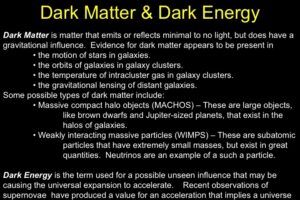
Observations of gravitational effects that cannot be explained by visible matter alone suggest the presence of an unseen form of matter influencing cosmic structures. - Accelerated Expansion and Dark Energy:
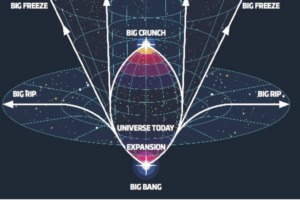
Measurements indicating that the universe’s expansion is speeding up imply the existence of a mysterious energy component driving this acceleration.
While these discoveries have formed a coherent narrative about cosmic history, subtle inconsistencies beneath the surface challenge the completeness of this story.
The Hubble Tension: A Central Puzzle
One of the most prominent issues in current cosmology is the “Hubble tension,” which refers to the conflicting measurements of the universe’s expansion rate, known as the Hubble constant. Different methods yield divergent results:
- Early Universe Measurements:
Data from the cosmic microwave background radiation suggest one value for the expansion rate. - Local Universe Observations:
Measurements based on supernovae and other nearby cosmic indicators indicate a higher expansion rate.
This persistent discrepancy, despite improvements in observational techniques and data analysis, suggests that either unknown physical phenomena are missing from current models or that systematic errors remain undetected in measurement methods.
The Enigma of Dark Matter and Dark Energy
Dark matter and dark energy constitute the majority of the universe’s total energy content, yet their true nature remains elusive:
- Dark Matter:
Inferred from gravitational effects on visible matter, dark matter has resisted direct detection despite extensive experimental efforts involving particle detectors and astronomical surveys. - Dark Energy:
This mysterious force is believed to drive the accelerated expansion of the universe, challenging fundamental assumptions about spacetime and cosmic fate.
The inability to directly observe these components highlights significant gaps in our understanding and raises questions about the validity of the standard cosmological model.
The Standard Cosmological Model and Its Limitations
The prevailing framework in cosmology, known as the ΛCDM model, integrates cold dark matter (CDM) and a cosmological constant (Λ) to explain a wide range of observations. Despite its successes, this model relies heavily on entities that have not been empirically confirmed. This reliance introduces a conceptual vulnerability, prompting scientists to question whether the model is a provisional scaffold awaiting replacement or refinement.
Exploring Alternative Theories
In response to these challenges, researchers are investigating various extensions and alternatives to the standard model, including:
- Modifications to General Relativity:
Proposals to alter Einstein’s theory on cosmic scales to account for observed anomalies. - Exotic Fields and Particles:
Hypothetical new components that could explain dark matter and dark energy phenomena. - Multiverse Concepts and Variable Constants:
Radical ideas suggesting multiple universes or changing physical constants over time.
While these hypotheses offer intriguing possibilities, none have yet achieved broad acceptance or definitive empirical support, reflecting the profound uncertainty at cosmology’s cutting edge.
Philosophical and Psychological Dimensions of the Cosmological Crisis
The current state of cosmology also touches on deeper human concerns about knowledge and existence. The field’s grand questions about origins and destiny resonate with our innate desire for meaningful narratives. The discomfort arising from unresolved mysteries fuels both scientific inquiry and philosophical reflection, illustrating how crises in understanding can stimulate intellectual growth and creativity.
Historical Context: Scientific Revolutions and Paradigm Shifts
Periods of scientific upheaval are not unprecedented. History shows that anomalies challenging established views often precede major breakthroughs:
- Copernican Revolution:
The shift from Earth-centered to Sun-centered cosmology transformed astronomy and philosophy. - Quantum Mechanics Emergence:
The development of quantum theory revolutionized physics by addressing phenomena classical mechanics could not explain.
The current challenges in cosmology may similarly herald a transformative new understanding of the universe.
Future Directions and Technological Advances
Progress in resolving cosmological puzzles depends on both improved observational capabilities and theoretical innovation. Upcoming technologies and collaborative efforts include:
- Next-Generation Telescopes:
Instruments designed to capture more precise data across the electromagnetic spectrum. - Gravitational Wave Detectors:
Facilities that observe ripples in spacetime, offering new insights into cosmic events. - Advanced Particle Experiments:
Experiments aimed at detecting dark matter particles and probing fundamental physics. - Interdisciplinary Collaboration:
Integrating astrophysics, particle physics, and philosophy to address conceptual and empirical challenges.
The Significance of Cosmology in Human Knowledge
Cosmology occupies a unique niche at the intersection of empirical science and metaphysical inquiry. The current challenges do not diminish its importance; rather, they highlight the evolving nature of scientific exploration. Embracing uncertainty and complexity, cosmology continues to inspire wonder and drive humanity’s quest to comprehend the universe and our place within it.
Conclusion: The Ongoing Quest to Understand the Universe
The question facing modern cosmology is not simply whether it is in crisis, but what this state reveals about the process of scientific investigation itself. The universe resists simple explanations, demanding humility, persistence, and ingenuity. It is through grappling with these profound challenges that transformative discoveries emerge, promising to deepen our cosmic understanding and enrich the human experience.
FAQ
What is modern cosmology?
Modern cosmology is the scientific study of the universe's origins, structure, evolution, and ultimate fate.
What is the Hubble tension?
The Hubble tension refers to the discrepancy between different measurements of the universe's expansion rate, known as the Hubble constant.
What are dark matter and dark energy?
Dark matter is an unseen form of matter that influences the universe's structure, while dark energy is a mysterious force driving its accelerated expansion.


Leave a Reply