
Short Answer
Definition and Historical Significance of Tycho Brahe’s Supernova
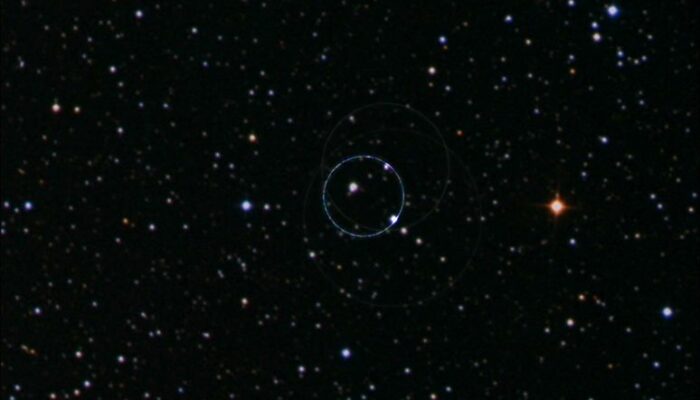
Tycho Brahe’s supernova, observed in 1572, stands as a landmark event in the history of astronomy. This stellar explosion, also known as SN 1572 or Tycho’s Star, was a brilliant supernova that temporarily outshone planets and stars in the night sky. Its observation marked a pivotal moment, challenging long-held beliefs about the immutability of the heavens and initiating a new era of scientific inquiry into cosmic phenomena.
- Historical Context:
Tycho Brahe’s detailed records of the supernova provided one of the earliest systematic observations of a celestial event, bridging the gap between medieval and modern astronomy. - Impact on Astronomy:
The event questioned Aristotelian cosmology by demonstrating that the celestial realm was not unchangeable, thus reshaping the understanding of the universe’s dynamic nature.
Classification and Nature of Tycho’s Supernova
Supernovae are broadly divided into Type I and Type II categories, distinguished by their progenitor stars and explosion mechanisms. Tycho’s supernova is classified as a Type Ia supernova, which arises from the thermonuclear detonation of a white dwarf star within a binary system.
- Type Ia Characteristics:
These supernovae occur when a white dwarf accretes matter from a companion star, reaching a critical mass that triggers a runaway nuclear reaction. - Elemental Synthesis:
The explosion synthesizes heavy elements such as iron, nickel, and silicon, contributing significantly to the chemical enrichment of galaxies and planetary systems.
Mechanics of Supernova Remnants and Cosmic Echoes
Following the initial explosion, the supernova remnant expands, sending shock waves through the surrounding interstellar medium. These shock waves interact with gas and dust, producing luminous emissions across multiple wavelengths and creating what can be described as cosmic echoes.
- Shock Wave Dynamics:
The collision of shock waves with interstellar material generates high-energy emissions observable in radio, optical, and X-ray spectra. - Acoustic Fingerprints:
These emissions serve as a unique signature of the explosion’s energy and expansion, allowing astrophysicists to reconstruct the event’s dynamics.
Advanced Observations and Elemental Mapping
Modern astrophysical instruments, such as the Chandra X-ray Observatory, have enabled detailed studies of Tycho’s supernova remnant. These observations reveal the spatial distribution of synthesized elements, offering insights into the nucleosynthesis processes during the explosion.
- Elemental Distribution:
Mapping of iron, nickel, and silicon within the remnant provides a record of the nuclear reactions that occurred during the supernova. - Scientific Implications:
Understanding the elemental composition aids in piecing together the life cycles of stars and the cosmic origin of heavy elements.
Philosophical and Temporal Reflections on Cosmic Events
The study of Tycho Brahe’s supernova also invites contemplation on the nature of time and cosmic history. Brahe’s meticulous documentation acts as a temporal link, connecting past astronomical phenomena with present-day scientific exploration.
- Time’s Elasticity:
The echoes of the supernova illustrate how events from centuries ago continue to influence current understanding, highlighting the dynamic and evolving character of the universe. - Cosmic Continuity:
This perspective underscores the universe as a constantly changing entity rather than a static backdrop.
Interdisciplinary Engagement: Art Meets Science
Tycho’s supernova has inspired innovative approaches that blend scientific data with artistic expression. By converting electromagnetic signals from the remnant into sound, researchers create immersive experiences that deepen public appreciation of cosmic phenomena.
- Multisensory Representation:
Transforming visual and radio data into auditory formats allows audiences to engage with the universe in novel and emotionally resonant ways. - Public Outreach:
This fusion of art and science enhances educational efforts and fosters a broader interest in astronomy.
Implications for Cosmology and Future Research
Insights gained from studying Tycho Brahe’s supernova extend beyond stellar phenomena, influencing broader cosmological theories. Understanding the mechanisms of Type Ia supernovae is crucial for exploring the expansion of the universe and the nature of dark energy.
- Cosmic Expansion:
Type Ia supernovae serve as standard candles for measuring cosmic distances, playing a key role in determining the rate of universal expansion. - Dark Energy Research:
Observations of these supernovae contribute to investigations into dark energy, which affects the ultimate fate of the cosmos.
Conclusion: The Enduring Legacy of Tycho Brahe’s Supernova
The echoes of Tycho Brahe’s supernova continue to illuminate the complexities of the cosmos, linking historical observations with modern astrophysical research. This event exemplifies the intricate interplay between destruction and creation inherent in stellar life cycles, enriching our understanding of nucleosynthesis and cosmic evolution. As a beacon of scientific curiosity and interdisciplinary collaboration, Tycho’s supernova invites ongoing exploration into the mysteries that lie beyond our terrestrial horizon.
FAQ
What is Tycho Brahe's supernova?
Tycho Brahe’s supernova, also known as SN 1572, is a Type Ia supernova observed in 1572, marking a significant event in the history of astronomy.
What are the implications of Tycho Brahe's supernova for modern astronomy?
The study of Tycho Brahe’s supernova provides insights into stellar evolution, the expansion of the universe, and the nature of dark energy.


Leave a Reply