
Short Answer
Understanding Photon Counting
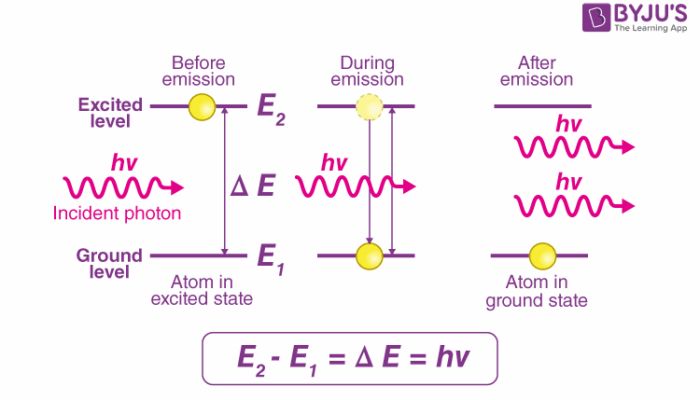
Photon counting refers to the precise measurement and enumeration of individual photons, the fundamental particles of light. Unlike classical views that treat light solely as a wave, modern physics recognizes photons as discrete energy packets, each carrying quantized energy. This concept is pivotal in exploring the nature of light, its interaction with matter, and its applications across various scientific and technological fields.
- Photon:
A quantum of electromagnetic radiation, representing the smallest possible unit of light energy. - Photon Counting:
The process of detecting and tallying individual photons, enabling detailed analysis of light at the quantum level.
Historical Evolution of Light Detection
Early light detection methods were relatively rudimentary, often relying on aggregate measurements that averaged the behavior of many photons. These traditional detectors lacked the sensitivity to resolve individual photon events, limiting their utility in advanced scientific research. As the demand for more granular insight into light’s properties grew, innovations in detection technology emerged, culminating in devices capable of single-photon sensitivity.
Mechanism Behind Photon Counting Technologies
One of the most significant advancements in photon detection is the development of single-photon avalanche diodes (SPADs). These devices exploit the photoelectric effect, where incoming photons generate electron-hole pairs within a semiconductor material. This event triggers an avalanche multiplication of charge carriers, producing a measurable current pulse that corresponds to the arrival of a single photon. The high sensitivity and low noise characteristics of SPADs make them ideal for precise photon counting.
Quantum Optics and Photon Counting
Photon counting plays a crucial role in quantum optics, a field that investigates the quantum mechanical properties of light. Experiments involving entangled photons demonstrate phenomena such as quantum superposition, where photons exist simultaneously in multiple states. By counting photons individually, researchers can analyze these complex quantum states, advancing our understanding of quantum information processing and enabling secure communication technologies based on quantum cryptography.
Applications in Medical Imaging
Photon counting has transformed medical diagnostic techniques, particularly in imaging modalities like positron emission tomography (PET). Incorporating photon-counting detectors into PET scanners enhances image resolution and specificity, allowing for earlier and more accurate disease detection. This non-invasive approach improves patient outcomes by providing detailed insights into physiological processes at the molecular level.
Role in Astronomy and Space Science
In astronomy, photon counting is indispensable for analyzing light from distant celestial objects. Advanced telescopes equipped with photon-counting detectors can dissect the spectral signatures of stars and galaxies, revealing critical information about their composition, age, and motion. This capability aids astronomers in unraveling the mysteries of cosmic evolution and the fundamental workings of the universe.
Photon Counting in Quantum Computing
The field of quantum computing benefits significantly from precise photon detection. Quantum bits, or qubits, often rely on photons to encode information. Accurate photon counting enables the manipulation and measurement of qubits, facilitating quantum algorithms that outperform classical computations in speed and complexity. This synergy between photonics and quantum computing is driving the development of next-generation computational technologies.
Philosophical and Scientific Significance
The ability to detect individual photons challenges classical perceptions of light, highlighting its dual wave-particle nature. This duality prompts profound philosophical questions about the nature of reality and observation. Advances in photon counting not only deepen scientific knowledge but also enrich philosophical discourse on the fundamental properties of the universe.
Challenges and Future Directions
Despite remarkable progress, photon counting technology faces ongoing challenges. Issues such as background noise interference, limited detection efficiency at certain wavelengths, and the integration of photon-counting systems into existing infrastructures require continuous innovation. The dynamic field of photonics must evolve to address these obstacles and harness emerging scientific discoveries.
Summary and Outlook
The precise counting of photons marks a transformative milestone in the study and application of light. From enhancing medical diagnostics to enabling breakthroughs in quantum computing and astronomy, photon counting technologies have far-reaching implications. As research advances, the potential for new insights and applications continues to expand, promising to deepen our understanding of the universe and drive technological progress.
FAQ
What is photon counting?
Photon counting is the process of detecting and counting individual photons, allowing for precise analysis of light at the quantum level.
How has photon counting impacted medical imaging?
Photon counting has improved image resolution and specificity in medical imaging techniques like PET, leading to more accurate disease detection.
Why is photon counting important in quantum computing?
In quantum computing, photon counting enables the manipulation and measurement of qubits, enhancing computational capabilities beyond classical systems.



Leave a Reply