
Short Answer
Understanding the Cosmos: A Historical Perspective
The quest to comprehend the universe has fascinated thinkers, philosophers, and scientists throughout history. Central to this exploration is the monumental era defined by Sir Isaac Newton’s groundbreaking contributions. His pioneering work established the foundation of classical mechanics, setting the stage for centuries of scientific inquiry. Yet, this legacy also sparked an enduring debate: how can the deterministic precision of Newtonian physics be reconciled with the often unpredictable and mysterious phenomena observed in the cosmos? This question challenges us to consider whether Newton’s laws can fully explain the vast complexities of the universe or if they encounter limitations when faced with its infinite expanse.
Newton’s Legacy in Classical Mechanics
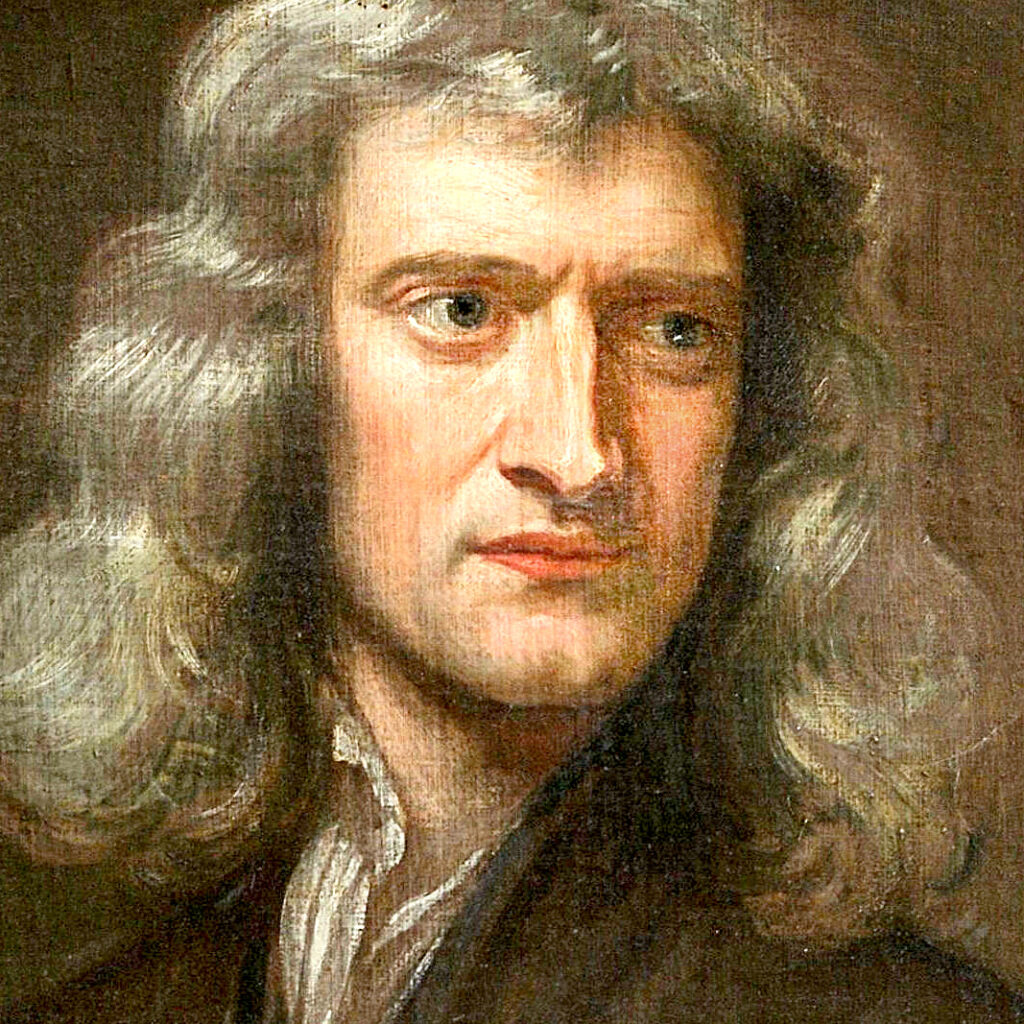
Isaac Newton stands as a towering figure in the chronicles of science. His seminal publication, Philosophiæ Naturalis Principia Mathematica (1687), introduced the three laws of motion alongside the law of universal gravitation. These principles describe the behavior of objects with remarkable accuracy and have provided a robust framework for understanding the physical world for over 300 years. Newton’s first law, for example, states that an object will maintain its state of motion unless influenced by an external force, offering a clear and predictable model of physical interactions. However, as humanity’s observational reach extended beyond Earth, new challenges to this framework began to surface.
Newtonian Mechanics and Celestial Phenomena
Newton’s laws adeptly explain many celestial motions, such as the elliptical orbits of planets around the sun, as described by Kepler’s laws. Nevertheless, as astronomers probed deeper into the universe-examining distant galaxies and the large-scale structure of space-anomalies emerged that Newtonian physics struggled to address. The fabric of space-time itself, once assumed to be governed solely by Newton’s principles, revealed complexities that were beyond his conceptual horizon.
Extreme Cosmic Entities: Black Holes and Neutron Stars
Objects like black holes and neutron stars present gravitational forces so intense that Newtonian mechanics cannot adequately describe their effects. These dense celestial bodies challenge the limits of classical physics. For instance, calculating the gravitational pull of a black hole using Newton’s law results in values that fail to match observed phenomena, highlighting the inadequacy of Newtonian gravity in such extreme contexts.
Gravitational Lensing: A Phenomenon Beyond Newton
Gravitational lensing, the bending of light around massive objects, further illustrates the limitations of Newtonian physics. First empirically confirmed during the 1919 solar eclipse, this effect demonstrated that light does not travel in straight lines when influenced by strong gravitational fields. While Newton’s law of gravitation captures the essence of attraction between masses, it cannot fully explain the curvature of light paths, a phenomenon more accurately described by Einstein’s general theory of relativity.
Expanding the Framework: Beyond Newtonian Physics
Newton’s laws, while foundational, are now understood as approximations within a broader and more intricate physical reality. The challenges posed by the cosmos extend into other domains such as thermodynamics, quantum mechanics, and relativity, where classical equations often yield counterintuitive or incomplete results. For example, Newtonian gravity does not account for the behavior of particles moving at speeds close to that of light or the interactions of subatomic particles.
Quantum Mechanics and the Limits of Determinism
Newton’s worldview was fundamentally deterministic: if all forces and initial conditions were known, the future could be precisely predicted. However, the advent of quantum mechanics introduced inherent uncertainties, epitomized by Heisenberg’s uncertainty principle, which imposes fundamental limits on the precision of simultaneous measurements of certain pairs of physical properties. This quantum unpredictability stands in stark contrast to Newton’s vision of a calculable universe, presenting a profound conceptual challenge.
The Ongoing Dialogue Between Classical and Modern Physics
Newton’s contributions are not the conclusion of scientific understanding but rather the foundation for an evolving discourse. Modern physics necessitates a synthesis of classical mechanics with the insights of relativity and quantum theory. This dynamic interplay enriches our comprehension of the universe, revealing both the power and the boundaries of Newtonian principles.
Knowledge as a Progressive Endeavor
The legacy of Newton exemplifies the nature of scientific progress: a continuous exchange where established knowledge is both utilized and questioned. His laws provide essential tools for interpreting the natural world, yet they also highlight the constraints inherent in any scientific model. The cosmic narrative is thus an ongoing saga, where each generation builds upon previous discoveries, posing new questions and deepening our understanding of the universe’s mysteries.
Significance of Newton’s Work in Contemporary Science
Newton’s theories remain indispensable in many areas of science and technology, underpinning everything from engineering to space exploration. His laws offer a reliable framework for predicting the motion of everyday objects and celestial bodies alike. However, recognizing their limitations encourages the pursuit of more comprehensive theories that can accommodate the complexities of the cosmos, such as general relativity and quantum field theory.
Conclusion: Embracing the Cosmic Challenge
As humanity ventures further into the unknown, the interplay between Newtonian mechanics and modern physics continues to illuminate the mechanisms governing reality. Newton’s intellectual legacy serves as a beacon, guiding inquiry while reminding us of the profound enigmas that remain. The universe invites us to explore its depths with curiosity and humility, carrying forward the spirit of discovery that Newton so powerfully embodied.
FAQ
What is the significance of Newton's work in modern physics?
Newton’s work laid the foundation for classical mechanics and continues to inform our understanding of motion and gravity, even as modern physics has expanded to include quantum mechanics and relativity.
How does Newtonian physics relate to the cosmos?
Newtonian physics provides a framework for understanding many celestial motions, but its limitations become apparent in extreme cosmic phenomena like black holes and neutron stars.




Leave a Reply