
Short Answer
Definition of Complex Fluids
Complex fluids are heterogeneous mixtures composed of multiple interacting components such as solid particles, polymers, or surfactants. Unlike simple Newtonian fluids, these substances exhibit intricate behaviors that deviate from classical fluid dynamics. Their properties often depend on time, applied stress, and internal microstructure, resulting in non-linear and sometimes counterintuitive responses.
- Examples:
Common complex fluids include colloidal suspensions, emulsions, foams, polymer solutions, honey, and certain paints with thixotropic characteristics. - Characteristics:
They display emergent phenomena due to interactions among their constituents, leading to behaviors such as shear thinning, viscoelasticity, and time-dependent flow properties.
Classification and Types of Complex Fluids
Complex fluids are traditionally divided into several categories based on their composition and behavior:
- Colloidal Suspensions:
Mixtures where fine particles are dispersed within a continuous medium, exhibiting stability due to Brownian motion and interparticle forces. - Emulsions:
Systems consisting of two immiscible liquids where one is dispersed in the other as droplets, stabilized by surfactants. - Foams:
Gas bubbles trapped within a liquid or solid matrix, showing unique mechanical and flow properties. - Polymer Solutions:
Fluids containing dissolved polymers that impart viscoelastic and non-Newtonian characteristics.
Emergence of Novel Phases in Complex Fluids
Recent scientific investigations have uncovered previously unknown phases within complex fluids that challenge conventional classifications. These include:
- Active Fluids:
Systems composed of self-driven particles that consume energy from their environment to generate autonomous motion, leading to collective dynamic patterns. - Living Crystals:
Transient, self-organized structures formed by active particles that exhibit solid-like order while maintaining fluidity.
These discoveries highlight the ability of complex fluids to self-organize into states that blur the line between solids and liquids, expanding the traditional phase diagram of matter.
Fundamental Physics Behind Complex Fluid Behavior
The unusual properties of complex fluids arise primarily from non-equilibrium statistical mechanics, which governs systems far from thermodynamic equilibrium. Unlike equilibrium fluids where particle distributions are stable, complex fluids experience continuous fluctuations and energy exchanges that drive emergent phenomena.
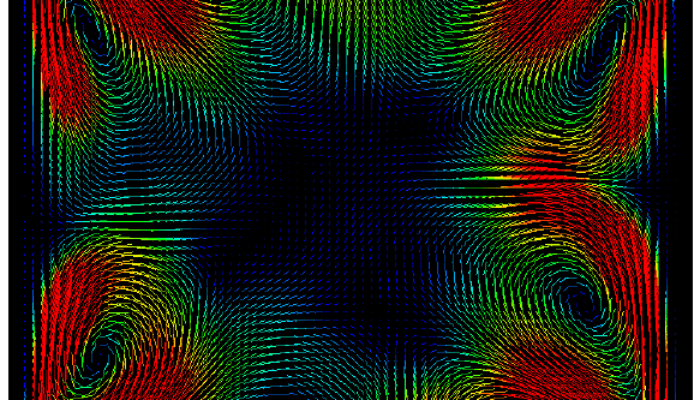
Topological concepts such as defects, vortices, and disclinations are instrumental in explaining flow patterns and structural organization within these fluids. Understanding these topological features enables researchers to manipulate fluid behavior, optimize flow properties, and design materials with tailored functionalities.
Mathematical Framework and Models
The behavior of complex fluids is often described using constitutive equations that relate stress and strain rates, incorporating variables that capture their non-Newtonian nature. For example, the generalized Navier-Stokes equations are modified to include terms accounting for viscoelasticity and active stresses:
σ = η(γ̇) + σ_active + σ_elastic
- σ: Total stress tensor
- η(γ̇): Shear-rate-dependent viscosity
- σ_active: Stress generated by active particles
- σ_elastic: Elastic stress from polymeric or structural components
These models help predict flow behavior under various conditions and guide experimental design.
Practical Applications of Complex Fluids
The insights gained from studying complex fluids have significant implications across multiple industries and biological systems:
- Industrial Formulations:
Enhanced control over complex fluid properties improves product stability and performance in cosmetics, pharmaceuticals, and food processing. - Drug Delivery:
Active fluids enable the development of self-propelling carriers capable of navigating complex biological environments, potentially increasing therapeutic efficiency and reducing side effects. - Biological Systems:
Understanding anomalous fluid dynamics in living organisms aids in the study of diseases such as Alzheimer’s, where fluid transport and cellular interactions are disrupted.
Common Misconceptions About Complex Fluids
Complex fluids behave like simple liquids.
They exhibit non-linear, time-dependent, and often viscoelastic behaviors that differ fundamentally from Newtonian fluids.
Phase transitions in complex fluids follow classical thermodynamics.
Many complex fluids exist in non-equilibrium states where traditional phase transition theories do not apply, requiring new frameworks.
Importance and Future Perspectives
The study of complex fluids is crucial for advancing both fundamental science and technological innovation. By uncovering new phases and behaviors, researchers can develop materials with unprecedented properties and functionalities. Future research will likely leverage high-throughput experiments and advanced computational modeling to deepen our understanding and enable predictive control over these systems.
Interdisciplinary collaboration among physicists, chemists, and biologists will be essential to translate theoretical insights into practical applications, fostering breakthroughs in medicine, materials science, and beyond.
Summary
Complex fluids represent a fascinating class of materials characterized by heterogeneous composition and emergent behaviors that defy classical fluid mechanics. The discovery of novel phases such as active fluids and living crystals has expanded our understanding of matter’s states. Grounded in non-equilibrium physics and enriched by topological analysis, the study of complex fluids offers promising avenues for innovation in industry and healthcare. Continued exploration promises to unlock new scientific paradigms and transformative technologies.
FAQ
What are complex fluids?
Complex fluids are heterogeneous mixtures that exhibit intricate behaviors deviating from classic fluid dynamics, often influenced by time, stress, and internal structure.
What are some examples of complex fluids?
Examples include colloidal suspensions, emulsions, foams, and polymer solutions.
What are active fluids?
Active fluids are composed of self-driven particles that generate autonomous motion, leading to dynamic collective behaviors.



Leave a Reply