Are there nuclear reactions going on in our bodies?

Understanding Nuclear Reactions in the Human Body The question of whether nuclear reactions occur within the human body invites a fascinating exploration at the intersection of biology, chemistry, and physics. While nuclear reactions are commonly associated with large-scale phenomena such as stars and nuclear reactors, subtle nuclear processes do indeed have a presence in biological […]

Read More →

What is a swift heavy ion beam?

Definition of Swift Heavy Ion Beams Swift heavy ion beams (SHIBs) refer to streams of highly charged ions accelerated to velocities approaching a significant fraction of the speed of light. These ions are distinguished by their substantial mass compared to lighter particles, which influences their interaction dynamics when they collide with target materials. SHIBs are […]

Read More →

CERN Confirms Direct CP Violation: Matter’s Mirror Shattered

Definition of CP Violation CP violation, or Charge-Parity violation, describes a fundamental asymmetry in the laws of physics where the behavior of particles changes when they are replaced by their corresponding antiparticles and their spatial coordinates are inverted. This phenomenon is crucial for explaining why the universe contains more matter than antimatter, a question that […]

Read More →

How strong is the God particle and what can it do?

Definition of the Higgs Boson The Higgs boson, often dubbed the “God particle,” is a fundamental particle in the field of particle physics, playing a crucial role within the Standard Model. It is essential for understanding the underlying principles that govern the universe, particularly the origin of mass for elementary particles. This particle’s discovery has […]

Read More →

What are the quantum roots of nuclear fission?

Definition of Nuclear Fission Nuclear fission is a fundamental physical process in which the nucleus of an atom splits into two or more smaller nuclei, accompanied by the release of a considerable amount of energy. This phenomenon is central to both nuclear power generation and atomic weaponry, representing a complex interplay between nuclear physics and […]

Read More →

What is the functional form of the strong nuclear force?

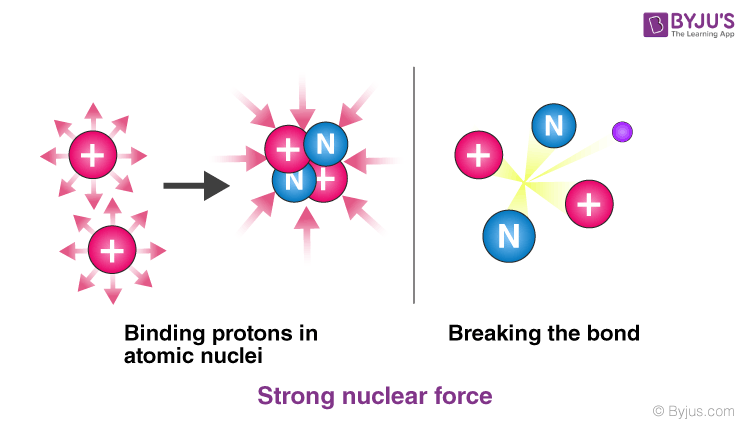
Definition of the Strong Nuclear Force The strong nuclear force is a fundamental interaction that governs the behavior of subatomic particles, primarily responsible for binding protons and neutrons within atomic nuclei. This force is essential for the stability and structure of matter, operating with immense strength over extremely short distances. Its unique characteristics and underlying […]

Read More →

What is the scope of nuclear physics research?

Definition of Nuclear Physics Nuclear physics is a specialized branch of physics focused on studying the components and interactions within atomic nuclei. This scientific discipline explores the forces and particles that constitute the nucleus, aiming to understand its structure, behavior, and the processes it undergoes. Nuclear physics intersects with various fields, including energy generation, medicine, […]

Read More →

How many elementary particles are there?

Definition of Elementary Particles Elementary particles are the most basic building blocks of matter and energy in the universe, not composed of smaller constituents. They form the foundation of all physical phenomena and are categorized primarily within the framework of the Standard Model of particle physics. This model identifies a set of fundamental particles that […]

Read More →

What is the scope of doing research in high energy physics?

Definition of High Energy Physics High energy physics, also known as particle physics, is a scientific discipline focused on investigating the most fundamental components of matter and the forces that govern their interactions. This field explores particles at energy scales far beyond everyday experiences, aiming to uncover the underlying principles that shape the universe. Fundamental […]

Read More →