
Short Answer
Definition of Atomic Splitting and Ernest Rutherford’s Role
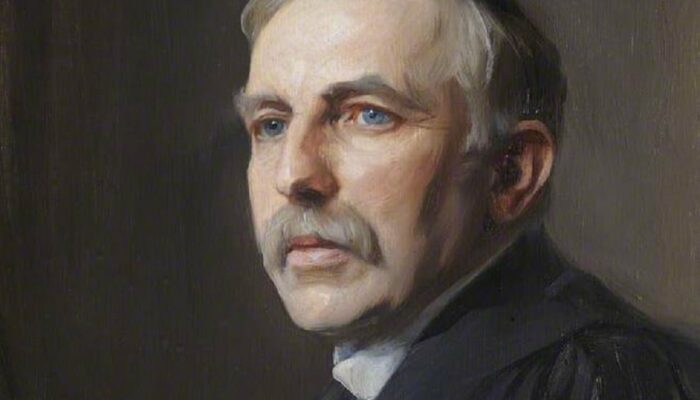
The concept of splitting the atom often evokes images of catastrophic explosions and mushroom clouds. However, the true essence of this scientific breakthrough lies in intellectual discovery and the deepening of our understanding of matter. Central to this transformation is Ernest Rutherford, widely regarded as the “father of nuclear physics.” His pioneering work unraveled the complexities of atomic structure and laid the foundation for both scientific progress and the ethical challenges associated with nuclear research.
Early Life and Academic Background of Ernest Rutherford
Ernest Rutherford was born on August 30, 1871, in the modest surroundings of Spring Grove, New Zealand. Despite his humble beginnings, Rutherford exhibited a profound curiosity about the natural world from an early age. He pursued his education at the University of New Zealand before securing a scholarship to the University of Cambridge. It was in this intellectually stimulating environment that Rutherford began developing the fundamental principles that would shape nuclear science.
Exploration of Radioactivity
Rutherford’s initial scientific endeavors focused on the study of radioactivity, building upon the groundbreaking work of Henri Becquerel and Marie Curie. He meticulously analyzed radioactive emissions and proposed that radiation consists of three distinct types of particles: alpha, beta, and gamma rays. This classification revolutionized the understanding of radioactive phenomena and paved the way for further research into isotopes and nuclear reactions.
Gold Foil Experiment and the Nuclear Model of the Atom
In 1909, Rutherford, along with Hans Geiger and Ernest Marsden, conducted the famous gold foil experiment. Their goal was to validate the then-accepted plum pudding model of the atom by directing alpha particles at a thin sheet of gold foil. Contrary to expectations, while most particles passed through, some were deflected at large angles, with a few even rebounding. This surprising outcome led Rutherford to propose a new atomic model.
He introduced the nuclear model, describing the atom as having a dense, positively charged nucleus at its center, surrounded by negatively charged electrons. This model challenged the long-held belief that atoms were indivisible and fundamentally altered the scientific understanding of atomic structure.
Impact on Subatomic Particle Research
Rutherford’s discoveries ignited a surge of research into the components of the atom, culminating in James Chadwick’s discovery of the neutron in 1932. While Rutherford illuminated the internal structure of atoms, his work also inadvertently initiated the pursuit of nuclear energy, which would later lead to both remarkable technological advancements and serious ethical dilemmas.
Artificial Transmutation and Nuclear Reactions
Furthering his investigations, Rutherford explored artificial transmutation by bombarding elements with alpha particles, successfully transforming them into different elements. This groundbreaking research provided critical insights into nuclear reactions and hinted at the potential for harnessing nuclear energy. These findings had profound implications for both energy production and military technology, raising important ethical questions about the use of such powerful discoveries.
Ethical Considerations and Legacy
Rutherford’s legacy extends beyond his scientific achievements to encompass the moral responsibilities of scientists. The splitting of uranium atoms, a direct extension of his work, led to the development of nuclear power and nuclear weapons. This duality highlights the ethical challenges faced by researchers: balancing the promise of scientific progress with the potential for destructive consequences.
Modern Relevance of Rutherford’s Contributions
Today, Rutherford’s influence is evident in various fields such as nuclear medicine, energy generation, and environmental science. His work serves as a reminder of the need for responsible stewardship of scientific knowledge. As nuclear technology continues to evolve, the lessons from Rutherford’s discoveries encourage a conscientious approach to innovation, ensuring that atomic science benefits humanity rather than endangers it.
Conclusion: The Enduring Significance of Rutherford’s Work
Ernest Rutherford’s groundbreaking contributions marked a turning point in scientific inquiry, transforming our understanding of the atom from a simple, indivisible particle to a complex, dynamic system. His work challenges us to carefully consider the ethical dimensions of scientific exploration. As we advance further into the realm of nuclear science, Rutherford’s legacy urges us to harness atomic knowledge wisely, fostering progress that enriches human life while minimizing harm.
FAQ
Who was Ernest Rutherford?
Ernest Rutherford was a physicist known as the father of nuclear physics, who made pioneering contributions to the understanding of atomic structure and radioactivity.
What was the gold foil experiment?
Conducted in 1909 by Rutherford and his colleagues, the gold foil experiment demonstrated that atoms have a small, dense, positively charged nucleus by observing alpha particle deflections.
What are alpha, beta, and gamma rays?
They are types of radiation discovered by Rutherford: alpha particles are helium nuclei, beta particles are electrons or positrons, and gamma rays are electromagnetic radiation.
How did Rutherford's work influence nuclear energy?
Rutherford’s discoveries on nuclear reactions and artificial transmutation laid the groundwork for harnessing nuclear energy, which later enabled nuclear power and weapons.
What ethical concerns arise from Rutherford’s discoveries?
Rutherford’s work opened possibilities for both peaceful applications like medicine and destructive uses like nuclear weapons, raising questions about the responsibility of scientists.






Leave a Reply