What are the different types of quarks?

Definition of Quarks Quarks are elementary particles that serve as the fundamental building blocks of matter within the framework of particle physics. They are the essential constituents of protons and neutrons, which themselves form the nuclei of atoms found in all known elements. Quarks are never observed as free particles in nature; instead, they combine […]

Read More →

How is nuclear energy measured?

Definition of Nuclear Energy Measurement Nuclear energy measurement refers to the systematic quantification and evaluation of energy produced through nuclear reactions, primarily fission and fusion. This process involves understanding the energy output, safety parameters, and efficiency metrics that govern nuclear power generation. It integrates principles from physics, engineering, and radiological science to provide a comprehensive […]

Read More →

What is the origin of the atomic structure?

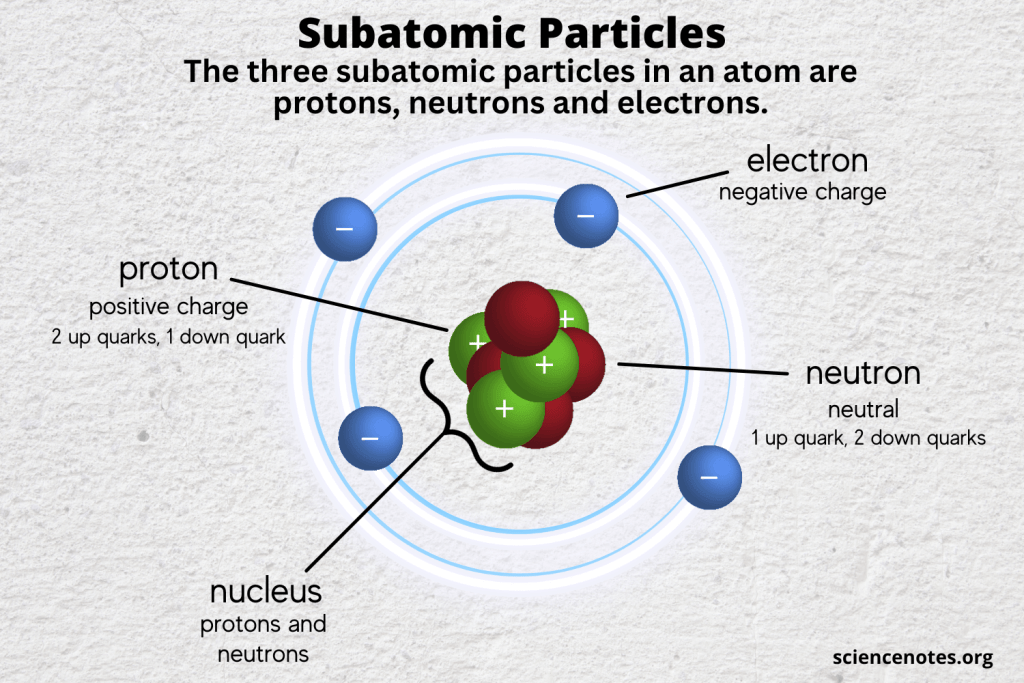
Definition of Atomic Structure Atomic structure refers to the arrangement and composition of the smallest unit of matter known as the atom. Atoms serve as the fundamental building blocks of all substances, defining the properties and behaviors of elements and compounds. Understanding atomic structure involves exploring the components within an atom-protons, neutrons, and electrons-and how […]

Read More →

What flux of neutrinos would kill me?

Definition of Neutrinos and Their Flux Neutrinos are subatomic particles characterized by their extremely small mass and their ability to traverse vast distances through matter with minimal interaction. These elusive particles are produced in a variety of astrophysical processes and are known for their remarkable capacity to pass through entire planets without being absorbed or […]

Read More →

I have heard of protons

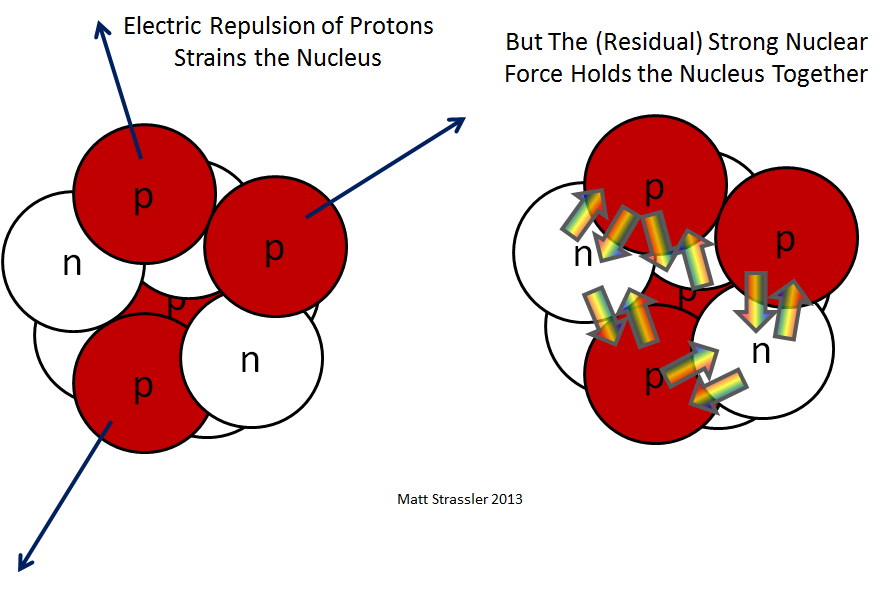
Definition of Protons Protons are subatomic particles that reside within the nucleus of an atom, playing a crucial role in defining the nature of matter. They are baryons, meaning they are composite particles made up of smaller constituents called quarks. Each proton carries a positive electric charge of +1 elementary charge, which is fundamental to […]

Read More →

Why are neutrinos so light?

Definition of Neutrinos Neutrinos are fundamental subatomic particles characterized by their neutral electric charge and extremely small mass. They belong to the lepton family and exist in three distinct types, known as flavors: electron neutrinos, muon neutrinos, and tau neutrinos. These particles are generated in vast quantities through various natural processes, including nuclear fusion in […]

Read More →

Is neutrino a type of chemical element?

Definition of Neutrinos and Chemical Elements Neutrinos are fundamental subatomic particles that are integral to particle physics but should not be confused with chemical elements. Unlike chemical elements, which are defined by the number of protons in their atomic nuclei and cannot be broken down by chemical means, neutrinos are elementary particles without atomic structure. […]

Read More →

Can elementary particles break into two primary particles?

Definition of Elementary Particles Elementary particles are the most basic constituents of matter and the fundamental agents of interactions within the universe. These particles, which include quarks, leptons, and gauge bosons, are considered indivisible and lack any smaller internal structure according to the Standard Model of particle physics. They serve as the foundational elements from […]

Read More →

Are neutrinos smaller in mass than neutrons?

Understanding Neutrinos and Neutrons Within the vast domain of particle physics, neutrinos stand out as mysterious and nearly intangible particles that traverse the universe almost unnoticed. Their elusive characteristics and remarkable properties have intrigued researchers, prompting numerous questions-one of the most compelling being: How does the mass of neutrinos compare to that of neutrons? This […]

Read More →