Siddharth Bardiya?

Overview of Siddharth Bardiya’s Scientific Contributions Within the evolving landscape of scientific research, the work of Siddharth Bardiya often remains underrecognized despite its profound implications. Investigating Bardiya’s academic pursuits and practical innovations raises a fundamental question: who is Siddharth Bardiya, and in what ways does his research challenge traditional scientific paradigms? This inquiry invites reflection […]

Read More →

What is the thinnest material ever built or found naturally?

Understanding the Concept of the Thinnest Material The pursuit of the thinnest material, whether artificially created or naturally found, has long intrigued scientists and researchers. This quest has sparked extensive investigations into the fundamental characteristics of matter at its most minimal scale. As materials science advances, the terminology and criteria defining “thinness” have evolved, prompting […]

Read More →

Where do I start if I want to learn about topological insulators?

Definition of Topological Insulators Topological insulators are a fascinating class of materials that exhibit unique electronic characteristics, bridging the gap between the mathematical field of topology and condensed matter physics. These materials behave as insulators in their interior while supporting conducting states on their surfaces or edges, which are remarkably resistant to impurities and defects. […]

Read More →

What’s the thinnest manmade material?

Understanding Ultrathin Manmade Materials In materials science, the pursuit of the thinnest synthetic substances represents a captivating blend of innovation, engineering prowess, and scientific curiosity. Defining what constitutes the “thinnest” material involves more than just measuring physical dimensions; it also encompasses the unique properties and potential applications these materials offer. This exploration challenges our fundamental […]

Read More →

At what thickness is a piece of material considered quasi-2D?

Definition of Quasi-Two-Dimensional Materials Quasi-two-dimensional (quasi-2D) materials represent a unique class of substances that occupy the dimensional space between traditional two-dimensional (2D) materials and their bulk three-dimensional (3D) counterparts. Unlike strictly 2D materials, which are typically a single atomic layer or just a few layers thick, quasi-2D materials have thicknesses ranging from a few nanometers […]

Read More →

What are the uses and technology benefits of graphene?

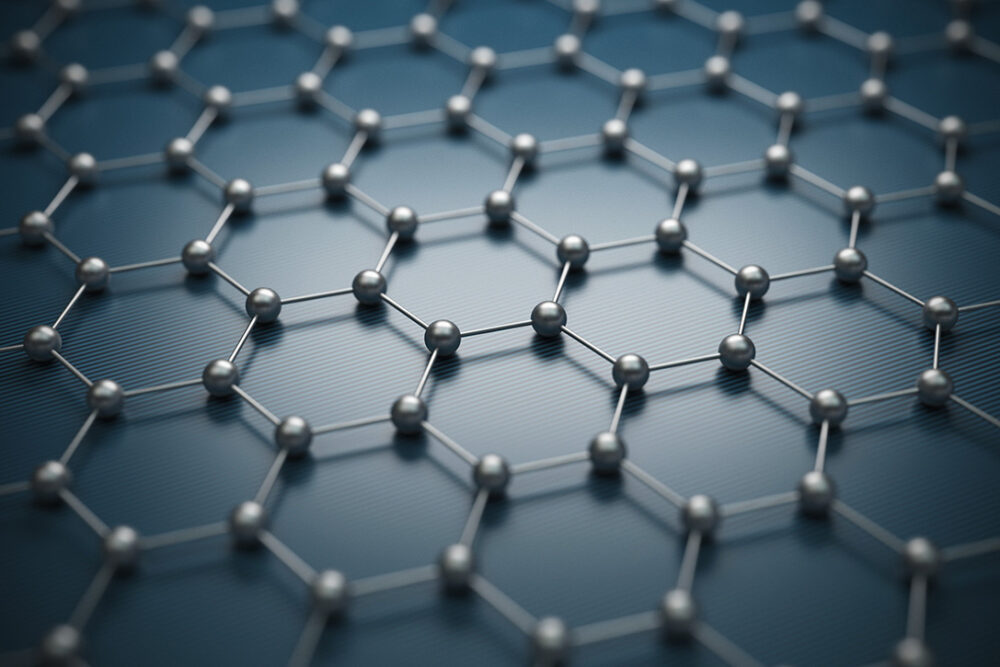
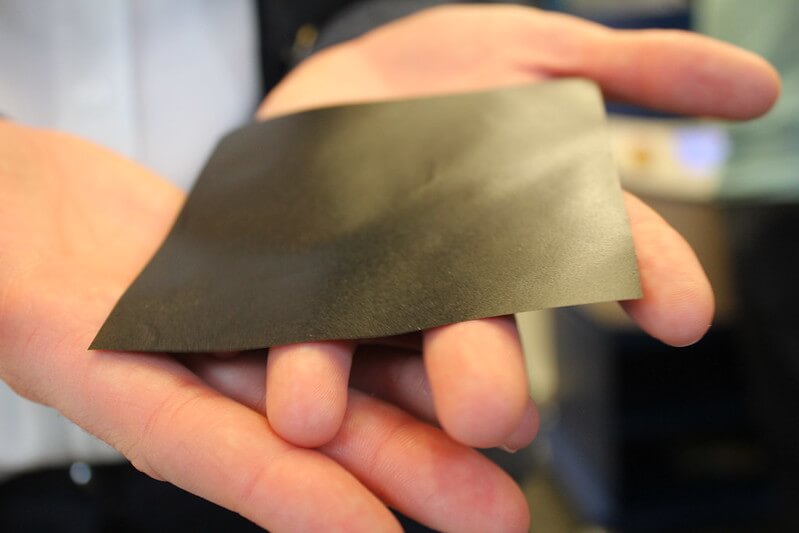
Definition of Graphene Graphene is a unique allotrope of carbon, consisting of a single atomic layer of carbon atoms arranged in a two-dimensional hexagonal lattice. Since its discovery in 2004, graphene has attracted significant attention due to its extraordinary physical and chemical properties. It stands out for its exceptional electrical conductivity, thermal management capabilities, mechanical […]

Read More →

Could there be a material stronger than carbyne?

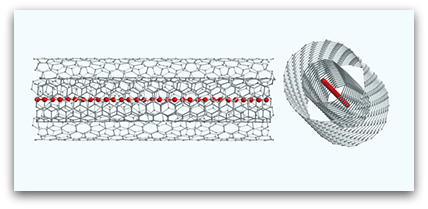
Definition of Carbyne and Its Significance Carbyne is a unique carbon allotrope characterized by a linear chain of carbon atoms connected through alternating single and triple bonds. This one-dimensional molecular structure endows carbyne with extraordinary mechanical properties, particularly exceptional tensile strength and rigidity. Often hailed as one of the strongest materials theoretically known, carbyne has […]

Read More →

What is the definition of 2D drawing?

Definition of 2D Drawing Two-dimensional (2D) drawing refers to the creation of images on a flat plane, utilizing only height and width without incorporating depth. It serves as a fundamental form of visual communication that bridges the gap between abstract ideas and tangible representations. Unlike three-dimensional art, 2D drawings exist solely within the X and […]

Read More →

What are 2D (two dimensional) materials?

Definition of Two-Dimensional Materials Two-dimensional (2D) materials are a class of substances defined by their atomic-scale thickness, typically consisting of just one or two layers of atoms, while extending extensively in the other two spatial dimensions. This extreme thinness imparts them with distinctive physical and chemical properties that differ markedly from their bulk counterparts. Atomic […]

Read More →

Is graphene over-hyped?

Definition of Graphene Graphene is a single layer of carbon atoms tightly packed into a two-dimensional honeycomb lattice. This unique atomic arrangement endows graphene with extraordinary characteristics that have captured the attention of scientists and industries worldwide. Its exceptional electrical, mechanical, and thermal properties distinguish it from conventional materials, making it a subject of intense […]

Read More →