
Short Answer
Understanding the Concept of the Thinnest Material
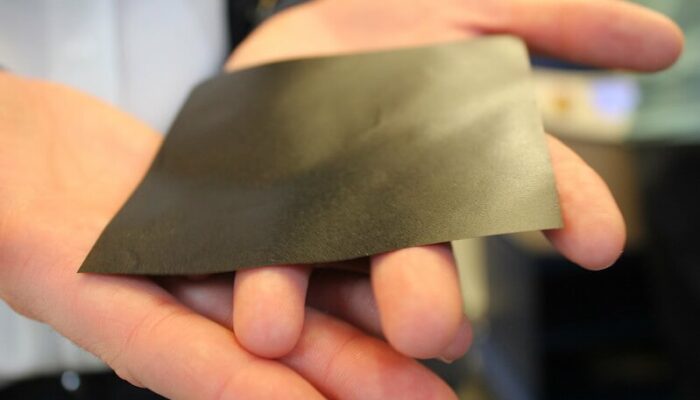
The pursuit of the thinnest material, whether artificially created or naturally found, has long intrigued scientists and researchers. This quest has sparked extensive investigations into the fundamental characteristics of matter at its most minimal scale. As materials science advances, the terminology and criteria defining “thinness” have evolved, prompting a comprehensive examination of what truly qualifies as the thinnest material. Central to this discussion is graphene, a single atomic layer of carbon atoms arranged in a two-dimensional hexagonal lattice, widely recognized as the thinnest known material. Its extraordinary properties have not only revolutionized material science but also raised profound questions about the nature and potential of ultra-thin substances.
Definition and Characteristics of Graphene
Graphene represents the epitome of two-dimensional materials, consisting of a single atom thickness. This monolayer carbon structure can be produced through various techniques such as mechanical exfoliation and chemical vapor deposition. Its unique atomic arrangement imparts exceptional electrical, mechanical, and thermal properties, making it a subject of intense scientific interest.
- Atomic Structure:
A hexagonal lattice of carbon atoms forming a one-atom-thick sheet. - Electrical Conductivity:
Exhibits outstanding electron mobility due to delocalized pi-bonding electrons. - Mechanical Strength:
Approximately 200 times stronger than steel, attributed to robust covalent carbon-carbon bonds. - Thermal Conductivity:
Efficient heat conduction surpassing many conventional materials.
Scientific Principles Behind Graphene’s Properties
The remarkable behavior of graphene stems from its unique electronic band structure. The honeycomb lattice facilitates rapid electron transport with minimal energy dissipation, primarily due to the delocalization of pi electrons across the entire sheet. This results in exceptional electrical conductivity, positioning graphene as one of the most efficient conductors known. Additionally, the strong covalent bonds between carbon atoms confer extraordinary tensile strength and flexibility, enabling it to endure significant mechanical stress without damage.
Exploring Other Two-Dimensional Materials
While graphene has dominated the spotlight, other two-dimensional materials have emerged, expanding the landscape of ultra-thin substances. Transition metal dichalcogenides (TMDs), such as molybdenum disulfide (MoS2), exhibit semiconducting properties absent in graphene, making them valuable for applications requiring a bandgap. These materials share the two-dimensional structure but offer distinct electronic and optical characteristics, broadening the scope of thin material applications.
Transition Metal Dichalcogenides (TMDs)
- Structure:
Layered materials composed of transition metals and chalcogen atoms. - Semiconducting Nature:
Possess a bandgap, enabling their use in transistors and photodetectors. - Optical Properties:
Exhibit strong light-matter interactions suitable for optoelectronic devices.
MXenes: Emerging Two-Dimensional Materials
MXenes are a novel class of two-dimensional materials derived from the selective etching of layered transition metal carbides and nitrides. Similar to graphene, MXenes are conductive and have attracted attention for their tunable properties, particularly in energy storage technologies such as supercapacitors and batteries. Their adjustable surface chemistry and layered structure allow for customization tailored to specific technological needs.
Natural Ultra-Thin Materials: The Case of Mica
Beyond synthetic materials, naturally occurring substances like mica offer insight into ultra-thin layered structures. Mica is a phyllosilicate mineral known for its ability to be cleaved into extremely thin sheets, sometimes only a few nanometers thick. Although mica does not reach the atomic thinness of graphene, its ease of exfoliation and stability make it a valuable material for various scientific and industrial applications, including electronics and optics.
Applications and Technological Implications
The unique properties of ultra-thin materials have far-reaching implications across multiple fields. Graphene’s exceptional conductivity and strength make it a promising candidate for next-generation electronic devices, flexible displays, and advanced composites. TMDs’ semiconducting behavior opens pathways for innovative transistors and photonic devices, while MXenes’ versatility enhances energy storage solutions. Natural materials like mica contribute to the development of insulating layers and substrates in microelectronics.
Common Misconceptions About Thin Materials
Graphene is the only two-dimensional material of interest.
While graphene is prominent, materials like TMDs and MXenes also offer unique properties valuable for various applications.
Thinner always means weaker.
Many ultra-thin materials, such as graphene, exhibit extraordinary strength despite their minimal thickness.
Natural materials cannot be ultra-thin.
Minerals like mica can be exfoliated into nanometer-thick layers, demonstrating natural ultra-thin materials exist.
Why the Study of Ultra-Thin Materials is Crucial
Investigating materials at atomic and molecular scales is pivotal for advancing technology and deepening our understanding of physical phenomena. Ultra-thin materials challenge traditional concepts of dimensionality and material behavior, revealing quantum mechanical effects on macroscopic levels. Their integration into electronics, energy storage, and biomedical devices promises enhanced performance, sustainability, and novel functionalities, underscoring their significance in modern science and industry.
FAQ
What is the thinnest material known to science?
Graphene, a single atomic layer of carbon atoms arranged in a hexagonal lattice, is the thinnest known material.
How is graphene produced?
Graphene can be produced via mechanical exfoliation or chemical vapor deposition techniques.
What are transition metal dichalcogenides (TMDs)?
TMDs are layered two-dimensional materials composed of transition metals and chalcogen atoms, exhibiting semiconducting properties.
Are natural materials like mica considered ultra-thin?
Yes, mica can be cleaved into nanometer-thick sheets, making it a naturally occurring ultra-thin material.
Why study ultra-thin materials?
Studying ultra-thin materials helps advance technology and understanding of physical phenomena, enabling applications in electronics, energy storage, and biomedical devices.





Leave a Reply