Colour Printing Hits the Physics Limit: Nanotech Redefines Resolution

Understanding Nanotechnology in Color Printing The field of color printing has experienced a profound transformation, largely driven by advancements in nanotechnology. This cutting-edge science is pushing the boundaries of resolution and color fidelity, meeting the growing demand for sharper, more vibrant images. By delving into the fundamental interactions between light and color at the nanoscale, […]

Read More →

What’s the use of a silicon carbide?

Definition of Silicon Carbide Silicon carbide (SiC) is a compound semiconductor composed of silicon and carbon atoms arranged in a crystalline lattice. This unique structure imparts SiC with outstanding physical and electrical properties, making it a highly valuable material in advanced electronic applications. Notably, SiC exhibits excellent thermal conductivity and a wide bandgap, which distinguish […]

Read More →

Which is the toughest material discovered by mankind?

Definition of Toughness in Materials Science Toughness refers to a material’s capacity to absorb energy and undergo plastic deformation without fracturing. It is a critical mechanical property that determines how well a material can withstand impacts, stresses, and strains without breaking. This attribute is vital across numerous fields, including construction, aerospace, and manufacturing, where materials […]

Read More →

Bubble Cavitation Spotted in Liquid Crystals: Tiny Explosions Big Insights

Definition of Bubble Cavitation in Liquid Crystals Bubble cavitation refers to the process where vapor-filled cavities or bubbles spontaneously form and subsequently collapse within a liquid medium. When this phenomenon occurs inside liquid crystals-materials that exhibit properties between those of conventional liquids and solid crystals-it reveals complex interactions at the microscale that bridge fluid dynamics […]

Read More →

The Good And Bad Of 2D Materials – SemiTechnical?

Definition of Two-Dimensional Materials Two-dimensional (2D) materials are crystalline substances consisting of a single layer of atoms, exhibiting unique physical and chemical properties distinct from their bulk counterparts. Their atomic-scale thickness imparts exceptional characteristics that have attracted significant attention in scientific research and technological development. Atomic Thinness: 2D materials are composed of one or a […]

Read More →

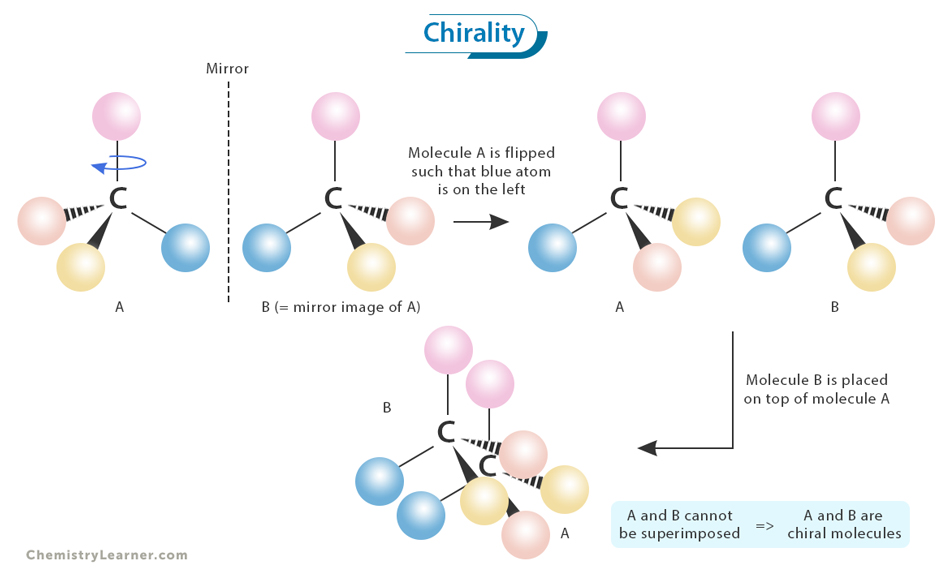
Chirality in Graphene: When Geometry Drives Electron Flow

Definition of Chirality in Graphene Chirality in graphene refers to the intrinsic asymmetry in the arrangement of carbon atoms within its two-dimensional lattice, which profoundly influences the behavior of electrons. This property arises from the unique geometric configuration of graphene’s honeycomb structure, composed of two interpenetrating sublattices, commonly labeled A and B. The concept of […]

Read More →

Why is graphene desirable as a touch screen material?

Definition of Graphene in Touchscreen Technology Graphene is a single-atom-thick sheet of carbon atoms arranged in a two-dimensional hexagonal lattice. This extraordinary material has attracted widespread interest across scientific and technological domains, particularly for its application in touchscreen devices. Its unique combination of electrical, optical, and mechanical properties positions graphene as a promising alternative to […]

Read More →

How long would it take to make a simple 2D game in Unity?

Understanding the Timeline for Developing a Simple 2D Game in Unity Estimating the duration required to develop a simple 2D game using Unity, a robust and flexible game development platform, involves multiple variables that can significantly influence the overall timeline. Although the question “how long does it take?” appears straightforward, the answer depends on factors […]

Read More →

2D Material Solution? Why Engineers Are Thinking Flat

Understanding Two-Dimensional Materials Two-dimensional (2D) materials are substances consisting of a single or a few atomic layers, exhibiting unique properties distinct from their bulk, three-dimensional counterparts. These atomically thin materials have garnered significant attention in recent years due to their exceptional electrical, mechanical, and thermal characteristics, which open new avenues for technological advancements. Atomic Thickness: […]

Read More →

Are papers 3D or 2D?

Understanding Dimensionality in Objects The concept of dimensionality, a fundamental topic in both physics and philosophy, explores the spatial properties of objects. Dimensions describe the measurable extents of an object in space, typically categorized as one-dimensional (length), two-dimensional (length and width), or three-dimensional (length, width, and height/depth). This framework helps us interpret the physical world […]

Read More →