
Short Answer
Definition of Hardness in Metals
Hardness refers to a material’s ability to resist deformation, scratching, or penetration. It is a fundamental mechanical property that influences how metals perform under various stresses and wear conditions. This characteristic is crucial in determining the durability and suitability of metals for industrial and technological applications.
- Hardness:
The resistance of a material to surface indentation or scratching. - Measurement Scales:
Commonly assessed using scales such as the Mohs scale, which ranks materials based on their ability to scratch one another.
Comparative Hardness of Osmium and Tungsten
Osmium and tungsten are two metals renowned for their exceptional hardness and strength, yet they differ significantly in their physical properties and crystal structures, which influence their hardness levels.
- Tungsten:
Exhibits a hardness of approximately 7.5 on the Mohs scale. It has a body-centered cubic (BCC) crystal lattice that contributes to its high tensile strength and moderate ductility. - Osmium:
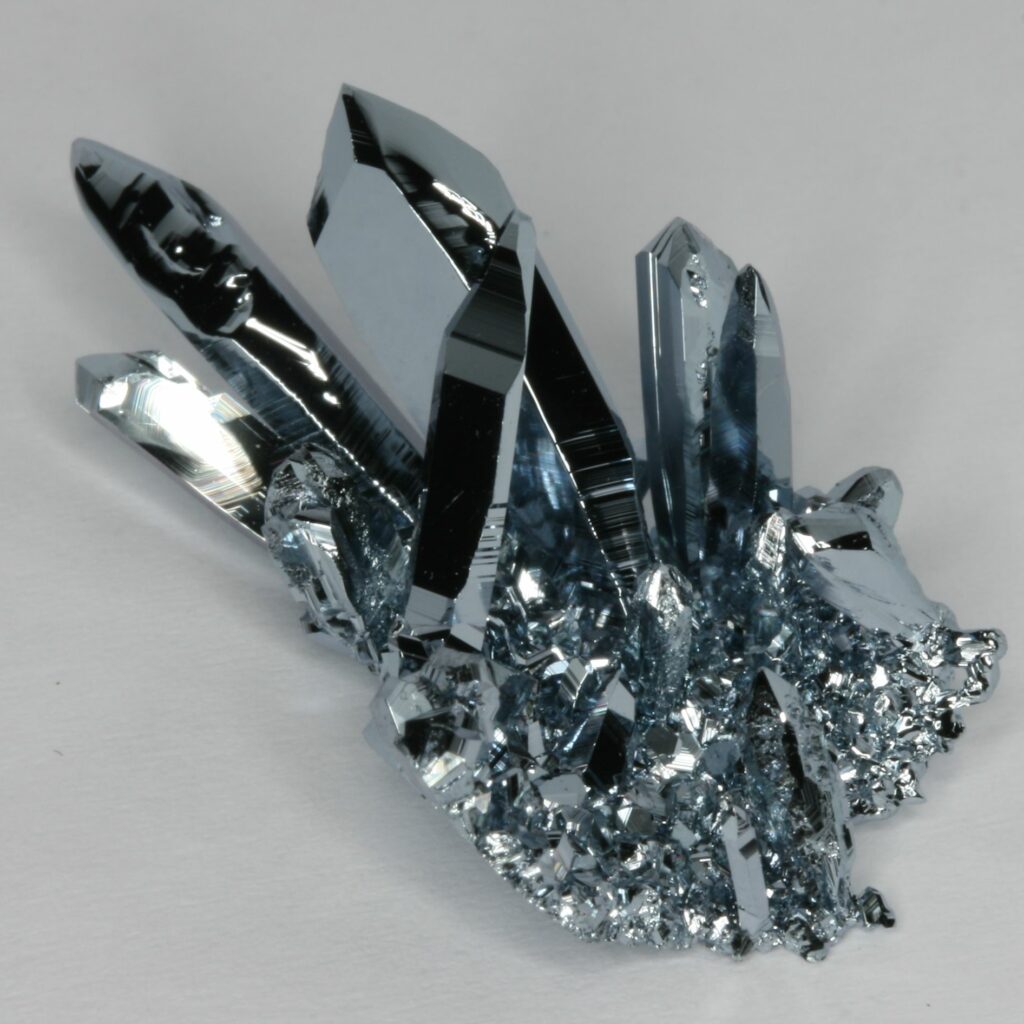
Known as the densest naturally occurring element, osmium possesses a hexagonal close-packed (HCP) crystal structure, which imparts superior hardness often exceeding that of tungsten, though exact values vary with testing methods.
Atomic Structure and Bonding Influences
The intrinsic hardness of tungsten and osmium is deeply rooted in their atomic arrangements and bonding characteristics.
- Tungsten’s Structure:
The BCC configuration allows strong covalent bonding among tungsten atoms, providing excellent tensile strength and some ductility, enabling it to withstand stretching without fracturing. - Osmium’s Structure:
The HCP lattice offers a highly efficient atomic packing, resulting in exceptional density and compressive strength. The close atomic proximity in osmium crystals generates significant interatomic forces, enhancing its resistance to deformation.
Industrial and Scientific Applications
Both metals serve vital roles across various sectors, leveraging their hardness and other physical properties.
- Tungsten Uses:
Widely utilized in manufacturing light bulb filaments, aerospace components, and medical imaging devices due to its strength and thermal stability. - Osmium Uses:
Employed in niche applications such as catalysts, fountain pen nibs, and the creation of ultra-hard alloys, benefiting from its remarkable hardness and density despite its rarity.
Significance of Hardness in Material Science
Understanding the hardness of metals like osmium and tungsten is pivotal in advancing material science and engineering. The atomic-level insights into their mechanical properties guide the development of new materials designed to endure extreme environments, which is essential for cutting-edge technology and infrastructure.
Environmental and Ethical Considerations
While the mechanical advantages of osmium and tungsten are clear, their extraction and processing raise important environmental and sustainability concerns. Tungsten is more abundant and economically viable to mine, whereas osmium is rare and typically obtained as a byproduct of platinum mining, complicating its supply chain and ecological footprint.
- Mining Impact:
Extraction processes can cause habitat disruption and pollution, necessitating responsible sourcing and environmental management. - Sustainability Challenges:
The rarity of osmium demands careful consideration of its use to balance technological benefits with ecological responsibility.
Common Misconceptions About Metal Hardness
Hardness directly correlates with density.
While osmium is the densest element and also very hard, density and hardness are distinct properties influenced by different atomic factors.
Tungsten is always harder than osmium.
Osmium generally exhibits greater hardness due to its crystal structure, although hardness values can vary depending on measurement techniques.
Conclusion: Balancing Hardness, Functionality, and Sustainability
Osmium’s superior hardness compared to tungsten highlights the complex interplay between atomic structure, material properties, and practical applications. Both metals exemplify the ongoing quest in materials science to optimize performance while addressing environmental and ethical considerations. Their study not only advances scientific knowledge but also informs sustainable technological progress in an increasingly resource-conscious world.
FAQ
Is osmium harder than tungsten?
Yes, osmium generally exhibits greater hardness than tungsten due to its crystal structure.
What is the Mohs hardness scale?
The Mohs hardness scale ranks materials based on their ability to scratch one another, with tungsten and osmium both measuring approximately 7.5.
What are the applications of osmium and tungsten?
Osmium is used in catalysts and ultra-hard alloys, while tungsten is utilized in light bulb filaments and aerospace components.





Leave a Reply