Is H2 a compound or molecule?

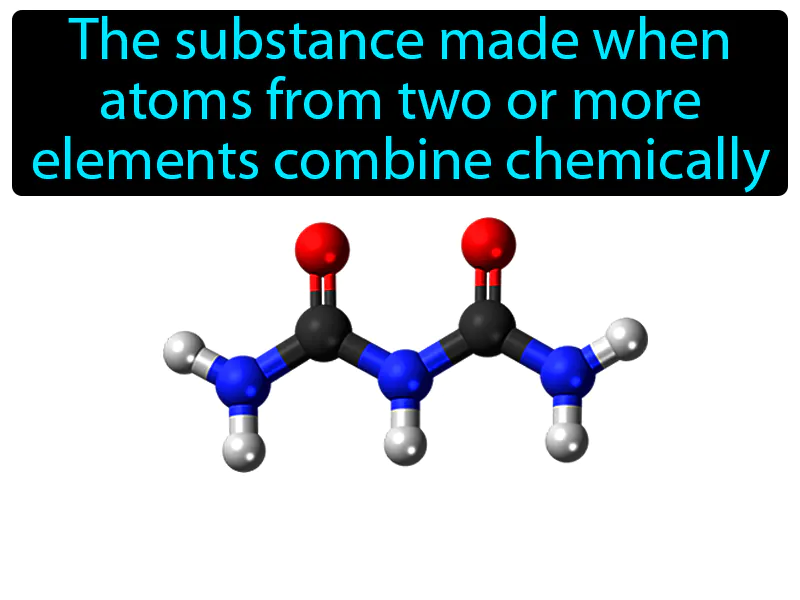
Definition of H2: Molecule or Compound? To accurately classify H2, it is essential to understand its basic chemical nature. The question arises: is H2 a molecule or a compound? Although this may seem straightforward, it involves a detailed examination of fundamental chemical concepts. Clarifying the definitions of ‘molecule’ and ‘compound’ is the first step in […]

Read More →

Can a light source not be hot?

Definition of Light and Heat in Light Sources Light is a form of electromagnetic radiation visible to the human eye, typically spanning wavelengths from about 400 to 700 nanometers. This visible spectrum represents only a small segment of the broader electromagnetic spectrum, which includes radio waves, microwaves, infrared, ultraviolet, X-rays, and gamma rays. Heat, in […]

Read More →

What are the spaces between atoms in a molecule called?

Definition of Atomic and Molecular Spaces In the microscopic domain of chemistry, the concept of spaces between atoms within molecules is fundamental to understanding matter’s structure and behavior. These spaces refer to the regions that exist either within a molecule, between its constituent atoms, or between separate molecules themselves. Recognizing these voids is essential for […]

Read More →

Are covalent and molecular bonds the same thing?

Definition of Covalent and Molecular Bonds In the field of chemistry, bonds between atoms and molecules define the structure and behavior of matter. Two commonly discussed types of bonds are covalent bonds and molecular bonds, which, although related, represent different concepts within chemical interactions. Covalent Bonds: These are strong chemical connections formed when two atoms […]

Read More →

The Structure of Atoms: Not Just Electrons Spinning Around

Definition of Atomic Structure An atom is the fundamental unit of matter, composed of a dense central nucleus surrounded by electrons. While often depicted as electrons orbiting the nucleus like planets around the sun, this analogy oversimplifies the true complexity of atomic architecture. The atom consists of subatomic particles-protons, neutrons, and electrons-whose interactions and behaviors […]

Read More →

Does laser belong to atomic physics?

Definition of Laser Technology Laser technology represents a significant breakthrough in contemporary science, characterized by the generation of highly coherent light. The term “laser” stands for Light Amplification by Stimulated Emission of Radiation, a process that produces light with uniform wavelength and phase. This phenomenon is deeply rooted in atomic physics, as it involves the […]

Read More →

Does an atom count as a chemical element?

Definition of Atoms and Chemical Elements In chemistry, understanding the difference between an atom and a chemical element is fundamental yet often misunderstood. An atom is the smallest unit of matter that retains the properties of an element, composed of protons, neutrons, and electrons. In contrast, a chemical element is a pure substance that cannot […]

Read More →