Is hydrogen an atom or molecule?

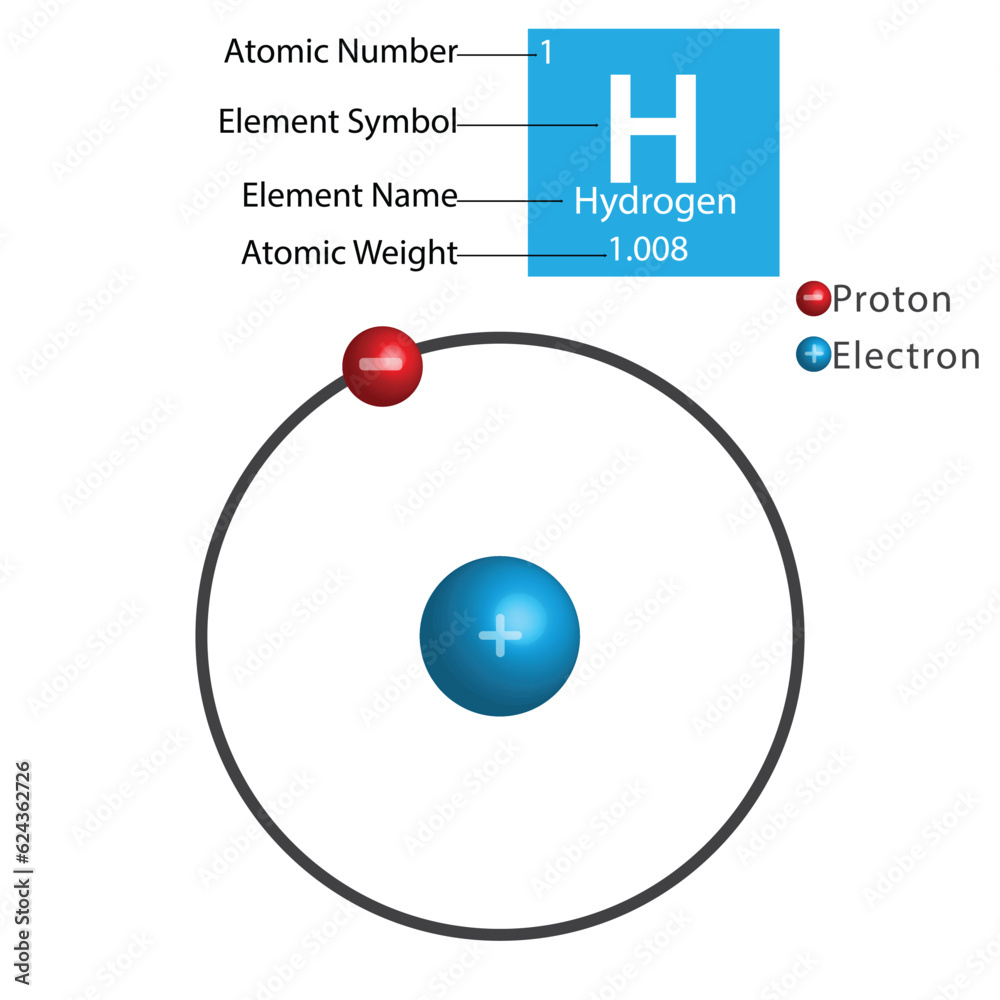
Definition of Hydrogen Hydrogen is the simplest and most plentiful element found throughout the universe. It is characterized by having an atomic number of one, meaning it consists of a single proton in its nucleus orbited by one electron. This elemental simplicity makes hydrogen a fundamental subject in the study of matter and chemistry. Atom: […]

Read More →

How fast would sound travel in a Bose-Einstein condensate?

Definition of Sound Propagation in Bose-Einstein Condensates Sound propagation refers to the transmission of vibrational energy through a medium, relying on molecular interactions to carry waves. While sound travels through conventional states of matter such as gases, liquids, and solids at speeds influenced by factors like density, elasticity, and temperature, its behavior in exotic quantum […]

Read More →

Are atoms particles or waves?

Definition of Atomic Duality The question of whether atoms behave as particles or waves has intrigued scientists and philosophers for centuries. This inquiry lies at the heart of modern physics, probing the fundamental nature of matter and the universe. Atoms exhibit a dual character, oscillating between particle-like and wave-like behaviors, a paradox that reveals the […]

Read More →

Can information be stored in single atoms?

Definition of Atomic-Scale Information Storage Atomic-scale information storage refers to the concept of encoding and preserving data within individual atoms. This idea represents a revolutionary leap from traditional data storage methods, which rely on larger physical structures, to the manipulation of quantum states at the atomic level. It challenges conventional notions of information by leveraging […]

Read More →

Why can mass by atom not be measured?

Understanding Mass at the Atomic Scale Mass measurement holds a pivotal role in both physics and chemistry, particularly when examining matter at the atomic and subatomic levels. A fundamental question arises: why is it impossible to measure mass directly at its most basic scale? This inquiry reveals a complex landscape that challenges conventional perceptions of […]

Read More →

What are the three main phases of matter?

Definition of the Three Primary States of Matter The universe, vast and complex, is composed of countless substances, yet all observable matter fundamentally exists in three main states: solid, liquid, and gas. These states represent distinct arrangements and behaviors of particles, each contributing uniquely to the physical world. Understanding these phases provides insight into the […]

Read More →

How to determine a molecular mass?

Definition of Molecular Mass Molecular mass, also known as molar mass, refers to the total mass of a single molecule expressed in atomic mass units (amu). It is calculated by summing the atomic masses of all atoms that compose the molecule. Each element’s atomic mass, found on the periodic table, serves as the fundamental value […]

Read More →

Can we ever freeze an object down to absolute zero?

Definition of Absolute Zero Absolute zero is the theoretical temperature point at which all classical molecular motion ceases. It is defined as 0 Kelvin (K), equivalent to -273.15 degrees Celsius (°C). At this temperature, particles are thought to reside in their lowest possible energy state, possessing no kinetic energy. This concept represents the ultimate lower […]

Read More →