
Short Answer
Definition of Chemical Compounds
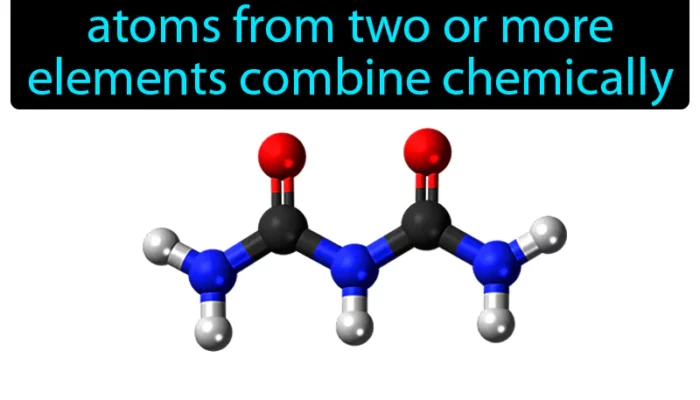
Chemical compounds are substances formed when two or more different elements chemically combine in fixed ratios. These elements are bonded together through chemical bonds, creating a unified entity with properties distinct from the individual atoms. The bonds that hold these atoms together are primarily ionic or covalent in nature, enabling the atoms to act as a single, cohesive unit. For example, water (H2O) consists of two hydrogen atoms bonded to one oxygen atom, resulting in a compound with characteristics unlike those of its separate elements-flammable hydrogen gas and oxygen, which supports combustion.
Classification of Compounds
Organic Compounds
Organic compounds are primarily carbon-based molecules where carbon atoms form covalent bonds with other elements such as hydrogen, oxygen, nitrogen, sulfur, or phosphorus. This vast category ranges from simple molecules like methane (CH4) to complex macromolecules including proteins and nucleic acids. These compounds are fundamental to life, earning carbon the title “the element of life” due to its central role in biological molecules.
Inorganic Compounds
Inorganic compounds generally lack carbon-hydrogen bonds and include salts, minerals, and metals. These substances are crucial in various natural and industrial processes. For instance, sodium chloride (NaCl), an ionic compound, is essential for maintaining physiological balance in living organisms and is widely found in nature and human diets.
Properties Influenced by Chemical Bonds
The characteristics of compounds are largely determined by the type of chemical bonds connecting their atoms:
- Ionic Compounds:
Formed by the transfer of electrons from one atom to another, ionic compounds typically have high melting and boiling points. They often dissolve in water and conduct electricity when molten or in solution. - Covalent Compounds:
Created by sharing electrons between atoms, covalent compounds usually have lower melting and boiling points. Many exist as gases or liquids at room temperature, such as ethanol (C2H5OH).
Molecular Geometry and Its Impact
The three-dimensional arrangement of atoms within a compound, known as molecular geometry, profoundly affects its chemical behavior and physical properties. This spatial configuration influences reactivity, polarity, phase (solid, liquid, gas), color, magnetism, and biological activity. For example, methane’s tetrahedral shape determines its stability and interactions. Understanding molecular geometry is vital in fields like pharmaceuticals and materials science, where the precise atomic arrangement can dictate a compound’s effectiveness.
Synthesis of Compounds
Natural Synthesis
Compounds can form naturally through geological processes or biological pathways, where environmental conditions facilitate the combination of elements. These natural syntheses often result in complex molecules essential for life and the environment.
Artificial Synthesis
Human ingenuity in synthetic chemistry aims to replicate or innovate beyond natural processes by designing compounds with specific properties for targeted uses. A notable example is the synthesis of Aspirin, a pharmaceutical compound developed to provide therapeutic benefits.
Applications of Chemical Compounds
Compounds are indispensable across numerous industries and scientific disciplines:
- Agriculture:
Fertilizers composed of various compounds supply essential nutrients to plants, enhancing growth and crop yields. - Medicine:
The development of vaccines, antibiotics, and other drugs relies heavily on the properties of chemical compounds. - Industry and Technology:
Materials science utilizes compounds to create advanced materials such as polymers, superconductors, and nanomaterials, driving innovation in technology.
Environmental and Health Considerations
While compounds offer numerous benefits, some pose risks to health and the environment. Toxic compounds require careful regulation and management. For example, chlorofluorocarbons (CFCs) have caused significant damage to the ozone layer, highlighting the need for ecological awareness and responsible chemical use.
Why Understanding Compounds Is Essential
Chemical compounds form the foundation of chemistry and are central to understanding the material world. Their study reveals the intricate connections between elements and the diverse properties that emerge from their combinations. This knowledge not only advances scientific discovery but also supports technological progress and environmental stewardship, bridging the microscopic world of atoms with the vast complexity of the universe.
FAQ
What distinguishes organic compounds from inorganic compounds?
Organic compounds contain carbon-hydrogen bonds and are typically associated with living organisms, whereas inorganic compounds usually lack these bonds and include minerals, salts, and metals.
How do ionic compounds behave differently from covalent compounds?
Ionic compounds often have high melting points and conduct electricity in molten or dissolved states, while covalent compounds usually have lower melting points and do not conduct electricity.
Why is the study of molecular geometry important?
Because the three-dimensional arrangement of atoms affects a compound's physical and chemical properties, influencing its usefulness in pharmaceuticals, materials science, and other fields.






Leave a Reply