
Short Answer
Definition of Atomic Matter
The concept that all matter consists of atomic particles is a foundational principle in modern science, particularly in physics and chemistry. Atoms are traditionally understood as the smallest units of matter that retain the properties of an element. However, this idea extends beyond simple indivisibility, encompassing a complex structure of subatomic components and fundamental forces that govern their behavior.
Historical Development of Atomic Theory
The exploration of matter’s fundamental building blocks dates back to ancient philosophy. Democritus, a Greek thinker, introduced the idea of “atomos,” meaning indivisible particles that form all substances. This early notion laid dormant until the 19th century when John Dalton revitalized it with his atomic theory. Dalton proposed that matter is composed of tiny, indivisible spheres called atoms, sparking a scientific revolution that influenced chemistry, physics, and biology.
Subsequent scientific advancements deepened this understanding. J.J. Thomson discovered the electron, revealing that atoms are not indivisible but contain smaller charged particles. Ernest Rutherford’s experiments uncovered the atomic nucleus, a dense core of protons and neutrons. Later, Niels Bohr introduced quantum concepts to explain electron behavior, fundamentally altering our perception of atomic structure and the nature of matter.
Structure and Composition of Atoms
Atoms consist of a central nucleus surrounded by electrons. The nucleus contains protons, which carry a positive charge, and neutrons, which are electrically neutral. Electrons orbit the nucleus in regions defined by quantum mechanics, often described as electron clouds rather than fixed paths. This arrangement resembles a miniature solar system, with the nucleus as the sun and electrons as orbiting bodies, though governed by probabilistic quantum laws rather than classical mechanics.
- Protons:
Positively charged particles that determine the atomic number and identity of an element. - Neutrons:
Neutral particles that contribute to atomic mass and influence isotope stability. - Electrons:
Negatively charged particles occupying quantized energy levels, responsible for chemical bonding and interactions.
Subatomic Particles and the Standard Model
Atoms themselves are composed of even smaller entities known as subatomic particles. Protons and neutrons are made up of quarks, which are elementary particles held together by gluons, the carriers of the strong nuclear force. Beyond quarks and gluons, the Standard Model of particle physics identifies over two dozen fundamental particles, including leptons, bosons, and gauge particles, each playing a unique role in the fabric of matter and forces.
This framework suggests that atoms are not the ultimate constituents of matter but rather complex assemblies of more fundamental particles and interactions. The intricate balance of these particles and forces forms the basis of all observable matter in the universe.
Quantum Mechanics and the Nature of Matter
Quantum theory introduces a dual nature to matter, where particles exhibit both wave-like and particle-like properties. This wave-particle duality challenges the classical view of matter as composed solely of discrete atoms. Instead, matter exists in a probabilistic state, described by wave functions that determine the likelihood of finding particles in particular locations.
Famous thought experiments, such as Schrödinger’s cat, illustrate the paradoxical and dynamic nature of quantum states, emphasizing that matter is not static but constantly influenced by observation and interaction at the quantum level.
Fundamental Forces Governing Matter
The cohesion and structure of matter depend on four fundamental forces:
- Gravitational Force:
The weakest but long-range force, influencing mass attraction on a cosmic scale. - Electromagnetic Force:
Governs interactions between charged particles, responsible for chemical bonds and electricity. - Strong Nuclear Force:
The powerful force that binds quarks within protons and neutrons and holds the atomic nucleus together. - Weak Nuclear Force:
Responsible for certain types of radioactive decay and particle interactions.
These forces operate at different scales and are essential for the stability and formation of atoms and, consequently, all matter.
Real-World Examples of Atomic and Subatomic Matter
Every object around us, from the air we breathe to the devices we use, is composed of atoms and their subatomic constituents. For instance:
- Water Molecules:
Comprised of hydrogen and oxygen atoms bonded through electron interactions. - Metals:
Atoms arranged in crystalline lattices, with electrons moving freely to conduct electricity. - Radioactive Materials:
Atoms undergoing nuclear decay due to weak nuclear force interactions.
Common Misconceptions About Atomic Matter
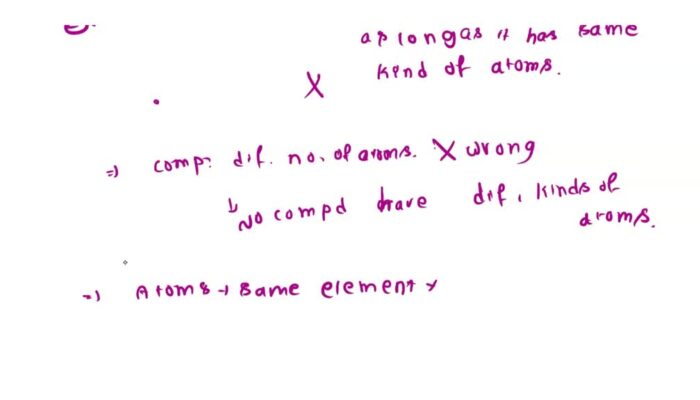
Atoms are indivisible.
Atoms are composed of smaller particles such as protons, neutrons, and electrons, which themselves are made of quarks and other fundamental particles.
Matter is always solid and particle-like.
Quantum mechanics shows that matter exhibits both particle and wave properties, existing in probabilistic states.
Forces are irrelevant to matter’s structure.
Fundamental forces are crucial for holding atomic and subatomic particles together, enabling the existence of stable matter.
Significance of Understanding Atomic Composition
Grasping the atomic and subatomic nature of matter is vital for advancements in science and technology. It underpins fields such as chemistry, materials science, nuclear physics, and quantum computing. This knowledge enables innovations in medicine, energy production, and electronics, shaping modern society and deepening our comprehension of the universe’s fundamental workings.
FAQ
Are atoms indivisible?
No, atoms are composed of smaller particles such as protons, neutrons, and electrons, and protons and neutrons themselves are made of quarks.
What is the Standard Model in particle physics?
The Standard Model is a theory describing the fundamental particles and forces (except gravity) that constitute matter.
How does wave-particle duality affect our understanding of matter?
It shows that matter has properties of both particles and waves, complicating the idea of matter being solely made of discrete particles.
Why are fundamental forces important for matter?
They hold atomic particles together and govern interactions that create stable matter.





Leave a Reply