How did you make the knife that was one atom thick?

Definition of an Atom-Thin Knife An atom-thin knife refers to a cutting instrument whose blade is reduced to the thickness of a single atom layer. This concept transcends traditional culinary tools, representing a convergence of advanced physics, materials science, and nanotechnology. Such a blade embodies the manipulation of matter at the atomic scale, pushing the […]

Read More →

What is plasma and Bose-Einstein condensate?

Definition of Plasma and Bose-Einstein Condensate Plasma and Bose-Einstein condensate (BEC) represent two distinct and fundamental states of matter, each characterized by unique physical properties and behaviors that challenge traditional physics concepts. Plasma, often called the fourth state of matter, is an ionized gas composed of free electrons and positively charged ions. In contrast, Bose-Einstein […]

Read More →

What is true nucleus in terms of Physics?

Definition of the True Nucleus The true nucleus in physics refers to the central part of an atom, comprising protons and neutrons, collectively called nucleons. This dense core contains nearly all the atom’s mass and serves as the foundation for understanding atomic structure. The nucleus is essential in defining the identity and properties of elements, […]

Read More →

How is light absorbed in the atoms?

Definition of Light Absorption in Atoms Light absorption at the atomic scale is a fundamental concept in quantum mechanics and atomic physics. It describes the process by which atoms take in electromagnetic radiation, leading to changes in their internal energy states. This interaction between light and matter is crucial for understanding phenomena across various scientific […]

Read More →

How much sharper is obsidian than steel?

Definition and Overview of Obsidian and Steel Obsidian is a naturally formed volcanic glass known for its distinctive sharpness and aesthetic appeal, captivating both craftsmen and researchers for centuries. Steel, on the other hand, is a widely used alloy primarily composed of iron and carbon, renowned for its strength and versatility. This article delves into […]

Read More →

Ultracold Quartet: Four Atoms One Quantum Performance

Definition of Ultracold Quartets Ultracold quartets refer to a system of four atoms cooled to temperatures near absolute zero, where quantum mechanical effects dominate their behavior. These atoms interact coherently, forming a collective quantum state that exhibits unique properties not observable at higher temperatures. This configuration serves as a fundamental model for studying complex quantum […]

Read More →

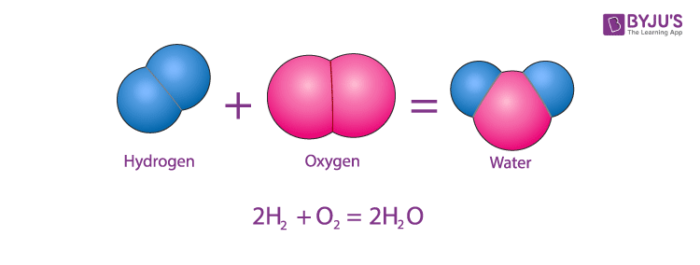
What are 2 hydrogen atoms called?

Definition of Hydrogen and Its Diatomic Form Hydrogen is the simplest and most abundant element in the universe, characterized by an atomic structure consisting of a single proton and one electron. When two hydrogen atoms bond together, they form a diatomic molecule known as H₂. This molecule is fundamental not only in chemistry but also […]
Read More →

How can chemistry be related to computer science?

Definition and Overview Chemistry and computer science, though traditionally viewed as distinct disciplines, share a dynamic and synergistic relationship that drives progress across various scientific fields. Their intersection facilitates the development of innovative techniques and enhances the capacity for analyzing and modeling complex chemical data. This article explores key domains where these two areas converge, […]

Read More →

How does sharpness work at an atomic level?

Understanding Sharpness: A Comprehensive Overview Sharpness is a concept commonly associated with objects like knives or high-resolution photographs, where precision and clarity are paramount. However, sharpness transcends these familiar examples and extends into the microscopic domain, particularly at the atomic scale. This article delves into the nature of sharpness from an atomic perspective, exploring how […]

Read More →

What stops atoms from touching?

Definition of Atomic Interaction Atomic interaction refers to the complex set of forces and principles that govern how atoms behave when they come close to one another. Despite their minuscule size, atoms do not simply merge into one continuous mass. Instead, their interactions are dictated by a combination of quantum mechanics, electromagnetic forces, and fundamental […]

Read More →