Dust to DNA? Interplanetary Grains and the Origins of Life

Definition of Interplanetary Dust and Its Role in Life’s Origins Interplanetary dust particles (IDPs) are tiny fragments that traverse the space between planets, originating from sources such as comets, asteroids, and other celestial bodies. These microscopic grains consist of diverse elements including carbon, silicon, and metals, often embedded within silicate frameworks. Notably, some IDPs harbor […]

Read More →

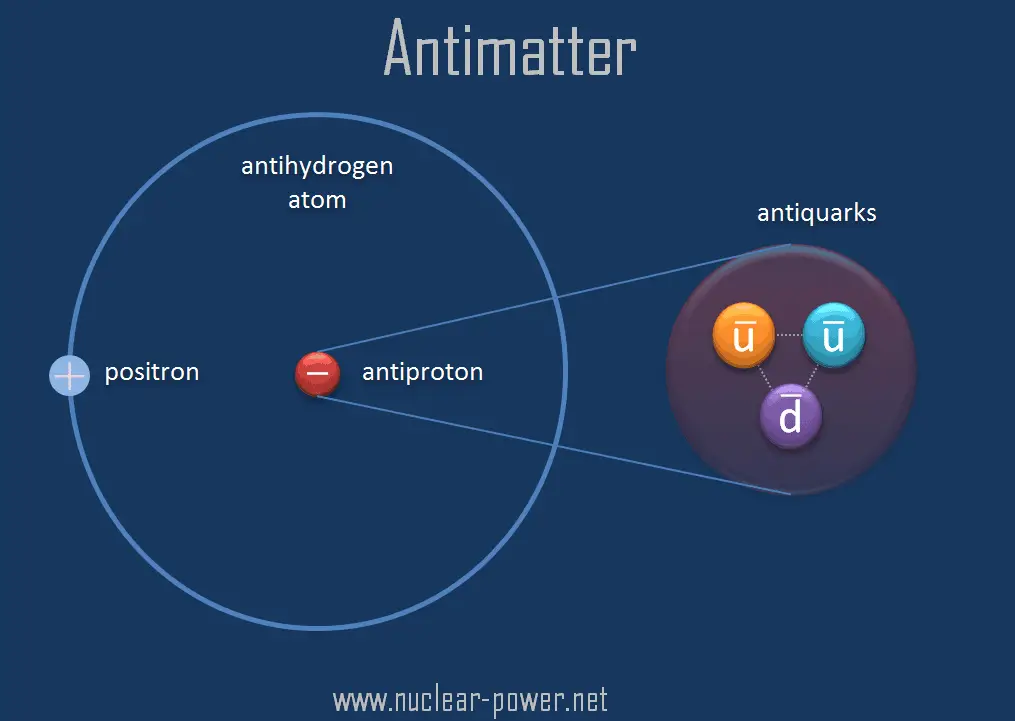
Positron Puzzle: Are Geminga Pulsars the Culprit?

Definition of Positrons and Their Significance Positrons are the antimatter counterparts of electrons, identical in mass but carrying a positive electric charge. As fundamental particles, they play a vital role in the study of particle physics and astrophysics, offering insights into the symmetry between matter and antimatter in the universe. Their interactions with ordinary matter […]

Read More →

From Blazer to Breeze: Energetic Star Turns Supergiant

Definition of Blue Supergiants Blue supergiants are a class of massive stars characterized by their immense size, high luminosity, and striking blue hue. These stars represent an advanced evolutionary stage of massive stellar objects, typically exceeding eight times the mass of our Sun. Their intense surface temperatures, often surpassing 20,000 Kelvin, cause them to emit […]

Read More →

Not So Dark After All? New Findings Light Up the Dark Matter Debate

Understanding Dark Matter Dark matter is a mysterious and invisible component of the universe that exerts a significant gravitational influence despite being undetectable by conventional observational tools. It constitutes approximately 27% of the universe’s total mass-energy content and acts as the unseen framework supporting the formation and structure of galaxies and larger cosmic formations. Its […]

Read More →

Dwarf Planets Are Not Space Potatoes—Here’s Why

Definition of Dwarf Planets Dwarf planets are a distinct category of celestial bodies within our solar system, officially recognized by the International Astronomical Union (IAU). They differ fundamentally from both classical planets and smaller objects like asteroids. Unlike informal nicknames such as “space potatoes,” which trivialize their nature, dwarf planets possess specific physical and orbital […]

Read More →

Echoes Illuminate Tycho Brahe’s Supernova—Cosmic Reverberations

Definition and Historical Significance of Tycho Brahe’s Supernova Tycho Brahe’s supernova, observed in 1572, stands as a landmark event in the history of astronomy. This stellar explosion, also known as SN 1572 or Tycho’s Star, was a brilliant supernova that temporarily outshone planets and stars in the night sky. Its observation marked a pivotal moment, […]

Read More →

Discovering Darkness: The Ongoing Search for Dark Matter

Definition of Dark Matter Dark matter is a mysterious form of matter that is believed to make up about 27% of the universe’s total mass-energy content. Unlike ordinary matter, it does not emit, absorb, or reflect light, making it invisible to traditional astronomical instruments. Despite its elusive nature, dark matter exerts a significant gravitational influence […]

Read More →

Laser Pulses Turn Dark: Next-Gen Telecoms on the Horizon

Understanding Next-Generation Telecommunications The telecommunications sector is on the verge of a revolutionary transformation driven by cutting-edge technologies. Among these, advancements in laser technology are poised to redefine connectivity, surpassing the capabilities of traditional communication systems. This article delves into the science behind laser pulses, their pivotal role in future telecom networks, and the profound […]

Read More →

European Synchrotron Secures €177M Upgrade: Precision Meets Power

Overview of the European Synchrotron Radiation Facility (ESRF) The European Synchrotron Radiation Facility (ESRF), situated in Grenoble, France, is a premier research center specializing in particle acceleration and synchrotron radiation. It plays a crucial role in advancing scientific knowledge by enabling researchers to investigate the atomic and molecular structures of various materials. The facility accelerates […]

Read More →

Europe Extends Key Missions: Science Beyond Deadlines

Definition of Extended Scientific Space Missions Extended scientific space missions refer to the deliberate prolongation of space exploration projects beyond their originally planned timelines. These extensions allow space agencies and scientific communities to deepen their investigations into astrophysical phenomena, gather additional data, and uncover new insights that were not initially anticipated. Rather than viewing deadlines […]

Read More →