
Short Answer
Definition of the Sun’s Mass
The mass of the Sun is a fundamental astrophysical quantity representing the total amount of matter contained within our star. It serves as the central gravitational anchor of the solar system, exerting a dominant influence over the motions of planets, comets, asteroids, and other celestial bodies. Understanding the Sun’s mass is crucial for interpreting gravitational interactions and the dynamics of the entire solar system.
- Magnitude:
Approximately 1.989 × 1030 kilograms, accounting for about 99.86% of the solar system’s total mass. - Role:
Governs the orbital paths of planets and smaller objects through its gravitational pull. - Dynamic Nature:
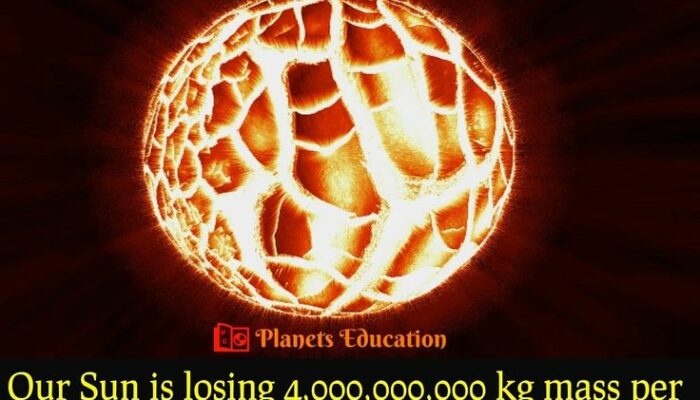
Slightly decreases over time due to mass loss from solar wind and radiation.
Historical Context and Scientific Foundations
The quest to determine the Sun’s mass has been a pivotal chapter in the history of astronomy, blending observational ingenuity with theoretical breakthroughs. Early astronomers, limited to Earth-based observations, relied on the motions of planets-especially Earth-to infer the Sun’s gravitational influence. This endeavor was revolutionized by the formulation of Newton’s law of universal gravitation, which provided a mathematical framework to relate gravitational forces to mass and distance.
Newton’s Law of Universal Gravitation
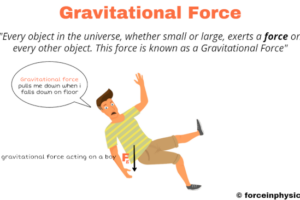
Newton’s principle states that every two masses attract each other with a force proportional to the product of their masses and inversely proportional to the square of the distance separating them. This law transformed the Sun from a mere luminous body into a gravitational powerhouse orchestrating planetary orbits.
Kepler’s Third Law and Orbital Mechanics
Johannes Kepler’s third law, which links the orbital period of a planet to the size of its orbit, further refined mass calculations. It establishes that the square of a planet’s orbital period is proportional to the cube of the semi-major axis of its elliptical orbit. When combined with Newtonian gravitation, this law enables the derivation of the Sun’s mass from observable orbital parameters.
Mathematical Determination of the Sun’s Mass
The mass of the Sun can be calculated using the formula derived from Newtonian mechanics and Kepler’s laws:
M = (4π²r³) / (G T²)
- M: Mass of the Sun
- r: Radius of Earth’s orbit around the Sun (approximately 1 astronomical unit, or 1.496 × 10¹¹ meters)
- T: Orbital period of Earth (about 365.25 days, converted to seconds)
- G: Gravitational constant (6.67430 × 10⁻¹¹ m³ kg-1 s-2)
This equation encapsulates centuries of astronomical observations and theoretical insights, allowing scientists to estimate the Sun’s mass with remarkable precision.
The Role of the Gravitational Constant
Accurate determination of the gravitational constant (G) was essential for calculating the Sun’s mass. This constant was first measured with precision by Henry Cavendish in 1798 through his torsion balance experiment, which quantified the weak gravitational attraction between lead spheres. This breakthrough enabled the conversion of orbital measurements into absolute mass values.
Techniques and Observations Enhancing Accuracy
Beyond Earth’s orbit, astronomers have refined the Sun’s mass estimate by analyzing the motions of other planets and spacecraft trajectories. Modern technologies such as radar and laser ranging provide precise distance measurements within the solar system, improving the accuracy of orbital parameters. Additionally, studying perturbations in the orbits of inner planets like Mercury offers further constraints on the Sun’s gravitational influence.
Solar Mass Loss and Its Implications
The Sun gradually loses mass through the emission of solar wind and radiation pressure. Although this loss is minuscule relative to the Sun’s total mass, it subtly affects the long-term evolution of planetary orbits. Understanding this phenomenon adds depth to our knowledge of solar dynamics and the changing nature of stellar bodies.
Real-World Significance of Measuring the Sun’s Mass
Determining the Sun’s mass is not merely an academic exercise; it underpins much of modern astrophysics and space exploration. Accurate knowledge of solar mass allows scientists to predict planetary positions, plan spacecraft missions, and model the lifecycle of stars and solar systems. It also provides insight into the balance between gravitational forces and nuclear fusion processes that sustain the Sun’s energy output.
Common Misconceptions About the Sun’s Mass
The Sun’s mass is constant and unchanging.
The Sun slowly loses mass over time due to solar wind and radiation, which affects orbital dynamics on very long timescales.
The Earth’s mass significantly influences the Sun’s mass calculation.
The Earth’s mass is negligible compared to the Sun’s, allowing simplifications in the mass determination formula.
Conclusion: The Sun’s Mass as a Cosmic Keystone
Measuring the Sun’s mass represents a remarkable achievement of human curiosity and scientific rigor. It exemplifies how abstract physical laws and precise observations can unveil the properties of distant celestial giants. As technology advances and theoretical models evolve, our understanding of the Sun’s mass continues to deepen, shedding light on the fundamental forces shaping our cosmic neighborhood and beyond.
FAQ
What is the significance of the Sun's mass?
The Sun's mass is a key factor in determining the gravitational dynamics of the solar system and influences the orbits of planets and other celestial bodies.
What is solar wind?
Solar wind is the stream of charged particles released from the Sun, contributing to its gradual mass loss.
Leave a Reply