
Short Answer
Understanding the Most Powerful Energy in the Universe
The quest to identify the most potent form of energy in the cosmos has intrigued humanity for millennia. This inquiry stems from our deep-seated curiosity about the universe and the fundamental forces that govern existence. Exploring energy on a cosmic scale extends beyond what is visible or tangible, inviting us into a domain where extraordinary phenomena dominate the fabric of reality.
Definition and Scope of Cosmic Energy
Energy in the universe manifests in various forms, each with distinct characteristics and influences. While some energies are observable, such as light and heat from stars, others remain elusive, inferred only through their effects on cosmic structures. Understanding these energies requires examining both their physical origins and their roles in shaping the universe.
- Observable Energy:
Includes radiant energy from stars, electromagnetic radiation, and kinetic energy of celestial bodies. - Hidden or Dark Energy:
A mysterious force driving the accelerated expansion of the universe, not directly detectable by conventional means. - Gravitational Energy:
Energy associated with the curvature of spacetime, influencing the motion and interaction of massive objects.
Nuclear Fusion: The Stellar Powerhouse
Nuclear fusion is a fundamental process powering stars, where lighter atomic nuclei combine to form heavier elements, releasing vast amounts of energy. This transformation follows Einstein’s mass-energy equivalence principle, expressed by the formula E=mc², which describes how mass converts into energy.
- Mechanism:
Fusion occurs under extreme temperatures and pressures in stellar cores, fusing hydrogen into helium and producing energy that sustains the star’s luminosity. - Cosmic Significance:
Fusion not only fuels stars but also synthesizes heavier elements essential for planet formation and life.
Dark Energy: The Enigmatic Cosmic Force
Dark energy constitutes approximately 68% of the universe’s total energy content and is responsible for the observed acceleration in cosmic expansion. Unlike conventional energy forms, dark energy does not interact with light or matter in familiar ways, making it one of the most mysterious components of the cosmos.
- Role in the Universe:
It exerts a repulsive effect that counterbalances gravitational attraction, causing galaxies to drift apart at increasing speeds. - Scientific Challenges:
Its elusive nature complicates direct measurement, prompting ongoing research into its properties and implications for the universe’s fate.
Gravitational Energy and Spacetime Dynamics
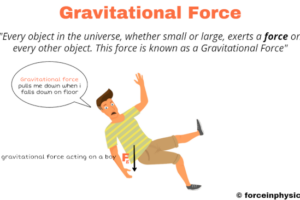
Gravitational energy arises from the warping of spacetime caused by mass and energy, as described by Einstein’s General Theory of Relativity. Although not energy in the classical sense, its effects are profound, influencing the structure and evolution of the cosmos.
- Black Holes:
Regions of extreme gravitational concentration where escape velocity exceeds the speed of light, encapsulating immense gravitational energy. - Gravitational Waves:
Ripples in spacetime generated by massive accelerating bodies, such as merging black holes or neutron stars, carrying energy across vast distances. - Cosmic Influence:
Governs the motion of galaxies, stars, and planets, shaping the large-scale architecture of the universe.
Electromagnetic Energy: Gamma-Ray Bursts and Beyond
The electromagnetic spectrum encompasses a wide range of energies, with gamma rays representing some of the most intense. Gamma-ray bursts (GRBs) are brief yet extraordinarily luminous events, often outshining entire galaxies for moments.
- Origins:
GRBs typically result from catastrophic cosmic events like supernova explosions or neutron star collisions. - Energy Output:
These bursts release tremendous energy in short durations, making them among the most powerful localized energy emissions observed.
Quantum Vacuum Energy and the Cosmological Constant
Beyond classical energies, the universe contains vacuum energy arising from quantum fluctuations in empty space. This zero-point energy contributes to the cosmological constant, a factor linked to dark energy’s effects on cosmic expansion.
- Quantum Fluctuations:
Temporary changes in energy levels within a vacuum, predicted by quantum field theory. - Cosmological Impact:
Influences the large-scale dynamics of the universe, adding complexity to the overall energy landscape.
Common Misconceptions About Cosmic Energy
The sun’s energy is the most powerful in the universe.
While immense, solar energy is localized and dwarfed by cosmic forces like dark energy and gravitational phenomena.
Dark energy is a form of matter.
Dark energy is not matter but a property of space itself, exerting repulsive effects on cosmic scales.
Gravitational energy is negligible compared to electromagnetic energy.
Gravitational energy shapes the universe’s structure and can release enormous power, especially in events like black hole mergers.
Significance of Understanding Cosmic Energy
Grasping the nature and hierarchy of energies in the universe is crucial for multiple scientific disciplines, including astrophysics, cosmology, and quantum mechanics. These energies dictate the formation, evolution, and ultimate destiny of cosmic structures, influencing conditions necessary for life and consciousness. Moreover, studying these forces expands human knowledge, pushing the boundaries of technology and philosophy alike.
Summary: A Hierarchy of Cosmic Energies
The universe hosts a spectrum of powerful energies, each with unique roles and magnitudes:
- Nuclear Fusion: Drives stellar processes and element creation.
- Dark Energy: Dominates cosmic expansion with mysterious repulsive force.
- Gravitational Energy: Shapes spacetime and cosmic structures through mass-induced curvature.
- Gamma-Ray Bursts: Represent extreme, transient electromagnetic energy releases.
- Quantum Vacuum Energy: Underlies the fabric of space with subtle but pervasive influence.
Collectively, these energies compose a complex and dynamic cosmic energy framework, reflecting the intricate interplay of forces that govern the universe.
Reflecting on the Cosmic Energy Quest
The endeavor to identify the universe’s most powerful energy transcends scientific curiosity; it embodies humanity’s profound desire to comprehend our cosmic origins and destiny. This pursuit challenges us to look beyond the visible, embrace the unknown, and appreciate the majestic forces orchestrating the grand cosmic symphony that shapes all existence.
FAQ
What is the most powerful energy in the universe?
The most powerful energies include dark energy, which drives the universe’s expansion, and nuclear fusion, which powers stars.
How does dark energy affect the universe?
Dark energy accounts for about 68% of the universe’s energy and causes the accelerated expansion of the cosmos.
What role does nuclear fusion play in the universe?
Nuclear fusion powers stars and is responsible for the creation of heavier elements essential for life.

Leave a Reply