
Short Answer
Understanding Gravity
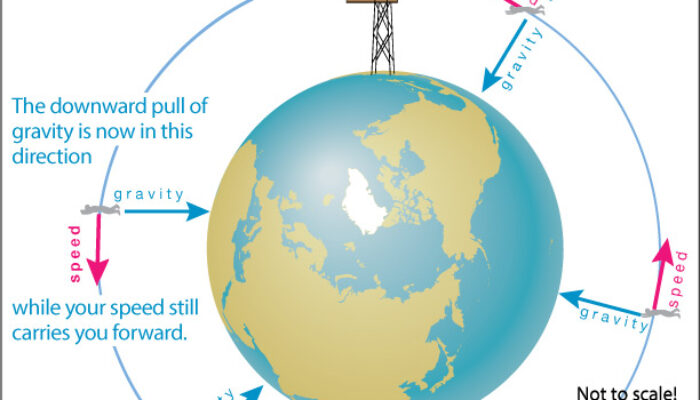
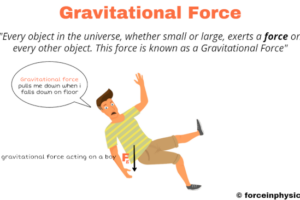
Gravity is the fundamental force responsible for the attraction between objects with mass. It governs the motion of planets, stars, and galaxies, shaping the structure of the universe. At its core, gravity is the mutual pull that masses exert on each other, a concept first formalized by Sir Isaac Newton through his law of universal gravitation.
Definition and Fundamental Principles
Gravity can be defined as the force by which any two masses attract each other. Newton’s law of universal gravitation states that this force is:
- Proportional to the product of the masses:
The greater the masses involved, the stronger the gravitational pull between them. - Inversely proportional to the square of the distance:
As the distance between two objects increases, the gravitational force decreases rapidly, following an inverse-square relationship.
This means that while gravity weakens with distance, it never abruptly disappears but instead diminishes gradually.
How Gravity Extends Through Space
Imagine a light source in a dark room; as you move farther away, the light dims but never completely vanishes. Gravity behaves similarly. Although its strength diminishes with increasing distance, it theoretically extends infinitely throughout space. Even celestial bodies billions of miles apart exert some gravitational influence on each other, albeit so faint that it becomes practically undetectable.
Gravity in the Context of Measurement and Cosmic Interactions
While gravity mathematically extends without end, practical detection is limited by the sensitivity of instruments and the presence of other gravitational fields. In the vast expanse of the cosmos, overlapping gravitational influences from numerous bodies create a complex web, making it difficult to isolate the effect of a single source at extreme distances. This interplay complicates the notion of a definitive boundary where gravity ceases.
Gravity Beyond Newton: Einstein’s Perspective
Modern physics, through Einstein’s theory of general relativity, reinterprets gravity not as a force but as the curvature of spacetime caused by mass and energy. Massive objects warp the fabric of spacetime, guiding the trajectories of other masses and even light. This geometric view implies that gravity is a continuous distortion extending outward indefinitely, gradually weakening but never fully disappearing.
Special Cases: Black Holes and Cosmic Voids
Black holes present a unique aspect of gravity. Their event horizons mark a boundary beyond which nothing, not even light, can escape. This boundary is not where gravity ends but where it becomes overwhelmingly strong. Conversely, in the vast emptiness between galaxies, gravity’s influence is faint, primarily affecting large-scale structures like galaxy clusters rather than individual stars, illustrating the varying scales at which gravity operates.
Gravity and the Expanding Universe
The universe is expanding, causing galaxies to move away from each other. At immense distances, dark energy drives this expansion faster than gravity can pull galaxies together. Despite this, gravity remains dominant on local scales, holding galaxies and clusters intact. This dynamic balance highlights how gravity interacts with other cosmic forces, shaping the universe’s evolution.
Mathematical Explanation of Gravitational Force
Newton’s law of universal gravitation is expressed as:
F = G × (m1 × m2) / r2
- F: Gravitational force between two masses
- G: Gravitational constant (6.674 × 10⁻¹¹ N·m²/kg²)
- m1, m2: Masses of the two objects
- r: Distance between the centers of the two masses
This formula quantifies how gravitational force decreases with the square of the distance, explaining why gravity weakens but never fully disappears.
Real-World Examples of Gravity’s Reach
- Planetary Orbits:
The Earth’s orbit around the Sun is maintained by the Sun’s gravitational pull, which extends across millions of kilometers. - Binary Star Systems:
Two stars orbit each other due to their mutual gravitational attraction, even when separated by vast distances. - Galaxy Clusters:
Gravity binds clusters of galaxies together, influencing their motion and structure despite the enormous spaces between individual galaxies.
Common Misconceptions About Gravity
Gravity stops at a certain distance.
Gravity extends infinitely, weakening with distance but never completely ceasing.
Gravity is a force acting through empty space.
According to general relativity, gravity is the effect of spacetime curvature caused by mass and energy.
Significance of Gravity in the Universe
Gravity is essential for the formation and stability of cosmic structures. It governs the motion of planets, stars, and galaxies, enabling the existence of solar systems and the large-scale architecture of the universe. Without gravity’s persistent influence, matter would not coalesce into the complex forms observed today, making it a cornerstone of astrophysics and cosmology.
Conclusion: The Infinite Reach of Gravity
In summary, gravity does not have a definitive endpoint. It extends endlessly across the cosmos, diminishing in strength but never vanishing entirely. This continuous presence acts as the invisible thread weaving together the fabric of the universe, from the smallest particles to the largest galactic superstructures. Gravity’s unceasing influence invites ongoing exploration and deepens our understanding of the cosmos’ intricate design.
FAQ
Does gravity ever stop at a certain distance?
No, gravity extends infinitely, diminishing in strength but never fully disappearing.
How does gravity affect the universe?
Gravity governs the motion of celestial bodies and is essential for the formation of structures in the universe.

Leave a Reply