
Short Answer
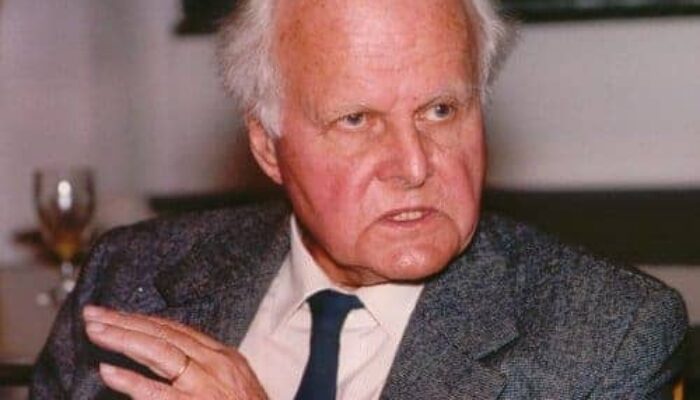
Overview of Carl Friedrich von Weizsäcker
Carl Friedrich von Weizsäcker is recognized as a towering figure in 20th-century physics, whose intellectual pursuits bridged the realms of science, philosophy, and ethics. His career reflects a rare blend of rigorous scientific investigation and profound humanitarian concern, positioning him as a pivotal contributor to modern scientific thought. From his early days as a gifted physicist to his later role as a reflective philosopher, von Weizsäcker’s work continues to influence contemporary discussions on the responsibilities entwined with scientific progress.
Early Life and Academic Formation
Born on June 28, 1912, in Kiel, Germany, von Weizsäcker was nurtured in an environment rich in intellectual and artistic influences. His father, a distinguished physicist, and his mother, a skilled pianist, fostered in him a deep appreciation for both the sciences and the arts. This dual exposure shaped his multifaceted approach to knowledge. During his formative academic years, he studied under prominent figures such as Werner Heisenberg, immersing himself in the dynamic debates surrounding quantum mechanics and laying the foundation for his future scientific endeavors.
Scientific Contributions and Ethical Reflections
Von Weizsäcker’s scientific acumen became particularly evident during his involvement in Germany’s nuclear research during World War II. Unlike many contemporaries who were captivated solely by technological breakthroughs, he was deeply troubled by the moral consequences of nuclear fission. He perceived this discovery not just as a scientific milestone but as a profound ethical dilemma, symbolizing humanity’s entry into a domain fraught with existential risks. This tension inspired his influential 1945 essay, “The Unity of Nature,” where he advocated for a vision of science that integrates empirical discovery with moral responsibility.
The Liquid Drop Model of the Atomic Nucleus
Among von Weizsäcker’s notable scientific achievements is the development of the liquid drop model, which provided a conceptual framework for understanding the behavior of atomic nuclei. This model likened the nucleus to a droplet of incompressible fluid, explaining nuclear binding energy and fission processes. It became foundational in nuclear physics, facilitating advancements in both theoretical understanding and practical applications.
Philosophical Engagement and Societal Impact
Following World War II, von Weizsäcker expanded his role beyond the laboratory, emerging as a public intellectual who emphasized the ethical dimensions of scientific work. He championed the integration of philosophical inquiry into scientific discourse, encouraging both experts and the general public to reflect on the societal implications of technological progress. His efforts marked a significant shift from purely technical discussions to a broader contemplation of science’s role within human values and responsibilities.
Interdisciplinary Collaborations and Environmental Advocacy
In the 1950s, von Weizsäcker ventured into interdisciplinary dialogues, collaborating with sociologists, economists, and ecologists. His seminal work, “The Peaceful Uses of Atomic Energy,” underscored the tension between scientific innovation and social accountability. He argued that scientific knowledge should be harnessed for the collective benefit of humanity, advocating for sustainable practices and ethical stewardship-principles that resonate strongly in today’s conversations about environmental preservation and climate change.
Philosophy of Science and Knowledge Production
Later in his career, von Weizsäcker delved deeply into the philosophical underpinnings of scientific inquiry. He challenged the notion of science as a purely objective pursuit, emphasizing the importance of incorporating human experience and ethical considerations into the quest for understanding. His perspective highlighted the limitations inherent in scientific methodologies and called for a more holistic approach that acknowledges the interconnectedness of knowledge, values, and societal impact.
Legacy and Enduring Influence
Von Weizsäcker famously asserted that “science without conscience is a soul without the body,” encapsulating his lifelong commitment to ethical reflection within scientific practice. This principle fostered dialogue across disciplines, influencing not only scientists but also policymakers and educators. He advocated for embedding ethical education within scientific training to prepare future generations for the moral complexities accompanying technological advancement.
Until his death in 2007, von Weizsäcker remained an active voice in academia and public discourse, leaving behind a legacy that harmonizes scientific ambition with moral responsibility. His life’s work serves as a reminder of the profound impact one individual can have in shaping both the intellectual and ethical contours of science.
Significance in Contemporary Context
In an era marked by rapid technological innovation and complex ethical challenges, Carl Friedrich von Weizsäcker’s insights remain remarkably relevant. His advocacy for a synthesis of empirical knowledge and ethical reflection encourages a more integrated approach to scientific inquiry. Honoring his contributions means embracing a vision of science that not only seeks to uncover the mysteries of the universe but also conscientiously considers the consequences of its applications, thereby promoting integrity, foresight, and humanitarian values in the evolving scientific landscape.
FAQ
What were Carl Friedrich von Weizsäcker's main contributions to science?
His main contributions include the development of the liquid drop model of the atomic nucleus and his ethical reflections on the implications of nuclear research.
How did von Weizsäcker influence the philosophy of science?
He emphasized the importance of integrating ethical considerations into scientific inquiry, challenging the notion of science as purely objective.






Leave a Reply