
Short Answer
Definition of the Hoyle State
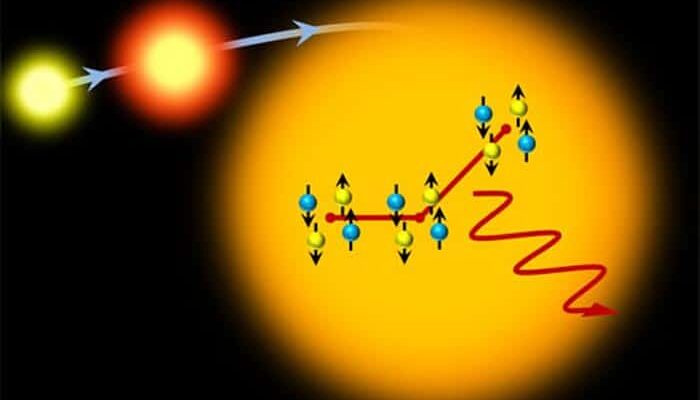
The Hoyle state is an excited energy level of the carbon-12 nucleus, crucial for the synthesis of carbon in stars. This resonance facilitates the fusion of three helium-4 nuclei (alpha particles) into carbon, a process essential for the formation of heavier elements and, ultimately, life. Named after astrophysicist Fred Hoyle, this state represents a finely tuned energy configuration that enables the triple-alpha process to occur efficiently within stellar interiors.
The Role of Carbon in Biological Systems
Carbon is fundamental to life due to its unique chemical properties. Its ability to form four stable covalent bonds allows it to create a vast array of complex organic molecules, including proteins, nucleic acids, and carbohydrates. These molecules form the structural and functional basis of living organisms. The origin of carbon atoms in the universe is intrinsically linked to nuclear fusion reactions inside stars, where lighter elements combine to form heavier ones.
- Tetravalency of Carbon:
Enables diverse molecular structures essential for biological complexity. - Organic Molecules:
Carbon forms the backbone of key biomolecules necessary for life. - Stellar Origin:
Carbon is produced in stars through nuclear fusion processes, highlighting the cosmic connection to life.
Mechanism of Carbon Formation via the Hoyle State
The triple-alpha process is the primary mechanism by which carbon is synthesized in stars. This involves the fusion of three helium nuclei in a two-step reaction. First, two helium nuclei combine to form an unstable beryllium-8 nucleus. Before this nucleus decays, a third helium nucleus fuses with it, forming carbon-12 in the Hoyle state. The existence of this excited state at a precise energy level dramatically increases the probability of carbon formation, overcoming the otherwise improbable triple collision.
Mathematical and Physical Explanation
The energy level of the Hoyle state is finely tuned to resonate with the combined energy of three alpha particles. This resonance condition can be expressed as:
EHoyle ≈ 7.65 MeV above the ground state of carbon-12
Where:
- EHoyle: Energy of the Hoyle state
- MeV: Mega electron volts, a unit of energy used in nuclear physics
This resonance enhances the reaction rate of the triple-alpha process, enabling sufficient carbon production in stars.
Recent Advances in Calculating the Hoyle State
Modern computational methods, integrating advanced nuclear interaction models and experimental data, have significantly improved the precision of Hoyle state energy calculations. These breakthroughs reconcile previous theoretical uncertainties and align closely with empirical observations from nuclear reaction experiments. By simulating nucleon interactions with greater accuracy, researchers have refined our understanding of the Hoyle state’s properties, which is pivotal for modeling stellar nucleosynthesis.
Astrophysical and Cosmological Significance
Accurate knowledge of the Hoyle state energy is vital for astrophysical models that describe the life cycles of stars, including supernovae and pulsating stars. It also informs theories on the synthesis of heavier elements beyond carbon, filling gaps in our understanding of cosmic chemical evolution. Furthermore, insights into the Hoyle state contribute to the study of primordial nucleosynthesis, shedding light on the formation of light elements in the early universe and the overall elemental composition of matter.
Connection to the Origin of Life
The formation of carbon through the Hoyle state is directly linked to the emergence of carbon-based life forms. The availability of carbon in the universe, governed by stellar processes, sets the stage for the development of complex organic molecules necessary for life. This fine-tuning raises profound questions about the likelihood of life elsewhere in the cosmos and whether the conditions for life are a product of chance or an inherent feature of the universe’s physical laws.
- Philosophical Inquiry:
Does the precise energy of the Hoyle state imply a universe predisposed to life? - Scientific Debate:
How do nuclear processes influence the distribution of life-supporting elements?
Future Research Directions
Building on the refined calculations of the Hoyle state, future investigations aim to explore isotopic variations of carbon and their biochemical implications. Interdisciplinary collaborations among astrophysicists, chemists, and biologists are expected to deepen our understanding of life’s origins and the potential for biogenesis beyond Earth. Experimental advancements may also uncover new nuclear phenomena related to the Hoyle state, further enriching nuclear physics and cosmology.
Why Understanding the Hoyle State Is Crucial
The precise characterization of the Hoyle state bridges nuclear physics, astrophysics, and biology, highlighting the interconnectedness of cosmic phenomena and life. It enhances our comprehension of elemental synthesis, informs stellar evolution models, and provides a foundation for exploring the conditions necessary for life. This knowledge not only advances scientific theory but also inspires philosophical reflection on humanity’s place in the universe.
FAQ
What is the Hoyle state?
The Hoyle state is an excited energy level of the carbon-12 nucleus that plays a crucial role in the synthesis of carbon in stars.
How does the Hoyle state relate to the origin of life?
The Hoyle state is essential for carbon formation, which is fundamental to the development of carbon-based life forms.



Leave a Reply