

Short Answer
Definition of Magnetic Resonance Imaging (MRI)
Magnetic Resonance Imaging, commonly known as MRI, is a cutting-edge medical imaging technique that offers detailed visualization of the body’s internal anatomy and physiological processes. It has revolutionized diagnostic medicine by providing high-resolution images without the use of ionizing radiation, making it an essential tool in modern healthcare.
- Non-invasive imaging:
MRI captures detailed images of organs, tissues, and other internal structures without surgical intervention. - High contrast resolution:
It excels at differentiating soft tissues, which is critical for diagnosing a wide range of conditions. - Wide clinical use:
Utilized extensively in neurology, oncology, orthopedics, and cardiology, among other specialties.
Fundamental Principles Behind MRI Technology
The operation of MRI is grounded in the physical phenomenon known as nuclear magnetic resonance (NMR). This process leverages the magnetic properties of atomic nuclei, predominantly hydrogen protons, which are abundant in the human body due to its high water content.
- Alignment in magnetic fields:
When subjected to a strong external magnetic field, hydrogen nuclei align with the field’s direction. - Radiofrequency excitation:
Pulses of radiofrequency energy temporarily disturb this alignment, causing the nuclei to emit signals as they relax back to their original state. - Signal detection and image formation:
These emitted signals are detected by the MRI scanner and processed to generate detailed images of internal body structures.
The Role and Impact of Magnetic Field Strength
The quality and clarity of MRI images are heavily influenced by the strength of the magnetic field, which is measured in teslas (T). Clinical MRI machines typically operate between 1.5 and 3.0 teslas, balancing image resolution with patient safety and comfort.
- Higher field strengths:
Provide enhanced image resolution and faster scan times but may increase susceptibility to artifacts and patient discomfort. - Lower field strengths:
Offer greater patient comfort and fewer artifacts but may compromise image detail. - Technological trade-offs:
Optimizing magnetic field strength is crucial for achieving diagnostic accuracy while maintaining patient safety.
Patient Experience During MRI Scanning
Understanding the MRI procedure can help reduce patient anxiety and improve cooperation during the scan. The process involves several key steps designed to ensure safety and comfort.
- Pre-scan preparation:
Patients are instructed to remove all metal objects to prevent interference with the magnetic field and ensure safety. - Positioning:
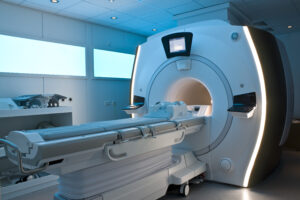
The patient lies on a motorized table that slides into the cylindrical MRI scanner. - During the scan:
Patients may feel warmth and hear repetitive tapping or knocking sounds, which correspond to the machine’s data acquisition sequences. - Communication:
Technologists maintain contact with patients throughout the procedure to provide reassurance and instructions.
Specialized MRI Techniques and Enhancements
MRI technology encompasses a variety of specialized methods designed to highlight specific tissues or physiological functions, expanding its diagnostic capabilities.
- Functional MRI (fMRI):
Measures brain activity by detecting changes in blood flow, enabling the mapping of neural functions. - Diffusion-Weighted Imaging (DWI):
Assesses the movement of water molecules within tissues, crucial for early stroke detection and characterization of certain tumors. - Contrast-enhanced MRI:
Utilizes contrast agents like gadolinium to improve the visibility of lesions and vascular structures, enhancing diagnostic precision.
Clinical Applications and Diagnostic Benefits
MRI’s versatility makes it invaluable across numerous medical disciplines, providing detailed insights that guide diagnosis and treatment planning.
- Neurology:
Detects brain tumors, demyelinating diseases such as multiple sclerosis, and neurodegenerative disorders with exceptional accuracy. - Oncology:
Assists in tumor detection, characterization, and staging, informing therapeutic decisions. - Orthopedics and cardiology:
Evaluates musculoskeletal injuries and cardiac abnormalities non-invasively. - Repeat imaging:
MRI’s lack of ionizing radiation allows for safe, repeated scans to monitor disease progression or treatment response.
Limitations and Safety Considerations
Despite its advantages, MRI has certain limitations and safety concerns that must be addressed to optimize patient outcomes.
- Scan duration:
Some MRI procedures can be lengthy, which may cause discomfort or anxiety, especially in claustrophobic patients. - Metal implants and foreign bodies:
Patients with pacemakers, cochlear implants, or metal fragments may be contraindicated for MRI due to safety risks. - Screening protocols:
Comprehensive patient evaluation prior to scanning is essential to prevent adverse events. - Technological advancements:
Innovations aim to shorten scan times and improve patient accessibility.
Emerging Trends and Future Prospects in MRI
The evolution of MRI technology continues to push the boundaries of medical imaging, promising enhanced capabilities and broader accessibility.
- Artificial intelligence integration:
AI algorithms are being developed to assist in image interpretation, increasing diagnostic accuracy and efficiency. - Advanced magnetic materials and sequences:
New hardware and imaging protocols aim to improve image quality while reducing scan duration. - Portable MRI devices:
Emerging portable scanners could expand MRI availability to remote or underserved areas, transforming healthcare delivery.
Significance of MRI in Modern Medicine
MRI stands as a cornerstone in contemporary medical diagnostics, offering unparalleled insights into human anatomy and physiology. Its non-invasive nature, combined with exceptional image detail, supports early diagnosis, treatment planning, and ongoing patient management. As technology advances, MRI’s role is set to expand further, enhancing our understanding of health and disease and driving innovation in medical care.
FAQ
What is an MRI scan?
An MRI scan is a diagnostic procedure that uses magnetic fields and radio waves to create detailed images of the inside of the body.
How safe is MRI for patients?
MRI is considered safe since it does not use ionizing radiation, but patients must remove metal objects and disclose implants due to magnetic field risks.
What conditions can MRI help diagnose?
MRI helps diagnose neurological disorders, tumors, musculoskeletal injuries, cardiac conditions, and more.
What is functional MRI (fMRI)?
Functional MRI maps brain activity by detecting changes in blood flow, useful in neuroscience and pre-surgical planning.
Why are contrast agents used in MRI?
Contrast agents like gadolinium enhance image clarity by highlighting specific tissues or abnormalities.




Leave a Reply