
Short Answer
Definition and Overview of Fullerenes
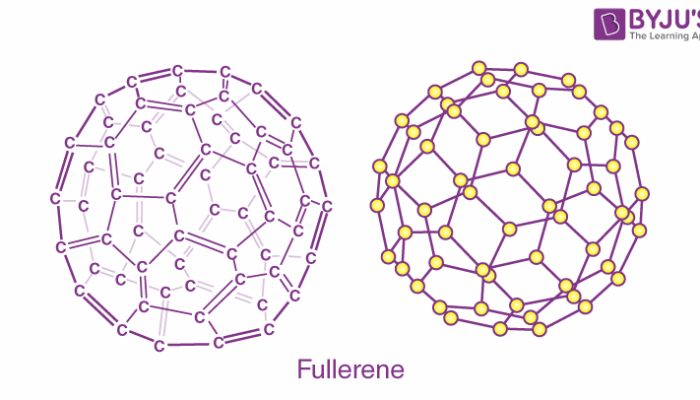
Fullerenes represent a broad class of carbon allotropes distinguished by their unique molecular structures. These carbon-based molecules are not only a captivating subject within contemporary chemistry but also hold significant promise for advancing nanotechnology. Among the various fullerenes, the spherical C60 molecule-commonly known as the “buckyball”-stands out as the most iconic. This molecule’s distinctive geometry and exceptional chemical characteristics have made it a focal point in numerous scientific investigations. The question arises: can the unique architecture of fullerenes transform materials science and outperform traditional compounds?
Historical Background and Discovery
The discovery of fullerenes dates back to 1985, credited to chemists Robert Curl, Harold Kroto, and Richard Smalley. They identified a novel carbon form characterized by hollow, cage-like structures that can take the shape of spheres, ellipsoids, or tubes. The remarkable stability of these molecules stems from their robust carbon-carbon bonds arranged in closed-cage configurations. The most famous fullerene, the buckyball, consists of 60 carbon atoms arranged in a pattern of pentagons and hexagons, resembling the design of a soccer ball.
Synthesis Techniques
Fullerenes are typically produced through high-temperature vaporization methods such as arc discharge and laser ablation. These techniques involve vaporizing carbon sources to generate fullerene vapor, which then cools and condenses into solid forms. Recent research has focused on developing innovative synthetic approaches to improve yield and create novel fullerene derivatives. Despite these advances, scaling up production to meet industrial requirements remains a significant challenge due to the complexity and cost of existing methods.
Structural and Electronic Properties
Fullerenes exhibit fascinating electronic behaviors that make them valuable in various technological applications. The buckyball’s ability to accept and transfer electrons is particularly noteworthy, enabling it to participate in charge-transfer complexes. This property is crucial for their role as electron acceptors in organic photovoltaic cells, where they contribute to efficient solar energy conversion. However, the widespread commercial use of fullerenes in solar technology is still hindered by the need for cost-effective manufacturing processes.
Biomedical Applications and Biocompatibility
Beyond their physical and electronic traits, fullerenes show promise in the biomedical field due to their biocompatibility. Their hollow cage-like structure allows them to encapsulate drug molecules, offering a novel platform for targeted drug delivery. Surface modifications can improve solubility and enhance selective targeting of specific cells, potentially reducing side effects compared to conventional treatments. Nonetheless, ensuring the safety and effectiveness of fullerene-based drug delivery systems in living organisms remains a critical area of ongoing research.
Role in Advanced Composite Materials
Fullerenes contribute significantly to materials science through their incorporation into composite materials. Their inclusion can enhance the mechanical strength and flexibility of polymers and ceramics, resulting in materials with superior thermal and structural properties. These advanced composites have potential applications across diverse industries, including aerospace and consumer electronics. A key question for researchers is whether fullerenes can be seamlessly integrated into existing manufacturing processes without compromising the integrity of the final products.
Applications in Nanotechnology
The unique properties of fullerenes have spurred their exploration in the field of nanotechnology. They are investigated for use in molecular electronics, nanoscale sensors, and innovative photographic materials. Each application presents experimental challenges, raising the question of whether fullerene-based nanoscale devices can outperform traditional technologies in terms of efficiency and functionality.
Challenges in Commercialization
Despite their promising attributes, the path to commercializing fullerene-based technologies is fraught with obstacles. Economic feasibility is a major concern, particularly regarding the scalability of production and market acceptance. Additionally, regulatory frameworks require comprehensive safety and environmental impact assessments before these materials can be widely adopted in consumer products. Researchers must navigate these regulatory complexities while continuing to innovate and develop practical fullerene applications.
Significance and Future Prospects
The resilience and multifunctionality of fullerenes, especially buckyballs, continue to inspire scientific and technological progress. Addressing the challenges related to their synthesis, application, and commercialization is essential to unlocking their full potential. The future of fullerene chemistry holds the promise of revolutionary breakthroughs in materials science and nanotechnology, contingent upon collaborative efforts within the scientific community. Whether fullerenes will redefine modern chemistry or remain scientific curiosities depends on ongoing research and innovation.
FAQ
What are fullerenes?
Fullerenes are a class of carbon allotropes with unique molecular structures, including spherical shapes like the buckyball.
What is the significance of buckyballs in nanotechnology?
Buckyballs exhibit unique electronic properties that allow them to be used in various applications, including molecular electronics and drug delivery systems.




Leave a Reply