
Short Answer
Definition of Boson Sampling
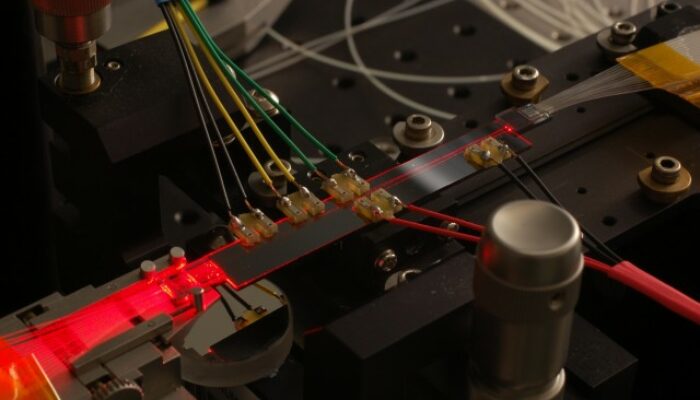
Boson sampling is a specialized quantum computational process that leverages the unique properties of bosons-particles such as photons that obey Bose-Einstein statistics-to perform complex calculations. Unlike classical particles, bosons can occupy the same quantum state simultaneously, enabling quantum systems to explore computational pathways inaccessible to traditional computers. This method involves sending multiple indistinguishable photons through a carefully designed linear optical network, resulting in output patterns that are extraordinarily difficult for classical algorithms to simulate.
Fundamental Principles Behind Boson Sampling
At the heart of boson sampling lies the quantum mechanical behavior of identical bosons. These particles differ fundamentally from fermions, which are restricted by the Pauli exclusion principle and cannot share quantum states. Bosons, however, can coexist in identical states, allowing for complex interference effects when multiple photons traverse an optical system. This indistinguishability and the resulting quantum interference form the basis for boson sampling’s computational power.
- Indistinguishability:
Photons used in boson sampling are identical in all quantum properties, making their paths through the optical network indistinguishable and enabling quantum interference. - Bose-Einstein Statistics:
These statistics allow multiple bosons to occupy the same quantum state, a property exploited to generate complex probability distributions. - Linear Optical Network:
A configuration of beam splitters and phase shifters that manipulates photon paths to create interference patterns.
Operational Mechanism of Boson Sampling
The process begins by simultaneously injecting multiple indistinguishable photons into a linear optical network composed of beam splitters and phase shifters. As photons propagate through this network, their wavefunctions overlap and interfere, producing a superposition of possible output states. The final measurement collapses this superposition into a specific photon distribution pattern, which corresponds to a probability distribution that is computationally intensive to replicate using classical methods.
This intricate interplay of quantum interference and measurement is what makes boson sampling a powerful computational tool. The complexity arises because the probability amplitudes of the output configurations are related to the mathematical concept of matrix permanents, which are notoriously difficult to calculate classically.
Mathematical Framework: The Role of Matrix Permanents
Central to boson sampling is the calculation of the permanent of a matrix, a function similar to the determinant but without alternating signs. For an n×n matrix, the permanent is defined as:
Perm(A) = ∑σ∈Sn ∏i=1n ai,σ(i)
where A is the matrix, and the sum is taken over all permutations σ of the set {1, 2, …, n}.
- Computational Complexity:
Calculating the permanent is a #P-hard problem, meaning it is believed to be intractable for classical computers as the matrix size grows. - Quantum Advantage:
Boson sampling naturally encodes these permanents in the probability amplitudes of photon detection events, enabling quantum devices to sample from distributions that are otherwise computationally prohibitive.
Practical Applications and Significance
While boson sampling is not a universal quantum computer, it holds significant promise for demonstrating quantum advantage-solving specific problems faster than classical counterparts. Its applications extend to various scientific domains:
- Quantum Chemistry:
Simulating molecular interactions and complex quantum systems more efficiently than classical simulations. - Cryptography:
Enhancing security protocols by leveraging quantum-generated randomness and complexity. - High-Energy Physics:
Modeling particle interactions and statistical properties that are challenging for classical computation.
Challenges in Implementing Boson Sampling
Despite its theoretical strengths, boson sampling faces several practical obstacles that limit its current scalability and reliability:
- Photon Source Imperfections:
Real-world photon emitters often produce photons with slight differences or losses, reducing indistinguishability and affecting interference quality. - Noise and Loss:
Environmental factors and imperfect optical components introduce noise, complicating the accurate measurement of output distributions. - Scalability:
Increasing the number of photons and optical modes to achieve meaningful quantum advantage remains a significant technical challenge.
Advancements and Future Directions
Ongoing research aims to overcome these limitations through innovations such as:
- Improved Photon Sources:
Developing more reliable and indistinguishable photon emitters to enhance experimental fidelity. - Optimized Optical Networks:
Designing more efficient and scalable linear optical circuits to handle larger photon numbers. - Hybrid Quantum-Classical Approaches:
Combining classical algorithms with quantum sampling techniques to maximize computational efficiency and practical usability.
Common Misconceptions About Boson Sampling
Boson sampling is a universal quantum computer.
Boson sampling is a specialized quantum process designed for sampling problems and does not perform arbitrary quantum computations.
Classical computers can easily simulate boson sampling.
Simulating boson sampling on classical machines becomes exponentially difficult as the number of photons increases, making it infeasible for large systems.
Why Boson Sampling Is Important
Boson sampling represents a critical milestone in the quest to harness quantum mechanics for computational purposes. It exemplifies how quantum phenomena-such as indistinguishability and interference-can be exploited to tackle problems beyond the reach of classical computers. This not only advances our understanding of quantum physics but also paves the way for practical applications in science and technology, potentially revolutionizing fields that rely on complex simulations and data processing.
FAQ
What is boson sampling?
Boson sampling is a quantum computational method that uses the quantum behavior of bosons, such as photons, to perform certain calculations faster than classical computers.
How does boson sampling differ from classical computing?
Boson sampling exploits quantum interference and the indistinguishability of photons to tackle problems that require exponential resources in classical computing.
Why is boson sampling important for quantum advantage?
It provides a concrete example where quantum devices can outperform classical computation, demonstrating the potential of quantum technologies.
What are the limitations of boson sampling experiments?
Current limitations include photon loss, noise, and difficulty scaling the number of photons to practical levels.




Leave a Reply