

Short Answer
Overview of the Dirac Award in Condensed Matter Physics
The field of condensed matter physics has recently celebrated a significant milestone with the conferral of the esteemed Dirac Award to a trio of distinguished scientists. This honor not only highlights their individual excellence but also underscores a collaborative effort that is poised to transform our comprehension of intricate materials and their practical uses. These researchers, whose work seamlessly integrates theoretical insights with experimental validation, have embarked on a path that promises to reshape scientific paradigms both within and beyond their discipline.
Fundamental Concepts in Condensed Matter Physics
Condensed matter physics focuses on the collective behavior of large groups of atoms and molecules, often revealing emergent phenomena that cannot be deduced by examining individual particles alone. The award-winning team has skillfully navigated this complex domain by employing sophisticated theoretical frameworks alongside cutting-edge experimental methods. Their work challenges long-standing assumptions about how matter behaves under diverse conditions, expanding the boundaries of current scientific understanding.
Dirac Materials: A New Frontier
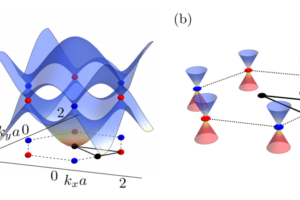
A central theme in their research is the investigation of Dirac materials, which exhibit extraordinary electronic characteristics due to the relativistic nature of their electrons. Graphene, a single layer of carbon atoms arranged in a hexagonal lattice, serves as a prime example. These materials display a linear relationship between energy and momentum, similar to particles moving at the speed of light. This unique property opens up numerous possibilities for applications in ultra-fast electronics and innovative energy technologies, positioning Dirac materials at the cutting edge of material science.
Exploring Topological Insulators
Another significant area of their study involves topological insulators-materials that act as insulators internally but support highly conductive states on their surfaces. The interplay between topology and condensed matter physics has generated substantial excitement, as these materials hold promise for developing fault-tolerant quantum computers and other advanced quantum devices. The recognition from the Dirac Award highlights the importance of their contributions to understanding these exotic phases of matter.
Mechanisms Behind Their Research
The trio’s approach combines theoretical modeling with experimental verification to unravel the behavior of electrons in low-dimensional systems. By examining quantum mechanical principles in nanoscale environments, they have shed light on phenomena such as superconductivity, magnetism, and topological phases. Their collaborative methodology, which integrates diverse scientific techniques, has been instrumental in overcoming theoretical challenges and experimental constraints.
Impact and Significance of Their Work
Their groundbreaking findings are expected to stimulate further research and innovation in condensed matter physics. This surge of interest may herald a new era characterized by interdisciplinary collaboration, which is essential for tackling contemporary challenges in materials science and related fields. Beyond academia, their work has far-reaching implications for technology development, including advancements in electronics, energy efficiency, and quantum computing.
Challenges and Perseverance in Scientific Inquiry
The path to their achievements was marked by numerous obstacles, ranging from complex theoretical problems to limitations in experimental techniques. Their determination and resilience exemplify the spirit of scientific exploration. By merging different methodologies and perspectives, they created a fertile environment for innovation, inspiring a new generation of physicists to delve into the complexities of condensed matter phenomena.
Broader Implications of the Dirac Award
The award not only honors scientific excellence but also symbolizes the power of intellectual collaboration. The recipients’ partnership transcends traditional disciplinary boundaries, serving as a blueprint for future scientific endeavors. As modern research questions grow increasingly complex, cooperative approaches that harness varied expertise become indispensable for generating novel insights and fostering intellectual curiosity across multiple fields.
Why Recognition Matters for Society
Celebrating such pioneering research encourages continued innovation, which is vital for addressing global challenges like sustainability and energy management. The enhanced understanding of condensed matter systems gained through their work has the potential to revolutionize technological solutions, ultimately benefiting society at large. The Dirac Award thus acts as a catalyst, motivating both academic and industrial communities to pursue collaborative and interdisciplinary research.
Looking Ahead: The Future of Condensed Matter Physics
The acknowledgment of these three scientists with the Dirac Award serves as a call to action for the scientific community. It invites researchers to rethink existing paradigms and explore the possibilities unlocked by teamwork and cross-disciplinary partnerships. As new ideas emerge and collaborative efforts expand, the future of condensed matter physics shines brightly, encouraging deeper inquiry and the pursuit of increasingly sophisticated answers in the quest for knowledge.
FAQ
What is the Dirac Award?
The Dirac Award recognizes outstanding achievements in physics, particularly in areas related to quantum mechanics and condensed matter.
What are Dirac materials?
Dirac materials exhibit electronic properties where electrons behave relativistically, such as graphene.
Why are topological insulators significant?
They have insulating interiors and conductive surfaces, making them valuable for quantum computing applications.



Leave a Reply